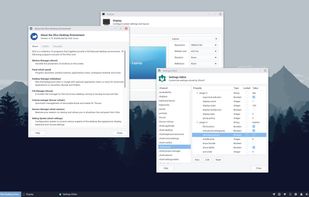
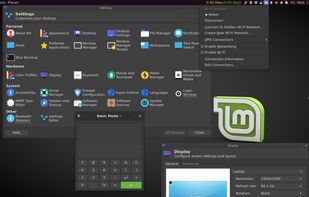
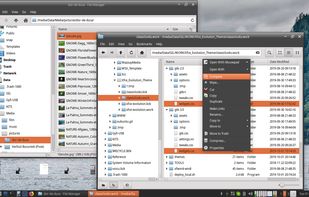
My default go to for a desktop environment. Lightweight and yet has great features and built in utilities. Also has excellent dark mode options.


I'm a big fan of Linux and have been using it consistently as my desktop daily driver since 2012. In that time, I've used a lot of software and these are the picks I come back to consistently. I don't live in the terminal with a tiling window manager, but also don't fear the command line.
There are lots of opinions and lists for terminal-centric Linux operators, hard core developers, and free software enthusiasts, but I haven't seen many for casual users just looking to do boring stuff. This is my humble list which includes practical applications, system tools to keep things running, and details on terminal specific software I use.
I'm not going to list Linux distros here because no matter what I am using because nearly all of these can be found in Fedora, Debian, and Arch derived distros (which is most beginner-friendly distros).

When I am using desktop Linux, I use the desktop environment and prefer a stacking/floating window setup to a tiling one.
I don't do fancy gaming and prefer using my computer to perform simple tasks. I have many more applications installed, but these get the most use:
My default go to for a desktop environment. Lightweight and yet has great features and built in utilities. Also has excellent dark mode options.


Default XFCE text editor. I used to use Gedit, but now prefer Mousepad since it doesn't require additional installation and works really well with markdown, spell-check and other add-ons.


Very simple image viewer. Nothing fancy and doesn't need to be! I use this for viewing images I download off the internet and which I take with my digital camera.

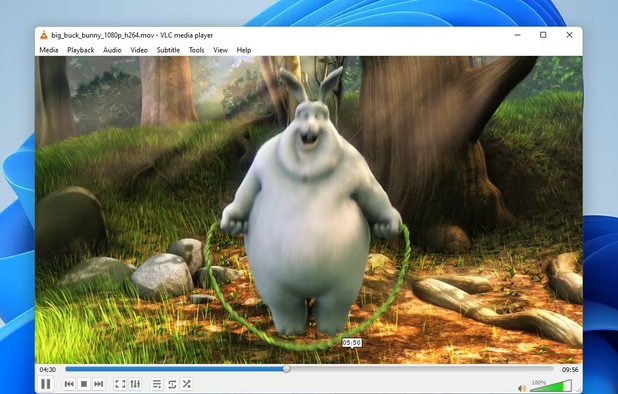
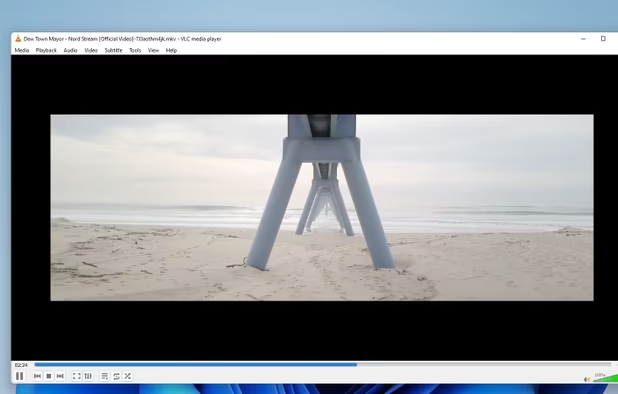
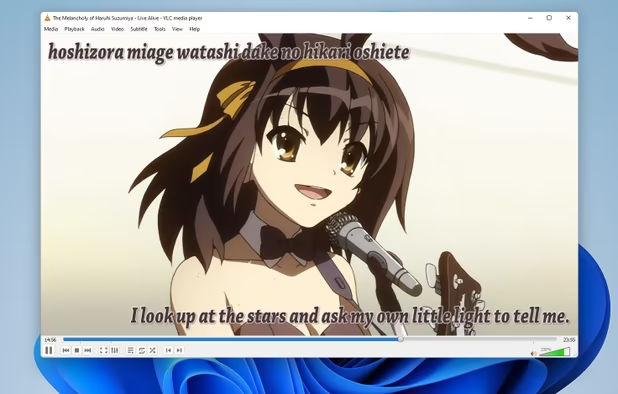
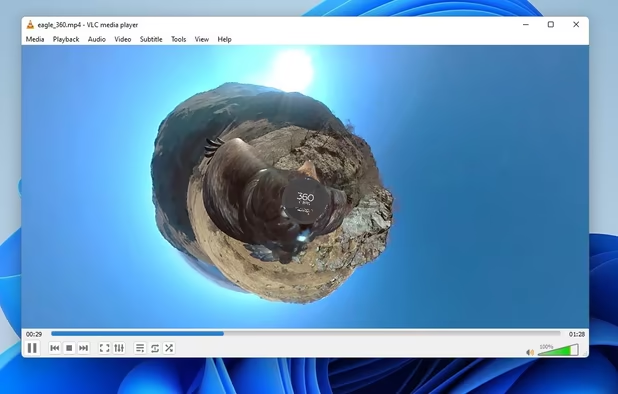
With the right plugins installed, this beast will play any video file! I use for playing videos I download off the internet or capture with my video camera. Doesn't play nice with dark mode in XFCE though? :(


Great little PDF file reader. Doesn't have all the fancy bells and whistles of Adobe Reader and doesn't need them.


I do financial planning and make fun lists in Libreoffice Calc. It's not as powerful as Microsoft Excel, but for most simple tasks, it gets the job done.


I do a lot of fun diagrams, including programming logic, network topology, and other maps, and find drawio to be a great tool. Saves files in XML format. Only major downside is that it's an electron app so it's heavy.


I am practicing python programming and this is a great, all bits included IDE for python. While it may be heavy for some, I prefer a fully stacked integrated development environment with batteries included all built by one trusted party compared to building one from a text editor like vscode using third party extensions I don't trust. One of the few times I think more is better!


My favorite hierarchical note-taker for fancy notes. Includes support for tables, rich text, and formatting for tons of programming languages (it can even run python scripts!). Also has options to save notes in encrypted format. All files are saved in open XML and SQLite files.


I use these utilities less frequently, but see a lot of use when I am re-installing operating systems, doing backup or file management processes, or managing disks.
Useful for doing file searches, including content search. Only downside is it can't peek into Cherrytree or Libreoffice files. :(


When I need to do a quick search to find out why a disk is full, I reach for baobab.


Graphical front end for the parted disk utility. Useful when I am messing around with disks for installing and uninstalling partitions.


Graphical interface for smartctl hard disk diagnostic tools. Great for checking disk health.


A graphical user interface for the rsync command-line tool. Used for all my backup operations.


Graphical interface for managing flatpak permissions. Important for doing basic things with a sandboxed flatpak, like saving a file to a local usb disk from a flatpakked browser or saving an image file from a flatpakked image editor.


Excellent tool for searching for duplicate files. Thinking about changing to Czkawka though.


A tool I use for ripping CDs I own. Many of my old disks are old and starting to degrade and skip, so having digital copies is a great backup.


I spend time in the terminal mostly to do admin work. Here are some common tools I use for these jobs.
Default terminal for XFCE. You won't get the bells and whistles that come with fancy terminal emulators like Alacritty or Ghostty, but works reliably well for most tasks.

Bash is the go to standard for the terminal because it's tried and true. Why mess with success?

90% of the work I do in the terminal is using the core utilities. I can ls and cd with the best of them and destroy disks (dd) like nobody's business.
I used vi/vim as my go-to text editor for 15 years until I found nano and switched to it immediately. A true terminal text editor for the 21st century (what is Emacs?)


I'm looking into trying lf, but right now, ranger works well for me, especially with its built-in file launcher.


How I make connections with outside systems. PuTTY is also a good tool, but I don't use it with Linux.

I use Flatpaks sometimes to install applications which are not available for my distribution. I only install verified Flatpaks if my computer is online.


The default package manager for Debian. I prefer using this tool directly in the terminal instead of graphical user frontends.


Same as above for arch based distros. Pamac is also available, but I prefer using the terminal for managing software.
I mainly use Firefox derived browsers to do all my browsing, switching browsers depending on what I am doing. I don't use Arkenfox and prefer Firefox clones with decent defaults. I accept there is an update risk between Firefox base and these browsers, but I find that less risky than using an add-on that demands I read an entire wiki to use it properly.
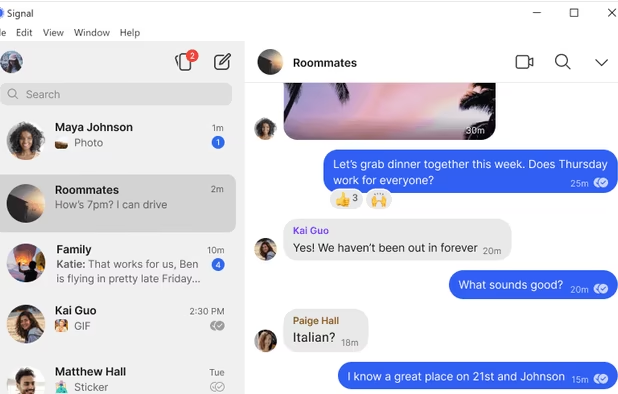
Not really a browser, but one of the most important online tools I use. My default messenger on my phone, now linked to my desktop.


Great browser specifically designed to be generic to avoid unique fingerprinting. I use it for casual clear-net browsing. I use it as is out of the box and it works very well. Includes a default ad-blocker and forgets sessions on close.


Similar to Mullvad browser, I use this browser for logging into accounts for online shopping, paying bills, online banking, etc. I use Firefox containers to keep these accounts separate from each other and block access to non-bookmarked sites using Blocksite and no-script to shut off third party scripts.


Useful when the customization to all of the above browsers breaks a site and there's no other choice.


I don't like using browser add-ons since they have privileged access to the browser and can be compromised by a supply chain attack. When I do use them, I prefer sticking with privacy focused add-ons which are well known and open source. I don't use any of these in Brave since default functionality in Brave is good enough to block ads and I only use it for one site.
I use this in every browser except Firefox. Great ad-blocker with minimal customization needed.


I use this in white-list mode to block the entire internet in Librewolf except for specific sites to avoid casual browsing on tabs where important business is conducted.


Probably the riskiest add-on I use since it is not privacy focused - it's just easy on the eyes.


What tools do you prefer when casually using Linux? Anything new you think I should add or something lame I should remove? Let me know in the comments below! :D