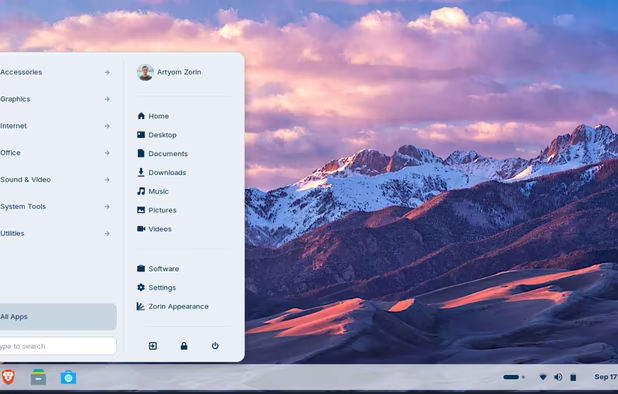
Aurora is a delightful KDE desktop experience for end-users that are looking for reliability and developers for the most-hassle free setup. Zero maintenance included.

Ubuntu is described as 'Community developed, Linux-based operating system that is perfect for laptops, desktops and servers. It contains all the applications you need - a web browser, presentation, document and spreadsheet software, instant messaging and much more' and is a leading Linux Distro in the os & utilities category. There are more than 100 alternatives to Ubuntu for a variety of platforms, including Linux, Self-Hosted, Windows, BSD and Mac apps. The best Ubuntu alternative is Linux Mint, which is both free and Open Source. Other great apps like Ubuntu are Debian, Manjaro Linux, Fedora and Kubuntu.

Aurora is a delightful KDE desktop experience for end-users that are looking for reliability and developers for the most-hassle free setup. Zero maintenance included.

Experience the latest Windows OS with a new Start menu, integrated Teams, and gaming technologies like Auto HDR. Improved security with stricter requirements enhances protection, and seamless Microsoft Account integration makes it ideal for modern devices.


Would you like your PC to show you ads even when not browsing the internet? Would you like us to take screenshots of your private activities and unleash our closed source AI on your data? Would you love to be denied the freedom to choose your default web browser? Then buy Microsoft Windows 11 because we have all these amazing spyware features and more!
Actually, we saved you the hassle of buying it and it's price is already included in the computer you paid for!
most people using linux use it to not use windows or mac
Red Hat is the leader in development, deployment, and management of Linux and open source solutions for Internet infrastructure - ranging from embedded devices to secure Web servers. Red Hat was founded in 1994 by visionary entrepreneurs Bob Young and Marc Ewing.

Free if you use the Developer version (needs signup), but it covers up to 16 servers - https://developers.redhat.com/articles/faqs-no-cost-red-hat-enterprise-linux
Ubuntu and Linux in general is free, RHEL is not.
It's especifically for server usage, not for desktop. That's why it shouldn't be a recommendation.
The Nobara Project, to put it simply, is a modified version of Fedora Linux with user-friendly fixes added to it. Fedora is a very good workstation OS, however, anything involving any kind of 3rd party or proprietary packages is usually...


Raspberry Pi OS (previously called Raspbian) is the Foundation’s official supported operating system. You can install it with NOOBS or download the image below and follow our installation guide.


it's cool, a debian for the raspberry, i use it for my pi's, but i am looking for a replacement for my desktop
it's an operating system. so is ubuntu
its for raspberry pi, not desktop or laptop

Puppy Linux is a unique family of Linux distributions meant for the home-user computers. It was originally created by Barry Kauler in 2003.


Puppy is for old computers.
too lightweight, pain to do everything.

CentOS is a community-supported, free and open source operating system based on Red Hat Enterprise Linux. It exists to provide a free enterprise class computing platform and strives to maintain 100% binary compatibility with its upstream distribution.


Very old packages, same as Debian Stable and Red Hat. It's often use as server, not as a desktop. If you want huge stability, you can use it.
Solus Operating System is a Linux distribution built from scratch, exclusively for desktop systems. There is no scope-creep associated with generic platforms, and the project aims to provide a modern and focused desktop-centric solution, that is designed to keep out of the way...

Solus created the Budgie desktop. Solus is a rare curated-rolling-release distro. Solus has Steam Implementation Built-in, excellent for gamers. GUI to manage drivers and easy access to newer drivers. Not bloated like Ubuntu. The community is very kind and helpful.
It doesn't have many applets compared to Ubuntu Budgie, so customization on Solus, especially its flagship with Budgie is pretty limiting.
It has an alien-like package manager and small quantity of packages available. It's easy to use, but since it has very small number of packages, it tends to force the user [indirectly] to use snap/flatpak as the only way to have the application that are missing in their repos, but it also brings other issues.
KDE neon is an Ubuntu-based Linux distribution that offers a stable and easy-to-use platform, featuring the latest KDE Plasma desktop and application releases.

A good alternative to Ubuntu and Kubuntu because it only ships the necessary, no useless packages like Kubuntu. It's a minimalistic distro. If you want the new versions of Plasma Shell, you should install it instead of Kubuntu (Ubuntu with KDE).
MX Linux is an operating system - a cooperative venture between the antiX and former MEPIS communities. It is a midweight OS that combines an elegant and efficient desktop with simple configuration, high stability and solid performance.


It's just a spin from Debian shipped with Xfce desktop and some utilities to make things better for newbies. It's not good because all the packages are very old, the community is very small.
Nothing special, very overrated distro. It's just Debian + Xfce + some useful tools (not created by the MX devs), just used in the distro to make it "easier". It's very stable as Debian is.
Artix Linux is a fork (or continuation as an autonomous project) of the Arch-OpenRC and Manjaro-OpenRC projects. Artix Linux offers a lightweight, rolling-release operating system featuring the OpenRC init software.

The OpenBSD project produces a FREE, multi-platform 4.4BSD-based UNIX-like operating system. Our efforts emphasize portability, standardization, correctness, proactive security and integrated cryptography.


Linux is Free and open source, Windows is not.