Cost / License
- Freemium
- Proprietary
Application type
Platforms
- Mac
- Windows
- Linux
 Cyprus
 EU
EU
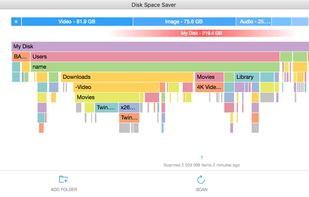



WinDirStat visualizes storage with treemap displays to quickly spot large files and folders, including on network drives. Users value its open-source nature and treemap-based disk visualization, but often switch due to speed and update concerns. Users complain that it can be slow, especially when scanning large drives or complex directory trees.
WizTree is the top-ranked alternative and reads the NTFS Master File Table directly, so scans can finish in seconds rather than minutes on Windows. SpaceSniffer ranks second with an easy-to-read treemap layout that users call simpler to understand, featuring a sober color scheme and labeled squares. TreeSize offers quicker scans and a friendlier UI with a separate free edition users say is "enough."
Disk analyzers split between Windows-first treemap tools and cross-platform open-source options, with QDirStat providing a WinDirStat-like experience for Linux users.
WinDirStat is a disk usage analyzer that helps visualize storage consumption through treemap displays. For open source transparency, Baobab Disk Usage Analyzer, Czkawka, and Filelight are community-driven options across Linux and macOS platforms. Linux users can choose Baobab Disk Usage Analyzer with GNOME integration, QDirStat for a WinDirStat-like UI, or ncdu for terminal-first analysis. Windows users seeking speed and polish have WizTree, TreeSize, and SpaceSniffer as frequently recommended disk analyzers with strong visual layouts.
If duplicates matter more than charts, Czkawka offers content-based comparison alongside its disk analysis features, while WizTree includes duplicate locator functionality. Terminal workflows benefit from ncdu, which is built for ncurses use over SSH, and dua-cli as another terminal-based directory analyzer for sysadmins working remotely. Android users managing phone storage can use DiskUsage for zoomable directory diagrams or disky for storage breakdown by directory and apps.
CyprusEU
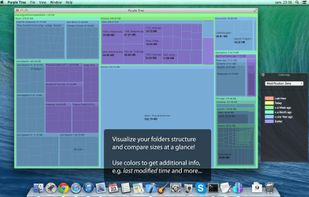
Purple Tree is a simple and beautiful visualization tool for your hard drive space usage. A comprehensive treemap display allows you to see all your large folders and files at a glance! You can visually compare sizes and locate the large files, usually hidden inside the...




diskonaut is a terminal disk space navigator. Given a path on your hard-drive (which could also be the root path, eg. /). diskonaut scans it and indexes its metadata to memory so that you could explore its contents (even while still scanning!).

 GermanyEU

DiskView shows you a graphical map of your disk, allowing you to determine where a file is located or, by clicking on a cluster, seeing which file occupies it.
 United States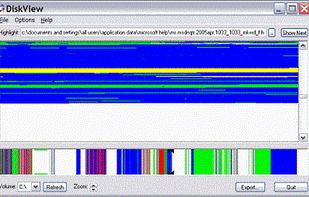


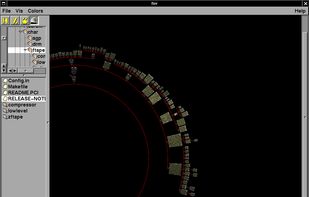
fsv (pronounced eff-ess-vee) is a file system visualizer in cyberspace. It lays out files and directories in three dimensions, geometrically representing the file system hierarchy to allow visual overview and analysis.


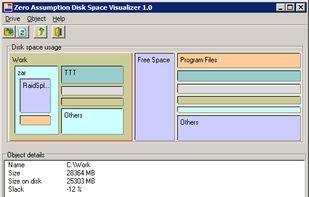
Disk Space Visualizer digs for a free disk space. This freeware program was created to simplify "garbage collection" procedures. In a typical usage the hard drive space is slowly filled up by the useless data. This may include temporary files, rarely used software, and.

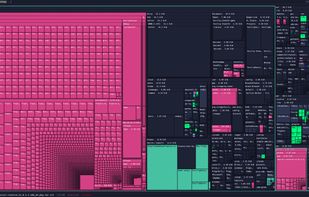
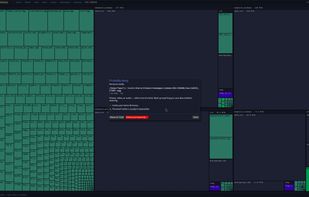
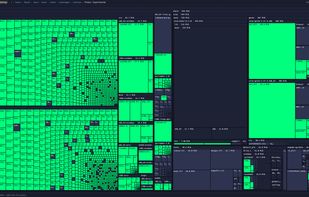
A fast, GPU-accelerated disk-usage treemap for Linux. It maps your whole filesystem as nested rectangles sized to what they actually consume, so the space hogs jump out instantly. Then right-click anything for a plain-English “safe to delete?


xdiskusage is a user-friendly program to show you what is using up all your disk space. It is based on the design of xhttp://alternativeto.net/software/xdu/ written by Phillip C. Dykstra <dykstra at ieee dot org & gt.
United States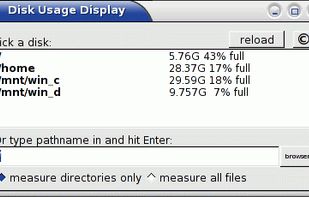
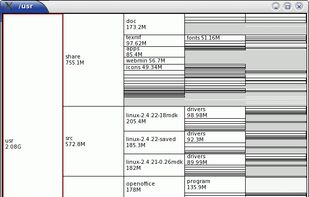


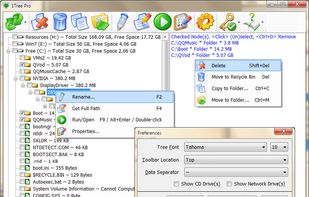
1Tree Pro lets you see drives/directories/files size in 1 tree view, so as to let you to do manual disk cleaning work easily. It loads drives, folders and files with their sizes (sorted by size in descending order), and offers some common commands.
United States