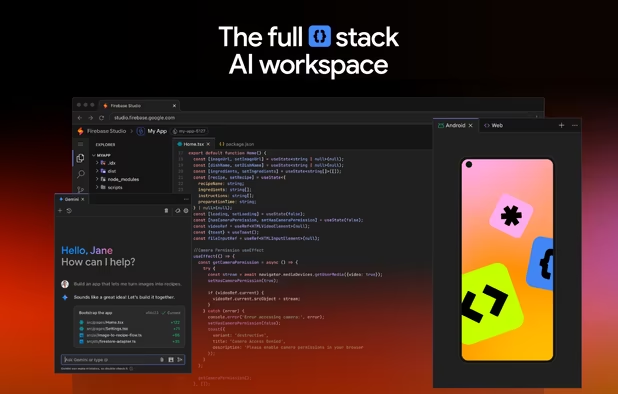
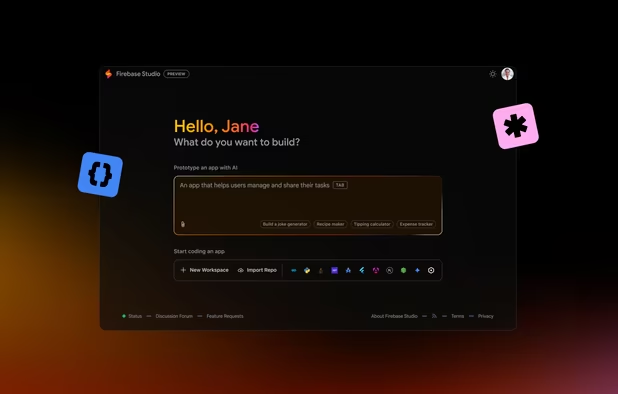
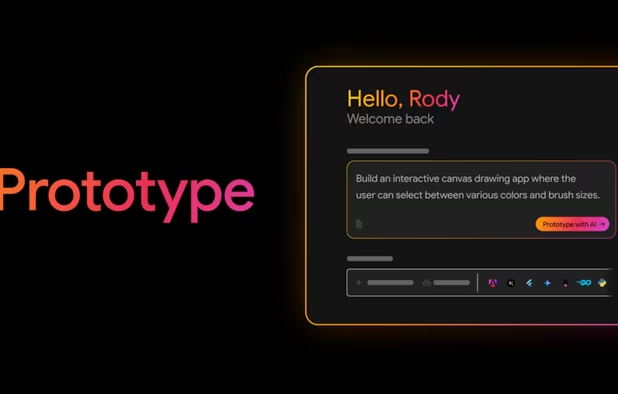
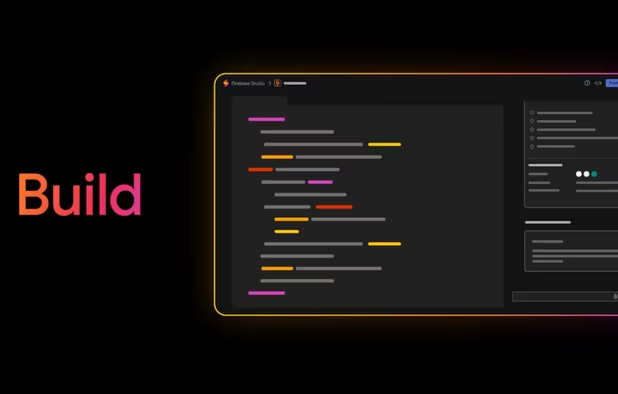
A cloud-based, agentic development environment designed to accelerate how you build, test, deploy and run production-quality AI applications, all in one place.


Visual Studio Code is a cross-platform, extension-driven code editor with IntelliSense-style completion plus integrated Git and debugging workflows. Users praise its versatility and ease of use for many programming workflows, though some complain it can feel resource-intensive and may get slower over time, especially after updates.
VSCodium tops the rankings as a fully open-source build of Code - OSS that removes telemetry while keeping most VS Code functionality and extensibility. Privacy-focused developers who want a VS Code-like experience often choose VSCodium specifically to avoid telemetry, though some Microsoft extensions may be unavailable. Sublime Text ranks second and is repeatedly praised for outstanding speed and being less resource-intensive than VS Code, making it popular with developers on slower machines or large projects.
The alternatives landscape spans lightweight text editors like Vim and Notepad++ to newer AI-first editors like Zed Editor, with over 100 alternatives covering code editors, full IDEs, and terminal-based editors.
Visual Studio Code is a code editor, but the alternatives span different approaches to development workflows. Open source options like VSCodium, Vim, and GNU Emacs appeal to users who want transparent licensing and community-driven tooling. For privacy-focused development, VSCodium and Helix emphasize no-tracking and telemetry prevention features.
Linux users have native options in VSCodium, Kate, and Lapce. Web-based development suits users who want browser-based environments - Replit and Firebase Studio run online for coding without local setup. For developers who live in the terminal, Micro, Neovim, and Helix target command-line workflows useful for SSH-heavy or low-overhead environments.
A cloud-based, agentic development environment designed to accelerate how you build, test, deploy and run production-quality AI applications, all in one place.


JetBrains WebStorm is a commercial IDE for JavaScript, CSS & HTML built on JetBrains' IntelliJ IDEA platform.


easily the most professional one and things work properly not dependent on outside programmers

It's fast, written in Rust, no registration, easy setting and keybindings files to customize, better built in terminal.

Kiro is an AI-powered IDE developed by Amazon Web Services to help developers build and ship production-ready software from prompt to deployment. Based on VS Code, it combines intuitive "vibe coding" with structured...


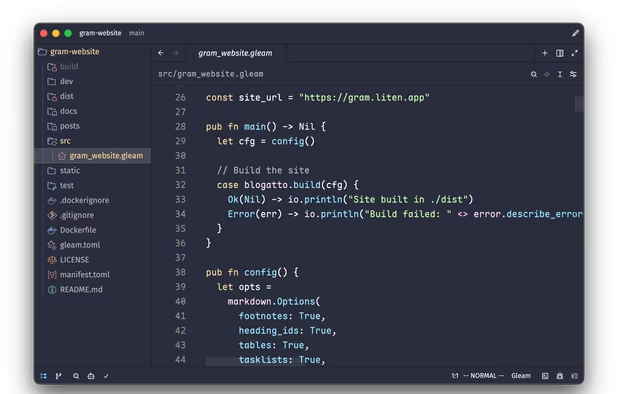
Lightweight, open-source code editor for Windows, Mac, and Linux featuring Vim keybindings, built-in Git support, agentic AI editing with multiple models, syntax highlighting, LSP for intelligent completion, fast performance, and efficient workflows.

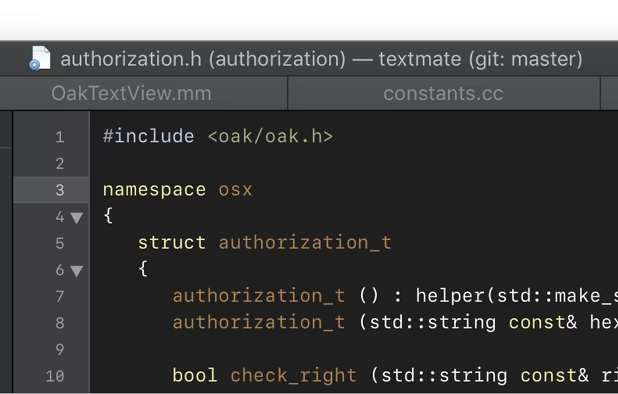
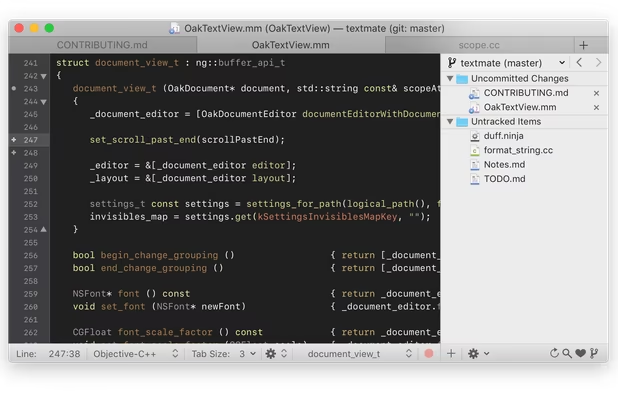
TextMate brings Apple's approach to operating systems into the world of text editors. By bridging UNIX underpinnings and GUI, TextMate cherry-picks the best of both worlds to the benefit of expert scripters and novice users alike.


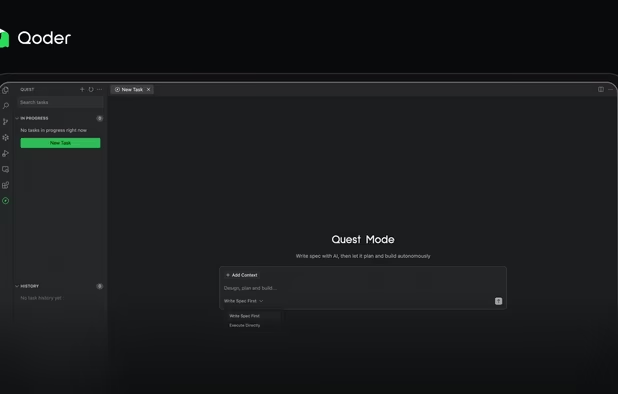
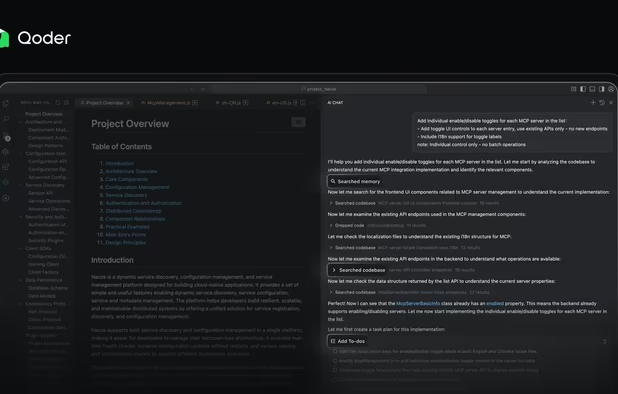
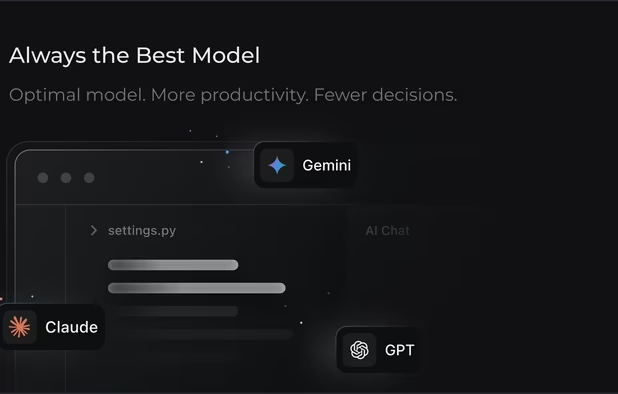
Qoder is an AI-powered agentic coding platform and IDE that automates complex software development tasks using autonomous AI agents.


CodeEdit is a code editor built by the community, for the community, written entirely and unapologetically for macOS. Features include syntax highlighting, code completion, project find and replace, snippets, terminal, task running, debugging, git integration, code review...


Bluefish is a powerful editor targeted towards programmers and webdesigners, with many options to write websites, scripts and programming code. Bluefish supports many programming and markup languages, and it focuses on editing dynamic and interactive websites.


Trae is an adaptive AI IDE that transforms how you work, collaborating with you to run faster.


With Theia you can develop one IDE and run it in browsers or native desktop application from a single source. Theia is designed in a modular way to allow extenders and adopters customizing and extending every aspect of it.


WebStorm at the time of writing has slightly better integration with JS build tools and TypeScript. If you're doing primarily frontend work, WebStorm is probably still the best choice. However, VsCode is a bit more flexible if you move out of that area.