
• HTML icon
  • CSS icon
  • Python icon
  • GNU Bourne Again SHell icon
  • PostgreSQL icon
  • +41

Programming Languages for Fun, not Profit (a Tier List)

Xen MasterXen Master46 appsUpdated
Copy a direct link to this comment to your clipboard

That's right, I am going there! Now that Generative AI has made programming a joke at the mercy of corporate hypemen and shovel selling grifters, the only reason to program is for fun! Below is my personally generated list of the best and worst languages to learn, based entirely on bc I said so. It focuses a lot less on how to get rich or get a job and more about the easiest way to build cool stuff for fun.

This entire list is based solely on my own personal opinion and has no basis in objective quality. You can decide whether or not this is a troll post or not.

If you are a computer science elitist, skip to the end.

A Tier

Learning everything on my A-tier list gives a user the tools to build anything from web apps, AI/ML tools, desktop utilities, mobile apps, full-stack websites, terminal applications and games. All of these languages are within the intellectual grasp of the common man (and woman!) without the need for a complex comp sci degree.

  1. HTML icon
     Like

    HTML is the standard markup language used to create web pages, and its elements form the building blocks of all websites.

    Cost / License

    • Free
    • Open Source

    Application type

    Platforms

    • Self-Hosted
    • HTML
    HTML screenshot 1
    Xen MasterXen Master’s note

    Some would argue this isn't really a programming language. And they'd be right. I'd call it the first step in learning how to build a basic website. The fundamental building block of any webpage that has forms and text. Bluefish is a great tool for learning how HTML works.
  2. CSS icon
     Like

    Cascading Style Sheets (CSS) is a simple mechanism for adding style (e.g., fonts, colors, spacing) to Web documents.

    Cost / License

    • Free
    • Open Source

    Platforms

    • Self-Hosted
    Xen MasterXen Master’s note

    This is what makes a website look good. I highly recommend learning the tailwind framework for CSS since its all the rage and has flexibility as well as strength when it comes to managing complex styles. CSS-in-JS used to be a hot ticket, but nobody seems to care about it anymore (same with CSS proprocessors like SaSS).

  3. Python icon
     Like

    Python is an interpreted, interactive, object-oriented, extensible programming language. It provides an extraordinary combination of clarity and versatility, and is free and comprehensively ported.

    Cost / License

    • Free
    • Open Source

    Application type

    Platforms

    • Windows
    • Mac
    • Linux
    • BSD
    • Linux Mobile
    • Haiku
    • Symbian S60
    • AmigaOS
    • MorphOS
    • OpenSolaris
    • AROS
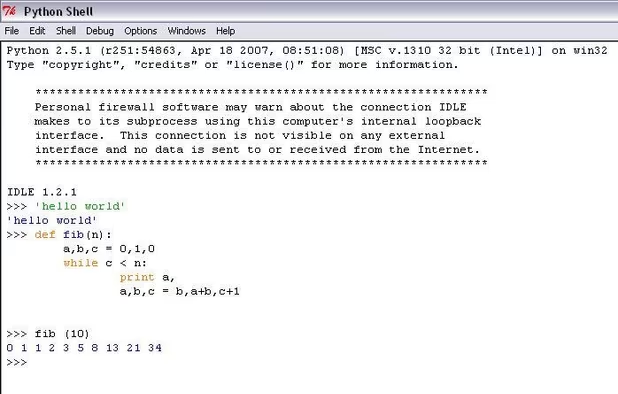
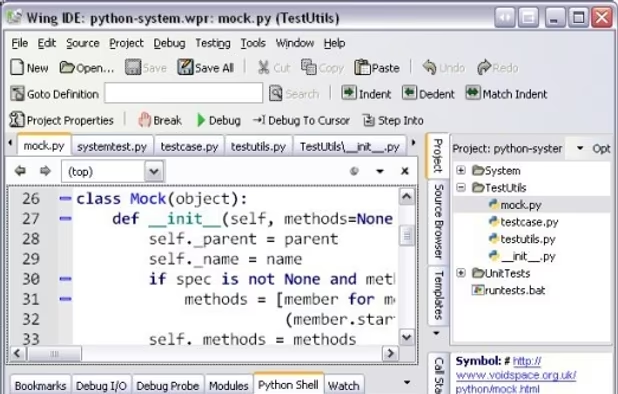
    Python screenshot 1
    Python screenshot 1
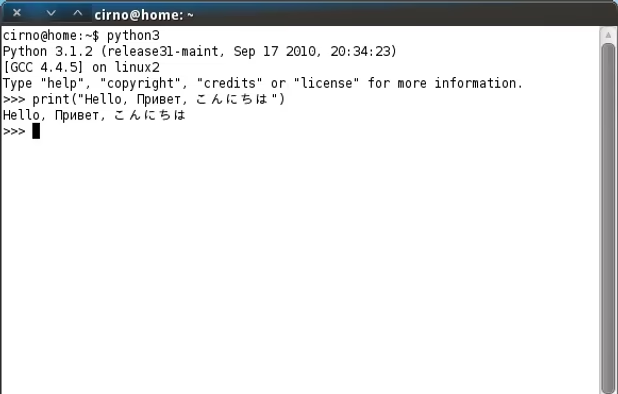
    The Python 3.1 interpreter running in a GNOME Terminal
    Xen MasterXen Master’s note

    The first real programming language on this list. Super easy to learn with forgiving syntax and typing. There are tons of free tutorials and exercises out there to learn this language. Great for a backend web solution using Django, for ML/AI Inference with FastAPI, data science and machine learning libraries and automation potential using scripts with services like AWS Lambda. A bit on the slow side since it is a scripted language. Use PyCharm when learning Python or for more specialized solutions, Spyder for scientific computing and Jupyter Notebook for data science applications. The Textual framework is also great for terminal based applications. And Pelican is an excellent static site generator, which is a good fit since you should know HTML and CSS by now.

  4. Bash is the shell, or command language interpreter, that will appear in the GNU operating system. Bash is an sh-compatible shell that incorporates useful features from the Korn shell (ksh) and C shell (csh). It is intended to conform to the IEEE POSIX P1003.2/ISO 9945.

    Cost / License

    • Free
    • Open Source

    Application type

    Platforms

    • Mac
    • Linux
    • BSD
    • Linux Mobile
    Bash using the ls command
    Xen MasterXen Master’s note

    There are other shells out there, like the hypothetically user-friendly fish shell or the fancy zsh shell, but bash is everywhere and is the default for all but the most barebones Linux systems. If you want to get gud at operating systems, learn bash!

  5. PostgreSQL is a powerful, open source object-relational database system with over 35 years of active development that has earned it a strong reputation for reliability, feature robustness, and performance.

    Cost / License

    • Free
    • Open Source

    Application type

    Platforms

    • Windows
    • Mac
    • Linux
    • BSD
    • Self-Hosted
    PostgreSQL screenshot 1
    PostgreSQL syntax example
    Xen MasterXen Master’s note

    Just as Bash is the language of operating systems, SQL is the language of databases. Some systems will have fancy ORMs to develop databases, but sometimes raw SQL is what will work best. Use DBeaver when learning SQL and practice on PostgreSQL, a very popular and feature-full implementation.

  6. JavaScript (sometimes shortened to JS) is a lightweight, interpreted, object-oriented language with first-class functions, most known as the scripting language for Web pages, but also used in many non-browser environments.

    Cost / License

    • Free
    • Open Source

    Application type

    Platforms

    • Windows
    • Mac
    • Linux
    • Chrome OS
    • BSD
    • Online
    • Android
    • iPhone
    • iPad
    • Haiku
    • AROS
    JavaScript screenshot 1
    JavaScript screenshot 1
    Xen MasterXen Master’s note

    The only language universally recognized by all browsers. If this list was about getting a job, I'd say learn React. End of story. But for a fun user experience? Forget the fancy frameworks and learn just enough vanilla Javascript to be dangerous. Then start learning about HTMX and Alpine.js which allows you to extend HTML functionality for client-side reactivity and to communicate with the server in a simplified manner. If you really want to learn a framework to build a Single Page Application, learn the Svelte framework. A lot less overhead and a better experience than messing around with virtual DOMs and huge bundles and builds. Avoid using nodeJS and npm if you can too, it's become a malware distribution network at this point. Use Jetbrains Webstorm when learning JavaScript - it's now free for people students and hobbyists.

  7. C# icon
     Like

    C# is a multi-paradigm programming language encompassing strong typing, imperative, declarative, functional, generic, object-oriented (class-based), and component-oriented programming disciplines.

    Cost / License

    • Free
    • Open Source

    Application type

    Platforms

    • Windows
    • Mac
    • Linux
    • BSD
    C# screenshot 1
    Xen MasterXen Master’s note

    The top dog of languages on this list - this is what the other steps were preparing you for. A more fun version of Java and widely used in enterprise environments, c# is a compiled language so it's got speed. It is backed by Microsoft so it isn't going anywhere. And you can do anything with it. Want a web backend? Use .NET. Looking for a front-end? Use Blazor and Web Assembly with SignalR for a real-time server connection. Looking to build a desktop or terminal application? Avalonia and Terminal.GUI are your friends. Developing for mobile? Check out .NET MAUI. C# is great for building games too; Stardew Valley is built on c# with the Monogame framework, and the language can also be used with Unity and Godot. Only downside is that c# works best on Windows, especially tools like .NET MAUI. If you aren't OK with this, move on to B-tier solutions! Definitely use either Microsoft Visual Studio or Jetbrains Rider when learning c#.

B Tier

These are nice to have languages that you can still use to work on cool projects for fun. A lot of them can replace the items in A tier so you can learn to work on stuff in different ways, particularly if you want something as useful as c# and don't want to be beholden to the Microsoft network.

  • note, if you are a computer science student, Lua and C should be in your S tier. Ignore all the other suggestions. :D
  1. Dart icon
     Like

    Dart (originally called Dash) is a Web programming language developed by Google. It was unveiled at the GOTO conference in Aarhus, 2011 October 10-12. The goal of Dart is "ultimately to replace JavaScript as the lingua franca of web development on the open web platform.

    Cost / License

    • Free
    • Open Source

    Application type

    Platforms

    • Windows
    • Mac
    • Linux
    • Online
    Dart screenshot 1
    Xen MasterXen Master’s note

    .NET Maui sucks if you aren't on Windows and React Native sucks all the time because you have to learn React. :( Flutter is the best way to build a cross platform mobile app that works well on Android and iPhone with consistent presentation. Flutter is a Dart framework, a JavaScript like language that can also be used for minimal static websites with the Jaspr framework and even as a back-end using Serverpod. Use Webstorm when learning Dart, using the Flutter and Dart Plugins.

  2. Open-source programming language with C-style syntax, Google-backed. Features concurrency, automatic memory management, and a robust library for web and CLI apps.

    Cost / License

    • Free
    • Open Source

    Application type

    Platforms

    • Windows
    • Mac
    • Linux
    • BSD
    • Self-Hosted
    • Go (Programming Language)
    Go (Programming Language) screenshot 1
    Xen MasterXen Master’s note

    A c-like language developed by google for ease of use and hands-off memory management. Useful for cloud-native services, terminal applications with Bubble Tea and even works great as a web back-end either freehand coded with its awesome standard library or using a framework like Gin. It's probably the most fun you will have using a relatively low-level language. Services like Grafana Dashboards, Caddy Webserver, and Traefik Proxy are written in Go. Use Jetbrains Goland or the free LiteIDE when learning Go.

  3. Kotlin icon
     Like

    Kotlin is a cross-platform, statically typed, general-purpose programming language with type inference. Kotlin is designed to interoperate fully with Java, and the JVM version of its standard library depends on the Java Class Library, but type inference allows its syntax to be...

    Cost / License

    • Free
    • Open Source

    Application type

    Platforms

    • Windows
    • Mac
    • Linux
    • Online
    Kotlin screenshot 1
    Kotlin screenshot 1
    Xen MasterXen Master’s note

    A better version of Java that is now the defacto language for natively developing Android apps. You'll get better performance than with Flutter or .NET MAUI and will be able to access hardware APIs at the cost of having to learn a new language. You can also use it for a web backend with KTor and can allegedly be used for desktop and mobile apps with Kotlin Multiplatform, but this is a new-ish feature. Use IntelliJ when learning Kotlin, using the Kotlin plugin.

  4. Open-source programming language for modern Apple platform apps, offering safe syntax, type inference, generics, compilation to native code, and integration with Objective-C.

    Cost / License

    • Free
    • Open Source

    Application type

    Platforms

    • Windows
    • Mac
    • Linux
    • Visual Studio Code
    • Apple Swift
    • Xcode
    Swift (programming language) screenshot 1
    Swift (programming language) screenshot 1
    Swift (programming language) screenshot 2
    Xen MasterXen Master’s note

    The better version of Objective-C for developing iPhone, Mac, and iWatch applications. As before, you can't beat native performance, but will have to learn something new to get that benefit. Also can be used to build a web back-end using Vapor, but I've never seen this done in real life. Use this if you are excited about developing apps for Apple-ware. Use xCode when learning Swift.

  5. Lua icon
     Like

    Lua is a powerful, fast, lightweight, embeddable scripting language.

    Lua combines simple procedural syntax with powerful data description constructs based on associative arrays and extensible semantics. Lua is dynamically typed, runs by interpreting bytecode for a register-based.

    Cost / License

    • Free
    • Open Source

    Application type

    Platforms

    • Windows
    • Mac
    • Linux
    • BSD
    • Android
    • iPhone
    • iPad
    • Android Tablet
    • Playstation
    • Android Wear
    Lua screenshot 1
    Xen MasterXen Master’s note

    Lua was created in Brazil. An unusually fast scripting language. The award winning game Balatro was built using Lua's Love2D framework. Lua is also great for extensibility for apps like Neovim, the Nginx fork OpenResty, Redis and others! Also super simple to learn (even easier than Python). Only drawback is the lack of an updated IDE and its weird indexing scheme which starts at 1, not 0. Consider using the Gram editor for working with Lua or Defold when doing game development. Avoid Zerobrane or RTStudio as they haven't been updated in years.

  6. C is a general-purpose programming language. It was created in the 1970s by Dennis Ritchie and remains very widely used and influential. By design, C's features cleanly reflect the capabilities of the targeted CPUs.

    Cost / License

    • Free
    • Open Source

    Application type

    Platforms

    • Windows
    • Mac
    • Linux
    • BSD
    • Self-Hosted
    • Linux Mobile
    C (programming language) screenshot 1
    Xen MasterXen Master’s note

    The OG of programming languages. It's a surprisingly simple procedural language that has that retro feel of actually talking to your computer and knowing exactly what it is doing. Many desktop applications are written in C and its a great way to learn the basics of memory management and is used to build everything from embedded systems to the operating system you are using right now. Someone even wrote a minimalist web backend in c, which is hilarious to me. Use Code::Blocks or Jetbrains CLion when learning c.

  7. Elixir icon
     Like

    Elixir is a dynamic, functional language designed for building scalable and maintainable applications.

    Cost / License

    • Free
    • Open Source

    Application type

    Platforms

    • Windows
    • Mac
    • Linux
    • BSD
    • FreeBSD
    • DragonFly BSD
    Elixir screenshot 1
    Xen MasterXen Master’s note

    The Ruby of 2026. It's a functional language so different from what most folks expect, but from what I've heard, the developer experience using Elixir with the Phoenix framework when building out websites is out of this world. Liveview helps build out the front end without needing too much JavaScript. Nerves can be used for embedded systems and Broadway for dealing with media and data flows. It doesn't have a dedicated IDE and the plugins for VSCode are super dodgy. The Zed editor supports it natively though.

C Tier

These languages are fun if you enjoy working on finishing another man's save game. All of these are application languages that used to be cool, but are still in use in many places.

  1. C++ icon
     Like

    C++ is a statically typed, free-form, multi-paradigm, compiled, general-purpose, powerful programming language. It is regarded as an intermediate-level language, as it comprises a combination of both high-level and low-level language features.

    Cost / License

    • Free
    • Open Source

    Application type

    Platforms

    • Windows
    • Mac
    • Linux
    • BSD
    • Linux Mobile
    C++ screenshot 1
    Xen MasterXen Master’s note

    The heavier cousin to c. Has a lot of features c requires you to build yourself, but also gives you more opportunities to foot-gun yourself when trying to develop your programs. God help you if you are forced to work on someone else's codebase. Nevertheless, it is the backbone of a significant portion of software in the world today. C++ is one of the staples of video game programming and, until recently, was the lingua franca of the Unreal Engine system. You can use code::blocks or Jetbrains CLion when learning c++.

  2. PHP icon
     Like

    Server-side scripting language designed for web development, featuring HTML embedment and extensive community support, suitable for dynamic content creation.

    Cost / License

    • Free
    • Open Source

    Application type

    Platforms

    • Windows
    • Mac
    • Linux
    • BSD
    • PHP
    PHP screenshot 1
    Xen MasterXen Master’s note

    PHP runs the world until a major vulnerability happens. Slowish scripting language that is the basis behind Wordpress and therefore runs a ton of sites in the real world. Laravel is framework for developing bespoke sites. People love to diss PHP, but it was great for its time. Use PHPStorm when learning PHP.

  3. Ruby icon
     Like

    Ruby is a dynamic, reflective, general purpose object-oriented programming language that combines syntax inspired by Perl with Smalltalk-like features. Ruby originated in Japan during the mid-1990s and was initially developed and designed by Yukihiro "Matz" Matsumoto.

    Cost / License

    • Free
    • Open Source

    Application type

    Platforms

    • Windows
    • Mac
    • Linux
    • BSD
    • Haiku
    Ruby screenshot 1
    Xen MasterXen Master’s note

    Similar to PHP, but with a great developer experience when using Rails to support web development. Shopify uses Rails famously, but the Rails creator disavowed his own creation recently and I don't know any other major uses for Ruby in 2026. Also has some severe performance issues. Very popular language in India market still. Use RubyMine when learning Ruby.

  4. Java icon
     Like

    Java is a general-purpose computer programming language that is concurrent, class-based, object-oriented, and specifically designed to have as few implementation dependencies as possible.

    Cost / License

    • Free Personal
    • Open Source

    Application type

    Platforms

    • Windows
    • Mac
    • Linux
    • BSD
    • Online
    • Android
    • Android Tablet
    • Kindle Fire
    • Blackberry
    • Java Mobile
    Java screenshot 1
    Java screenshot 1
    Java screenshot 2
    Xen MasterXen Master’s note

    A worse form of Kotlin. Like the others, learn this if you want to maintain enterprise codebases or work on old android apps that were coded in this. Not my idea of a great time! SpringBoot is a web framework still super popular in China. Use IntelliJ when learning Java.

  5. PowerShell (including Windows PowerShell and PowerShell Core) is a task automation and configuration management framework from Microsoft, consisting of a command-line shell and associated scripting language built on the .NET Framework.

    Cost / License

    • Free
    • Open Source

    Application type

    Platforms

    • Windows
    • Mac
    • Linux
    • Snapcraft
    PowerShell screenshot 1
    Xen MasterXen Master’s note

    Learn this only if you are excited about managing Windows Systems. This may actually be useful if you got the c# route all the way, but overall, I'd learn just enough of Powershell

  6. An assembly (or assembler) language, often abbreviated asm, is a low-level programming language for a computer, or other programmable device.

    Cost / License

    • Free
    • Open Source

    Platforms

    • Linux
    Assembly language screenshot 1
    Xen MasterXen Master’s note

    If you really want to get down and dirty with computer science, you can learn assembly. Mortal Kombat 3 was created with it back in the 90s. It is still used today for firmware and bootloaders. There is even an operating system built with and dedicated to assembly called MenuetOS! Otherwise, use the SASM IDE for learning Assembly.

D Tier

I wouldn't bother learning these languages. Nearly all of them are domain specific and can be handled by any A or B tier language already mentioned. Almost none of these have dedicated IDEs. I would label some of these curiosities, but others I'd steer clear from altogether.

  1. Rust icon
     Like

    Rust is a multi-paradigm, general-purpose programming language that emphasizes performance, type safety, and concurrency. It enforces memory safety—meaning that all references point to valid memory—without a garbage collector.

    Cost / License

    • Free
    • Open Source

    Application type

    Platforms

    • Windows
    • Mac
    • Linux
    • BSD
    • Linux Mobile
    Rust screenshot 1
    Xen MasterXen Master’s note

    I feel somewhat uninspired by a language that is well known as the language used to re-write old software rather than one used to build something new and exciting (Zed, not withstanding). I've heard good things about its performance and very bad things about managing the language, including design decisions that make it much harder to deal with than others on this list. For most use cases, chances are good the simplicity and speed of Go will be good enough. The community is also super toxic. Avoid if you can.

  2. Zig icon
     Like

    Open-source language emphasizing robustness, optimality, and clarity, integrates direct C library support, build system, modern error handling, and cross-compiling.

    Cost / License

    • Free
    • Open Source

    Application type

    Platforms

    • Windows
    • Mac
    • Linux
    • BSD
    Zig screenshot 1
    Xen MasterXen Master’s note

    I am a big fan of their anti-AI stance and this language does a lot of what I think Go succeeded at - making a better version of c++ by building off c and adding quality of use improvements. Having said that, it doesn't have the garbage collector of Go, the user is responsible for control over low-level functionality and doesn't have the Go standard library. It's decent for what it does, but not enough for me to choose it over Go, and I definitely wouldn't choose it over c or even c++ if I was a computer science enthusiast. No dedicated IDE either, so you are on your own. Also, it is still in beta as of 11/2026 (version 0.17.1 wtf?).

  3. The Objective-C language is a simple computer language designed to enable sophisticated object-oriented programming. Objective-C is defined as a small but powerful set of extensions to the standard ANSI C language.

    Cost / License

    • Free
    • Open Source

    Application type

    Platforms

    • Windows
    • Mac
    • Linux
    • BSD
    Objective-C screenshot 1
    Xen MasterXen Master’s note

    A worse version of Swift. Unlike Java, you won't find enterprise code bases with this. It just sucks and unless you are maintaining an old iPhone app that hasn't already refactored in Swift, don't bother with this.

  4. Julia icon
     Like

    Julia is a high-level, high-performance dynamic programming language for technical computing, with syntax that is familiar to users of other technical computing environments. It provides a sophisticated compiler, distributed parallel execution, numerical accuracy, and an...

    Cost / License

    • Free
    • Open Source

    Platforms

    • Windows
    • Mac
    • Linux
    Julia screenshot 1
    Xen MasterXen Master’s note

    As a compiled language, it's a faster version of Python specifically for scientific computing. Probably not worth learning if you already know Python and it works for you unless you really need that speed.

  5. Scala icon
     Like

    Scala is a modern multi-paradigm programming language based on the Java Virtual Machine (JVM) designed to express common programming patterns in a concise, elegant, and type-safe way.

    Cost / License

    • Free
    • Open Source

    Application type

    Platforms

    • Windows
    • Mac
    • Linux
    • BSD
    Scala screenshot 1
    Xen MasterXen Master’s note

    Supports both object oriented and functional programming paradigms and is statically typed. It's actually pretty decent and has a lot of cool features like the ability to transpile to JavaScript or compiled directly into executables using CLang, supports object oriented and functional paradigms, and has an advanced type system that allows for higher order functions. It is basically an attempt to fix a lot of Java's shortcomings and do more interesting things, but isn't as widespread as Kotlin, which can be used natively to build Android applications. Learn if you are curious, but I wouldn't have it at the top of any list.

F Tier

Languages here fall into the following categories

  • I didn't get the point or advantage over any A-D tier languages.
  • It is part of the 2010s functional language fad and doesn't offer too much more besides that. Most of the languages I already have mentioned support a multi-paradigm approach (can be used procedural, object oriented, and functional) or have a functional equivalent (f# for c#).
  • It's so outdated that unless you are managing corporate systems from the 70s, there's no reason to learn it.
  • It's weird af.
  1. R is a free software environment for statistical computing and graphics. It is a GNU project which is similar to the S language and environment which was developed at Bell Laboratories (formerly AT&T, now Lucent Technologies) by John Chambers and colleagues. R can be consider.

    Cost / License

    • Free
    • Open Source

    Application type

    Platforms

    • Windows
    • Mac
    • Linux
    • BSD
    R (programming language) screenshot 1
    On Unix
    On Mac
    Xen MasterXen Master’s note

    Similar to Python, but more domain specific for data analysis and visualization and the IDE for this (R Studio) is terrible. I know people who use R in the terminal to do what a spreadsheet normally would do. Don't be one of those people.

  2. Groovy is an agile and dynamic language for the Java Virtual Machine (JVM).

    Cost / License

    • Free
    • Open Source

    Application type

    Platforms

    • Windows
    • Mac
    • Linux
    Xen MasterXen Master’s note

    A weird version of Java that also targets the JVM and doesn't have the more useful application of building native apps in Android the way Kotlin does. No specific hate for this language, I just haven't seen it really used for anything other than Jenkins build pipelines.

  3. Nim is a statically typed, imperative programming language with a powerful macro system that tries to give the programmer ultimate power without compromises on runtime efficiency.

    Cost / License

    • Free
    • Open Source

    Application type

    Platforms

    • Windows
    • Mac
    • Linux
    • BSD
    Nim (programming language) screenshot 1
    Nim (programming language) screenshot 1
    Xen MasterXen Master’s note

    It's claim to fame is the foreign function interface (FFI) for interfacing with C, C++, Objective-C, and JavaScript and can compile to all of these languages (and LLVM). I've heard it described as a decent companion to low level languages like Zig and c++, but I've never seen it in the wild and don't get the point.

  4. Solidity icon
     Like

    Solidity is an object-oriented, high-level language for implementing smart contracts. Smart contracts are programs which govern the behaviour of accounts within the Ethereum state.

    Cost / License

    • Free
    • Open Source

    Platforms

    • Windows
    • Mac
    • Linux
    • Online
    Solidity screenshot 1
    Solidity screenshot 1
    Solidity screenshot 2
    +5
    Solidity screenshot 3
    Xen MasterXen Master’s note

    This language is specialized for developing smart contracts for Ethereum and who is doing that still in 2026?

  5. Odin icon
     Like

    The Odin programming language is fast, concise, readable, pragmatic and open sourced. It is designed with the intent of replacing C with the following goals:

    Cost / License

    • Free
    • Open Source

    Application type

    Platforms

    • Windows
    • Mac
    • Linux
    • BSD
    Xen MasterXen Master’s note

    An unnecessarily simpler version of Go with an imperative paradigm. Pass.

  6. Perl icon
     Like

    Perl is a high-level, general-purpose, interpreted, dynamic programming language with over 22 years of development.

    Cost / License

    • Free
    • Open Source

    Application type

    Platforms

    • Windows
    • Mac
    • Linux
    • BSD
    • Haiku
    Xen MasterXen Master’s note

    An awesome scripting language that was used for CGI processes back in the 90s. Basically a swiss army knife of functionality, but rather inelegant. I don't see it used much today, but if you want to try it out for nostalgia's sake, go ahead.

  7. MATLAB icon
     Like

    Interactive environment for numerical computation, data analysis, algorithm development, matrix operations, data visualization, and toolboxes for specialized mathematical functions.

    Cost / License

    • Paid
    • Proprietary

    Application type

    Platforms

    • Windows
    • Mac
    • Linux
    • Online
    • Android
    • iPhone
    • iPad
    MATLAB screenshot 1
    MATLAB screenshot 1
    MATLAB screenshot 2
    +3
    MATLAB screenshot 3
    Xen MasterXen Master’s note

    Proprietary language mostly used for numerical computing. There are already several better options on this list, but if your science class is making you use this, don't make waves. Let Matlab visualize them for you!

  8. GDScript icon
     Like

    GDScript is a high-level, dynamically typed programming language used to create content. It uses a syntax similar to Python.

    Cost / License

    • Free
    • Open Source

    Application type

    Platforms

    • Windows
    • Mac
    • Linux
    • BSD
    • Online
    • Android
    • Godot Engine
    GDScript screenshot 1
    Xen MasterXen Master’s note

    Purpose-built languages are such a pain in the rear because you'll never have a chance to use them anywhere else. Just learn c# if you want to work in Godot.

  9. Scratch icon
     Like

    Scratch is a programming language that makes it easy to create your own interactive stories, animations, games, music, and art -- and share your creations on the web. As young people create and share Scratch projects, they learn important mathematical and computational ideas...

    Cost / License

    • Free
    • Open Source

    Application type

    Platforms

    • Windows
    • Mac
    • Linux
    • Online
    Scratch screenshot 1
    Scratch screenshot 1
    Xen MasterXen Master’s note

    Don't learn this if you are in junior high or later. Just learn Python, there's lots of beginner friendly languages that don't cater to children.

Tier F - Functional Languages

  1. Haskell icon
     Like

    Haskell is an advanced purely-functional programming language. An open-source product of more than twenty years of cutting-edge research, it allows rapid development of robust, concise, correct software.

    Cost / License

    • Free
    • Open Source

    Application type

    Platforms

    • Windows
    • Mac
    • Linux
    • BSD
    Haskell screenshot 1
    Xen MasterXen Master’s note

    A purely functional programing language I've never seen used seriously in many places, aside from a few industry edge cases. If you really are a functional language enthusiast who never moved on from 2015, this will definitely be fun for you, but Elixir already can fill that need and produce cool webapps.

  2. Clojure icon
     Like

    Clojure is a dynamic programming language that targets the Java Virtual Machine (and the CLR ). It is designed to be a general-purpose language, combining the approachability and interactive development of a scripting language with an efficient and robust infrastructure for...

    Cost / License

    • Free
    • Open Source

    Application type

    Platforms

    • Windows
    • Mac
    • Linux
    • BSD
    Clojure screenshot 1
    Xen MasterXen Master’s note

    A more modern version of Haskell. Both function and dynamic, its easier to get things done, but lacks typesafety one gets from Haskell. While I like it's anti-AI stance, I'm not really sure of any practical use for this functional language. If you want to learn functional programming, learn Elixir to also get the benefits of the Phoenix framework for web development.

  3. Erlang icon
     Like

    Concurrent, functional programming language enabling fault-tolerant, distributed, and scalable real-time systems, with hot swapping, garbage collection, and dynamic typing.

    Cost / License

    • Free
    • Open Source

    Application type

    Platforms

    • Windows
    • Mac
    • Linux
    • BSD
    Erlang screenshot 1
    Xen MasterXen Master’s note

    Elixir is basically built on top of the Erlang/OTP BEEEM runtime and compiles to BEAM byte code (via Erlang Abstract Format). So you already get the benefits of Erlang by learning Elixir.

  4. Elm icon
     Like

    Elm aims to make web development more pleasant. Elm is a type-safe, functional reactive language that compiles to HTML, CSS, and JavaScript.

    Cost / License

    • Free
    • Open Source

    Application type

    Platforms

    • Windows
    • Mac
    • Linux
    Xen MasterXen Master’s note

    A purely functional language that transpiles into JavaScript. I don't see a point in this given my minimal-JavaScript perspective and adding a layer of abstraction on JavaScript already seems like a bit much. Svelte already transpiles into JavaScript so use that.

  5. OCaml icon
     Like

    OCaml is an industrial strength programming language supporting functional, imperative and object-oriented styles.

    Cost / License

    • Free
    • Open Source

    Application type

    Platforms

    • Windows
    • Mac
    • Linux
    • BSD
    Xen MasterXen Master’s note

    My Camel.

  6. A friendly language for building type-safe, scalable systems.

    Cost / License

    • Free
    • Open Source

    Application type

    Platforms

    • Self-Hosted
    • Rust
    Gleam Language screenshot 1
    Xen MasterXen Master’s note

    It looks like this is supposed to be a statically typed version of Elixir. Elixir already has (as of 2026) an optional gradual typing system and a much better ecosystem than Gleam. I've never seen Gleam used in the wild and their front-page has some weird virtue signalling proclamations that make me distrust how serious this group is about technology.

Tier G - Grandpa Languages

  1. Fortran icon
     Like

    Fortran (previously FORTRAN, derived from Formula Translating System) is a general-purpose, imperative programming language that is especially suited to numeric computation and scientific computing.

    Cost / License

    • Free
    • Open Source

    Application type

    Platforms

    • Windows
    • Mac
    • Linux
    Xen MasterXen Master’s note

    Compiled imperative language, mostly had its niche in scientific computing and was created by IBM as an alternative to assembly. Probably one of the oldest high-level languages out there. Again, just learn c (or assembly!).

  2. Delphi icon
     Like

    Embarcadero Delphi, formerly CodeGear Delphi and Borland Delphi, is a software development environment for Microsoft Windows applications originally developed by Borland and now owned and developed by Embarcadero Technologies.

    Cost / License

    • Paid
    • Proprietary

    Application type

    Platforms

    • Windows
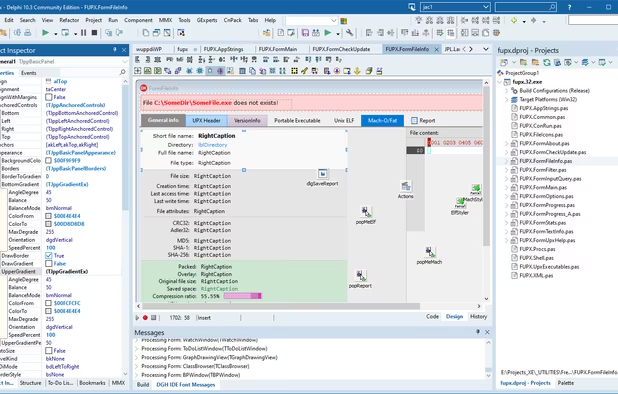
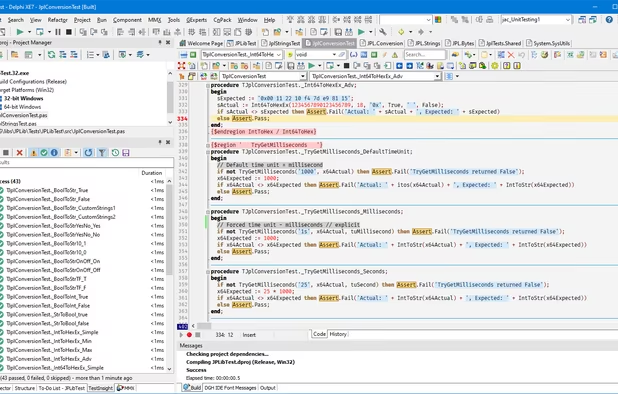
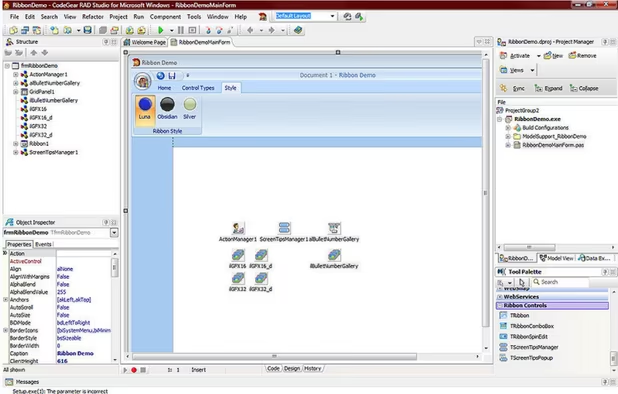
    Delphi 10.3 Rio - Visual designer
    Delphi XE7 - Unit testing
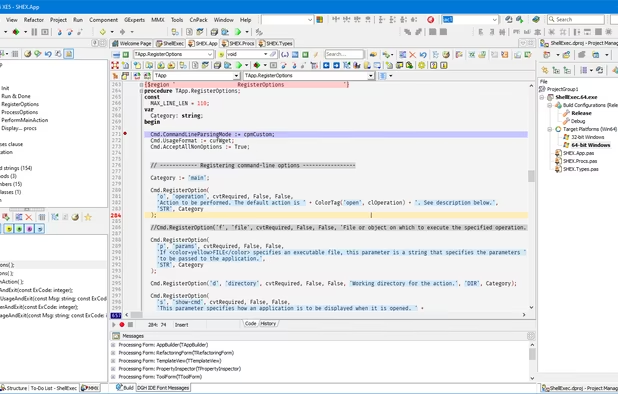
    Delphi XE5 - Console application development
    +2
    Delphi screenshot 3
    Xen MasterXen Master’s note

    Neither free nor open source. Big strikes against it right there.

  3. Ada icon
     Like

    Ada 2012 is the next generation of the world’s premier programming language for engineering safe, secure and reliable software.

    Cost / License

    • Free
    • Open Source

    Application type

    Platforms

    • Windows
    • Linux
    • BSD
    Ada screenshot 1
    Xen MasterXen Master’s note

    An imperative language from way back when. It's kinda fun to use, but with all things, learning c will give you the same experience and more practical skills.

Page 1 of 2

Ignore everything else on this list and learn these languages if you are a computer science enthusiast, in this order:

  1. c: Good for embedded systems in hardware, operating systems, and ubiquitous compiler support. You can even build a simple web-API framework using c. (see Beaker) and GTK to build desktop applications.
  2. lua: A super fast scripting language easily usable to extend what c can do by using it as an embedded scripting layer. Best timeline is where the web runs on Lua instead of JS.
  3. c++: Provides complex object-oriented abstractions alongside low-level performance.
  4. assembly: if you really want to get low level. Focus on ARM and x86.

If you want to see what a poorly designed low-level language with terrible dependency practices, an immature ecosystem, insane compile times, and a high level of internal complexity looks like, you can learn Rust too. At least your memory will be safety.

No comments so far, maybe you want to be first?