




Tailscale
83 likes
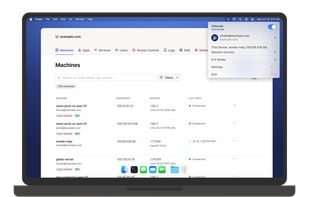
Private networks made easy. Connect all your devices using WireGuard, without the hassle. Tailscale makes it as easy as installing an app and signing in.

Cost / License
- Freemium (Subscription)
- Proprietary (BSD-3-Clause)
Application typeApplication types
Since
- Since 2020
GitHub
- GitHub stars: 9.5k



Features
Highlights All activities
Tailscale News & Activities
Recent News
- Paul published news article about Mullvad VPN

Recent activities








Open-Source Clankerkware
A list of open-source software containing clanker (LLM generated) code or endorses the usage of LLMs in other ways.
This list contains software that obviously accepts irresponsible coding practices or promotes LLM usage. I found these applications while searching for alternatives to previously used software that turned out to contain code generated by clankers.
Each of added applications have at least one link that points to a verifiable proof.
This list by no means is meant to cover all the software that contains code by not-so-intelligent tools and people using them but to serve as a reminder to myself about what I have already checked, so take this list with a bit of salt since software to be added to this list is evaluated quite naively — by looking for specific files in a project, specific keywords in pull requests and certain (co-)contributors.
Why having LLM generated code (and using generative tools in general) is bad?
Ethical reasons — such as illegally retrieved training material, underpaid workers that prepare the training data.
Impact on environment — increased fossil fuel usage to supply the needed electricity power, water usage in water scarce regions. This somewhat overlaps with the above.
Social impact – noise and light pollution in neighbourhoods near AI data centres, air pollution from diesel- or gas-powered turbines (also overlaps with the above), resource consumption by data centres drastically increases utility prices.
Impact on brain and thinking, reasoning — by offloading thinking and decision making to machines people are shooting in their foot (more like in their head) as this leads to brain rot. Less intelligent people are easier to control.
Even legal issues (especially in open-source software as it cannot be guaranteed that the “generated” code is not really just re-used, thus unknowingly violating the source license).
Inevitable enshittification — every software product from big technology eventually gets enshittified to maximize revenue. For users this could mean hidden or plain ads, biased opinions/information, privacy violations, increased prices for LLM based tools.
Burden on open-source software maintenance — LLM tools provide easier access to code contributions which often shifts the responsibility of checking code quality from developers to maintainers and reviewers. Digging through walls of merge request text and code generated by clankers takes valuable time that otherwise could be spent more meaningfully by fixing bugs and working on new features.
I will try to add links that back up the claims above, but it may take a while.
Of course, I see how and where generative tools could be helpful and sometimes I feel tempted to find an acceptable way to use them, but for now the direct and indirect costs far too much outweigh gains.
This list has its positive counterpart: Clanker-Free (Supposedly) Open-Source Software (not quite complete yet).
Also take a look at and give thumbs up to AI Slopfree Software Catalog which contains software dedicated against usage of LLMs.
Here are some tools that can make it easier to detect clankered software:
https://jacksonchen666.com/projects/ai-instructions-file-detector/ — a userscript;
slopscan.ava.pet — a web site/app for detecting presence of potential clanker-generated content in open-source software.


Windows stuff
A list with 48 apps by Tanath without a description.



Software I Love
🏆 = seriously impressed/impresses me
Official Links


Install from the command line
winget install -e --id Tailscale.Tailscalebrew install --cask tailscale-appbrew install tailscale
Developed by
 Tailscale Inc.
Licensing
Proprietary (BSD-3-Clause) and Freemium product.Pricing
Subscription ranging between $5 and $18 per month + free version with limited functionality.Written in
Rating
Average rating of 4.4Alternatives
82 alternatives listedBadge
Get an embeddable badge for TailscaleSupported Languages

AlternativeTo Categories
Security & Privacy, Network & Admin, DevelopmentApple AppStore
- Updated
- 4.4 avg rating
GitHub repository
- 9,464 Stars
- 602 Forks
- 1,045 Open Issues
- Updated


Comments and Reviews
We run Tailscale on our hypervisor host and on a couple of the servers behind it, mostly so admin access and one internal HTTP proxy never have to be exposed on a public port. tailscale up --ssh on a new box, one browser login, and it shows up on the tailnet with a stable 100.x address that survives reboots and IP changes. The thing to know: on a busy Docker host Tailscale adds its own iptables chains (ts-input, ts-forward), so when a container port mysteriously stops answering, those chains are one of the places to look before blaming Docker.
Tailscale is only an overlay network between devices in your tailnet. Ordinary browsing still goes out through your normal Internet connection.
Free, powerful - it's essentially oldschool Hamachi but modernized
Not sure how I ever lived without it. Securing our home servers and devices was always a pain, Tailscale made this process so simple and effective. Plex doesn't have to just be published to the outside world now when we travel.
Take a little bit of learning, but very configurable and management. I've used it at home (homelab) and at work (500person enterprise) with equal success.
very essential + has open-source control plane
Absolutely love it. Easily circumvents censorship in authoritarian countries.