Guddle is an AI-native Project Operating System for small and mid-sized teams who need real project governance without the weight — or the price — of enterprise PPM software.
Most project tools are generic task boards: you get lists and cards, but you rebuild the governance scaffolding by hand on every project. Guddle bakes the PRINCE2 method into the product itself — stages and stage tolerances, risk, issue and quality registers, exception reporting, the business case and a live project initiation document — so the discipline is there from day one, not bolted on afterwards.
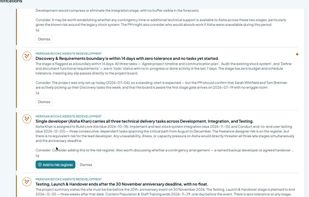
The AI layer is where Guddle earns its keep, and where it draws a hard line. It runs the admin nobody enjoys: it keeps registers current, drafts End Stage Reports and highlight reports, and prepares board briefings. Overnight it reviews your projects and surfaces what you'd otherwise miss — a slipping stage, a risk that's quietly escalated, a missing GDPR entry — and proposes the fix. But it never acts alone. Every AI suggestion waits for a person to approve or dismiss it. The principle is simple: AI does the admin, humans keep the governance. That trust boundary is the whole point.
Reports export as polished, board-ready PDFs carrying your own organisation's logo and branding — ideal for consultancies and fractional PMs who deliver governance under their own name. Clients and sponsors can be invited as free, read-only observers, so oversight never costs a seat.
Guddle is mobile-first, quick to set up, and connects to your own AI (bring-your-own-key), so the intelligence runs on your terms.
Best for: SMEs (10–200 people), project managers, PMO and fractional-PM consultancies, and any small team running structured or PRINCE2-style projects who've outgrown spreadsheets and generic boards but can't justify heavyweight enterprise PPM.









 Guddle

No comments or reviews, maybe you want to be first?