


gRPC
1 like
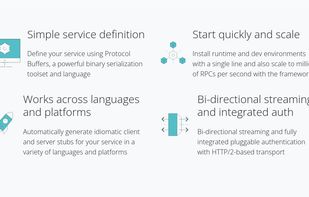
gRPC is a modern open source high performance Remote Procedure Call (RPC) framework that can run in any environment. It can efficiently connect services in and across data centers with pluggable support for load balancing, tracing, health checking and authentication.

Cost / License
- Free
- Open Source (Apache-2.0)
Platforms
- Self-Hosted

Features
Highlights All activities
gRPC News & Activities
Recent News
No news, maybe you know any news worth sharing?
Share a News Tip
Recent activities
- manduhcalderon liked gRPC
 Paul added gRPC as alternative to Resonance API Client


Developed by
 gRPC Authors
Licensing
Open Source (Apache-2.0) and Free product.Written in
Alternatives
52 alternatives listedBadge
Get an embeddable badge for gRPCSupported Languages


Xenmaster's 2026 Back-End Web Development Catalog
This list is an update to the list I created seven years ago https://alternativeto.net/lists/8010/back-end-web-development/ which focused on the server-side aspect of web applications. The web and development has changed a lot since then and rather than re-write history, decided to create a new list based on current patters and shifts in enterprise environments. These details are based on both what I've seen in the professional world as well as for hobbyists and web development enthusiasts who run their own projects. The general pattern for back-end development will cover three main points for each function:
Self Hosted Option
Third-Party Service Option
AWS Option
I also cover any GUI interfaces available for folks who don't want to interact with these services using a terminal.
In addition to consulting the documentation for each of the tools below, I'd like to shout out the following projects which also played a big part in informing the overall structure of this list:
Jeff Delaney's 100 Second Videos: https://www.youtube.com/@Fireship
Kamran Ahmed's Roadmaps: https://roadmap.sh
Stack Overflow's Developer Survey: https://survey.stackoverflow.co/2025/
The beginning of this list will cover some common languages used to build server-based APIs for web applications, including Python, Javascript, C#, and Go. Honorable mentions, some of which were from my original list, include the following:
Rails with Ruby: one of the best developer experiences but counterbalanced by terrible performance from a speed and efficiency perspective. This framework is still really popular in India.
Spring Boot with Java: A very common enterprise-based application framework and particularly popular in China. But it requires Java, which I wouldn't wish on anyone.
Laravel with PHP: PHP gets a lot of hate, but I used it back 20 years ago and am still fond if it. PHP is generally useful for Wordpress-based sites too. Has performance issues though since it is an interpreted language.
Phoenix with Elixir: Also a great developer experience and is very popular on the Stack Overflow survey. Only reason I can't recommend is because you will be learning Elixir just to use Phoenix because it isn't a language really used for anything else mainstream.
Note that I don't plan on covering anything AI related for the development process. Of Generative AI, wickedest of technological inventions, I shall neither speak nor give direction.
Update: 10-11-2026: The Deno team has announced they will no longer maintain their runtme after October 2027: https://deno.com/blog/cloudflare. I'll be removing all the references to this ecosystem since I don't want to encourage folks to buy into something that will be unsupported a year from now.
No comments or reviews, maybe you want to be first?