





Velum Privacy
2 likes
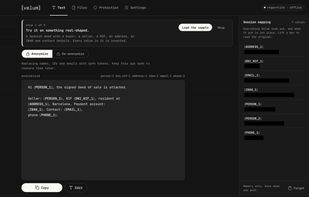
Masks personal data in text and files before it reaches ChatGPT, Claude or any AI, then restores it in the reply, running entirely on your own device.

Cost / License
- Freemium (Subscription)
- Proprietary
 EU
EUPlatforms
- Mac
- Google Chrome
- Jira
- Brave
- Confluence
- Mozilla Firefox
- Linux
- Arch Linux
- Ubuntu
- Debian


Features
Velum Privacy News & Activities
Highlights All activities
Recent activities
 mhrsntrk added Velum Privacy as alternative to Tritium
- reviewed Velum Privacy★★★★★
The company I work for don't allow me to use ChatGPT for my work because I handle sensitive data all the time. But thanks to this tool, I can mask all the sensitive information before!
- mhrsntrk updated Velum Privacy
- markfitz liked Velum Privacy
I like that privacy is built into the workflow rather than feeling like an additional complicated step. The product is easy to understand, and it gives teams more confidence when handling information they don't want exposed to AI tools.
- markfitz thinks Extensible by Plugins/Extensions is a important feature of Velum Privacy
- markfitz thinks Local-First is a important feature of Velum Privacy
- markfitz thinks Privacy focused is a important feature of Velum Privacy
- markfitz thinks Works Offline is a important feature of Velum Privacy
 mhrsntrk added Velum Privacy as alternative to Minimal eReader


Velum Privacy information
Developed by
 su.engineering
 Licensing
Proprietary and Freemium product.Pricing
Subscription that costs up to $149 per month + free version with limited functionality.Alternatives
31 alternatives listedBadge
Get an embeddable badge for Velum PrivacySupported Languages


Comments and Reviews
The company I work for don't allow me to use ChatGPT for my work because I handle sensitive data all the time. But thanks to this tool, I can mask all the sensitive information before!
I like that privacy is built into the workflow rather than feeling like an additional complicated step. The product is easy to understand, and it gives teams more confidence when handling information they don't want exposed to AI tools.