Tether Remote Desktop icon

Tether Remote Desktop

 Like

Open-source, self-hosted remote desktop and remote support for Windows and macOS. A TeamViewer/AnyDesk alternative on your own server, built on the RustDesk core.
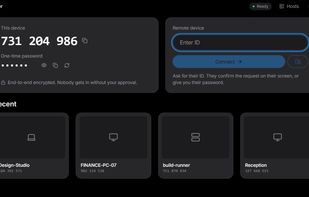
Tether Remote Desktop screenshot 1

Cost / License

Application type

Since

  • New

GitHub

  • GitHub stars: 1

Platforms

  • Windows
  • Mac
0likes
0articles
Save

Features

Properties

Features

Highlights All activities

Tether Remote Desktop News & Activities

Recent activities

Tether Remote Desktop information

AlternativeTo Category

Remote Work & Education

GitHub repository

  •  1 Star
  •  0 Forks
  •  0 Open Issues
  •   Updated  
View on GitHub
Tether Remote Desktop was added to AlternativeTo by Thomas-S on and this page was last updated .

No comments or reviews, maybe you want to be first?

Official Links

What is Tether Remote Desktop?

Why Tether Tether is for IT teams and support technicians who want remote access without a vendor's cloud in the middle. You run the relay; the apps talk only to it.

Private. Sessions are end-to-end encrypted between the two devices, and Tether refuses unencrypted sessions. The relay forwards ciphertext. What is protected and what is not: SECURITY.md, docs/encryption.md. Fast. 24–30 ms glass-to-glass at 2560×1440 and 57 fps on a GPU host, with hardware encoding and decoding. Method, numbers and a comparison with AnyDesk: docs/benchmarks.md. Works in corporate networks. Only outgoing TCP 443 (port 80 as fallback), through system proxies and TLS inspection. No open ports on the customer's side: docs/corporate-networks.md. Quick support without installing. TetherQS is one portable file for the customer: no installer, no admin rights. You can brand it: docs/quick-support.md. Hundreds of hosts. Tags, saved searches, bulk actions and a command palette: docs/advanced.md. Central management. Tether Manage signs policies and releases on the administrator's PC; the relay only serves them: docs/management.md. Also included: unattended access, file transfer, recording with consent, 2FA, signed updates with staged rollout, several relays with failover, Kubernetes, Grafana dashboards.