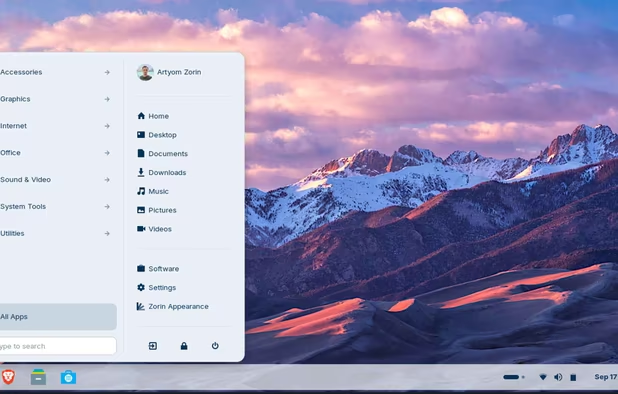
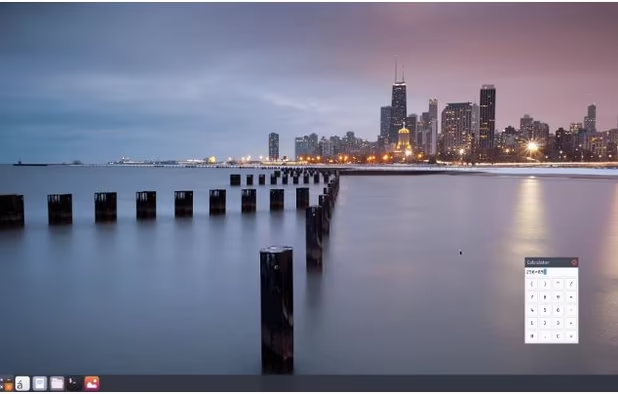
Lubuntu is described as 'Fast and lightweight operating system with a clean and easy-to-use user interface. It is a Linux system, that uses the minimal desktop LXDE/LXQT' and is a very popular Linux Distro in the os & utilities category. There are more than 100 alternatives to Lubuntu for a variety of platforms, including Linux, Self-Hosted, Windows, Mac and Raspberry Pi apps. The best Lubuntu alternative is Linux Mint, which is both free and Open Source. Other great apps like Lubuntu are Ubuntu, Fedora, Zorin OS and Manjaro Linux.


Chromium OS is an open-source project, used primarily by developers, that aims to build an operating system that provides a fast, simple, and more secure computing experience for people who spend most of their time on the web.


Ubuntu Budgie (previously budgie-remix) is an Ubuntu-based distribution featuring the Budgie desktop, originally developed by the Solus project. Written from scratch and integrating tightly with GNOME stack, Budgie focuses on simplicity and...


MenuetOS is an Operating System in development for the PC written entirely in 32/64 bit assembly language. Menuet64 is released under proprietary license and Menuet32 under GPL. Menuet supports 32/64 bit x86 assembly programming for smaller, faster and less resource hungry...


The unofficial successor of Antergos, RebornOS is an Arch-based distro that focuses on allowing the user to decide exactly how they want their system while making it easy for anyone to do so - both during installation and afterwards.


LXLE is a remastered version of Ubuntu/Lubuntu LTS releases, using the LXDE desktop interface. LXLE provides a complete drop in and go operating system coupled with style, speed and capability. It's light on resources and heavy on functions.


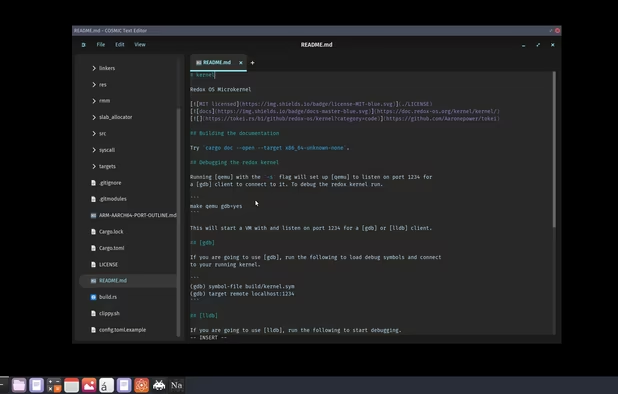
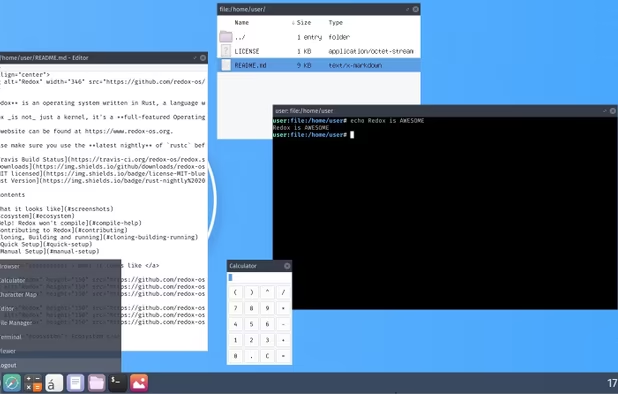
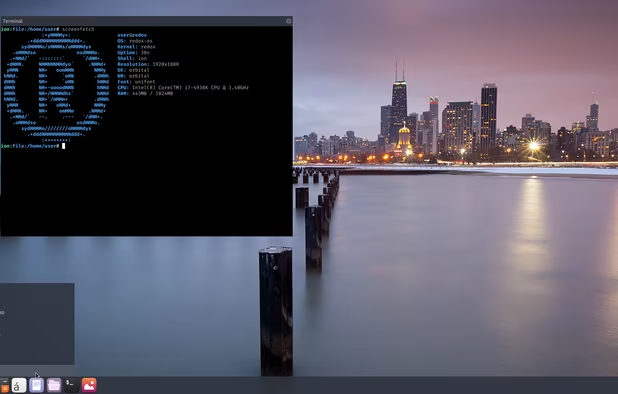
Redox is a Unix-like Operating System written in Rust, aiming to bring the innovations of Rust to a modern microkernel and full set of applications.


Knoppix is an operating system based on Debian designed to be run directly from a CD / DVD (Live CD) or a USB key (Live USB), one of the first of its kind for any operating system. When starting a program, it is loaded from the removable medium and decompressed into a RAM drive.
BunsenLabs Linux is a distribution offering a light-weight and easily customizable Openbox desktop. The current release is Helium, built on top of Debian (stable). The project is a community continuation of CrunchBang Linux.


Bedrock Linux is a meta Linux distribution which allows users to utilize features from other, typically mutually exclusive distributions. Essentially, users can mix-and-match components as desired. For example, one could have: