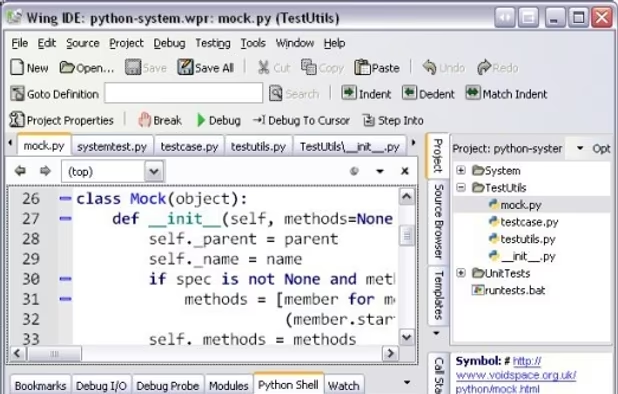
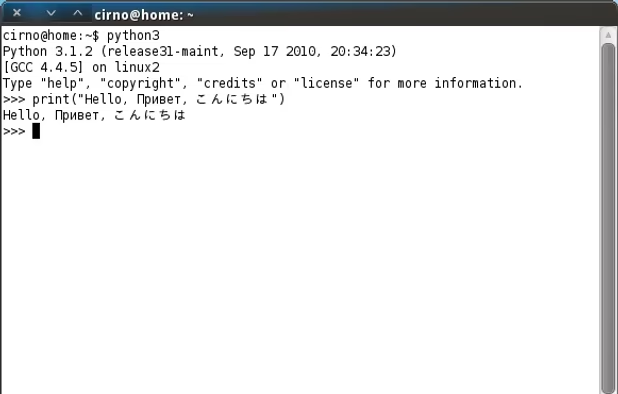
Python is an interpreted, interactive, object-oriented, extensible programming language. It provides an extraordinary combination of clarity and versatility, and is free and comprehensively ported.
 United States
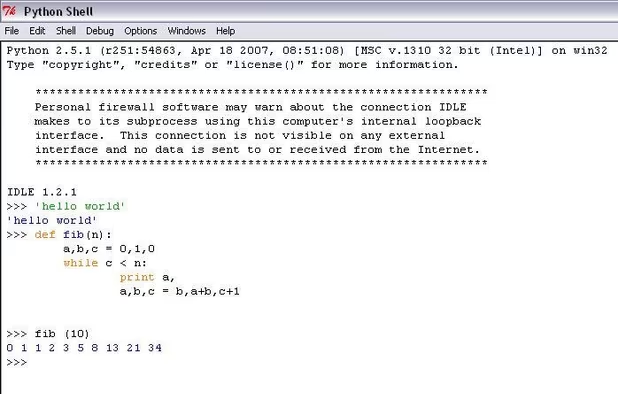



Apps similar to Go (Programming Language) include Python, which is free and open source. Other options are Java, Rust, C (programming language) and C++. You're spoiled for choice with Programming Languages like Go (Programming Language): we list more than 50 alternatives for Linux, Mac, Windows, the web and self-hosting.
Python is an interpreted, interactive, object-oriented, extensible programming language. It provides an extraordinary combination of clarity and versatility, and is free and comprehensively ported.
United States
Java is a general-purpose computer programming language that is concurrent, class-based, object-oriented, and specifically designed to have as few implementation dependencies as possible.
United States

Rust is a multi-paradigm, general-purpose programming language that emphasizes performance, type safety, and concurrency. It enforces memory safety—meaning that all references point to valid memory—without a garbage collector.
United States


C is a general-purpose programming language. It was created in the 1970s by Dennis Ritchie and remains very widely used and influential. By design, C's features cleanly reflect the capabilities of the targeted CPUs.
United States

C++ is a statically typed, free-form, multi-paradigm, compiled, general-purpose, powerful programming language. It is regarded as an intermediate-level language, as it comprises a combination of both high-level and low-level language features.

C# is a multi-paradigm programming language encompassing strong typing, imperative, declarative, functional, generic, object-oriented (class-based), and component-oriented programming disciplines.
United States
Lua is a powerful, fast, lightweight, embeddable scripting language.
Lua combines simple procedural syntax with powerful data description constructs based on associative arrays and extensible semantics. Lua is dynamically typed, runs by interpreting bytecode for a register-based.
 Brazil

Ruby is a dynamic, reflective, general purpose object-oriented programming language that combines syntax inspired by Perl with Smalltalk-like features. Ruby originated in Japan during the mid-1990s and was initially developed and designed by Yukihiro "Matz" Matsumoto.
 Japan


Perl is a high-level, general-purpose, interpreted, dynamic programming language with over 22 years of development.


Dart (originally called Dash) is a Web programming language developed by Google. It was unveiled at the GOTO conference in Aarhus, 2011 October 10-12. The goal of Dart is "ultimately to replace JavaScript as the lingua franca of web development on the open web platform.
United States


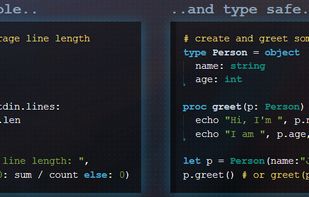
Nim is a statically typed, imperative programming language with a powerful macro system that tries to give the programmer ultimate power without compromises on runtime efficiency.
 Germany
 EU

Open-source programming language for developing iOS, macOS, watchOS, tvOS, and visionOS apps, featuring safety, speed, type inference, generics, native-code compilation, protocol-oriented design, memory management, Playgrounds, package manager, and Objective-C interoperability.
United States