A fast, friendly, functional language.
Cost / License
- Free
- Open Source
Application type
Platforms
- Mac
- Windows
- Linux
- BSD
- Rust


Apps similar to Go (Programming Language) include Python, which is free and open source. Other options are Java, Rust, C (programming language) and C++. You're spoiled for choice with Programming Languages like Go (Programming Language): we list more than 50 alternatives for Linux, Mac, Windows, the web and self-hosting.
A fast, friendly, functional language.

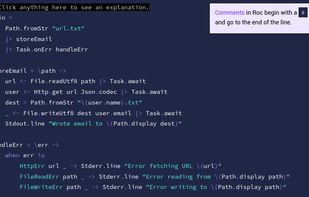
A friendly language for building type-safe, scalable systems.




The Objective-C language is a simple computer language designed to enable sophisticated object-oriented programming. Objective-C is defined as a small but powerful set of extensions to the standard ANSI C language.


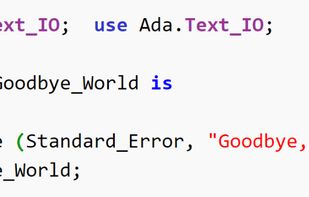
Ada 2012 is the next generation of the world’s premier programming language for engineering safe, secure and reliable software.


C3 is a programming language that builds on the syntax and semantics of the C language, with the goal of evolving it while still retaining familiarity for C programmers.


A community fork of a language named after a plant fungus. All of the memory-safe features you love, now with 100% less bureaucracy.


Mojo is a specialized artificial intelligence (AI) programming language developed by Modular Inc. First released in May 2023, it is designed to become a superset of Python, with the performance of C.
 United States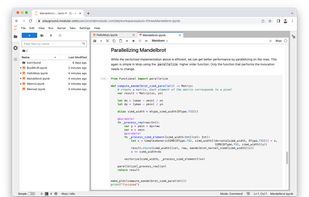


The Odin programming language is fast, concise, readable, pragmatic and open sourced. It is designed with the intent of replacing C with the following goals:


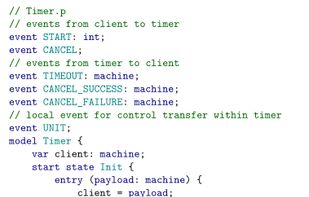
P is a programming language where the system is described as a collection of interacting state machines communicating with each other through events.


Hare is a systems programming language designed to be simple, stable, and robust. Hare uses a static type system, manual memory management, and a minimal runtime. It is well-suited to writing operating systems, system tools, compilers, networking software, and other low-level...


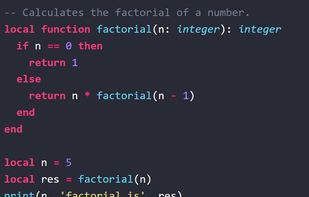
Nelua is a systems programming language for performance sensitive applications, like real-time applications and game engines. Its syntax and semantics are similar to Lua, but its garbage collection is optional, it provides optional type notations, and it is free from an...