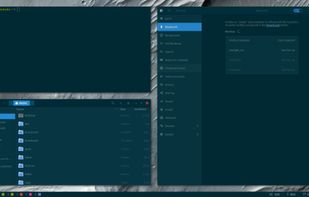
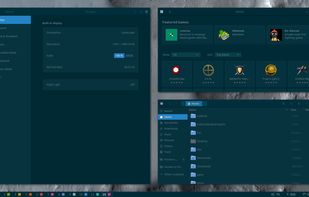
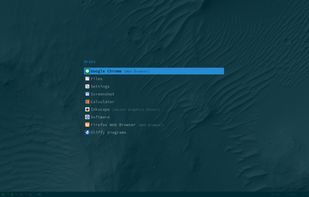
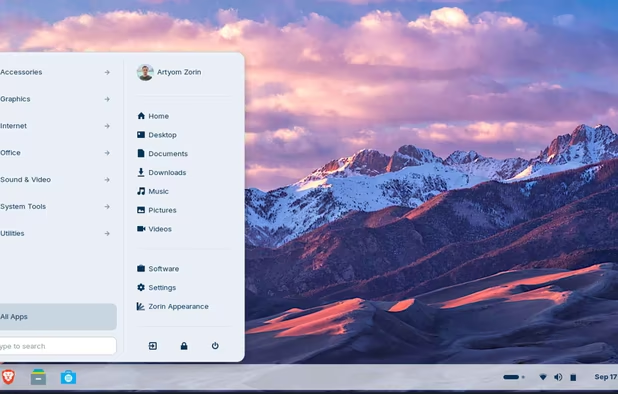
Netrunner is an Debian -based distribution with a focus on desktop computing. It boasts a carefully tuned KDE Plasma Plasma 5 desktop.


antiX is described as 'Fast, lightweight and easy to install systemd-free Linux live CD distribution based on Debian Stable for Intel-AMD x86 compatible systems' and is a Linux Distro in the os & utilities category. There are more than 100 alternatives to antiX for a variety of platforms, including Linux, Self-Hosted, BSD, Windows and Mac apps. The best antiX alternative is Linux Mint, which is both free and Open Source. Other great apps like antiX are Ubuntu, Debian, Fedora and Arch Linux.
Netrunner is an Debian -based distribution with a focus on desktop computing. It boasts a carefully tuned KDE Plasma Plasma 5 desktop.


BunsenLabs Linux is a distribution offering a light-weight and easily customizable Openbox desktop. The current release is Helium, built on top of Debian (stable). The project is a community continuation of CrunchBang Linux.


Featuring Linux Mint’s Cinnamon Desktop with Ubuntu at the core, packed fast and full of features, here is the most traditionally modern desktop you will ever love.


AV Linux is a versatile, MX Linux-based distribution featuring a large collection of audio and video production software.


NixBSD is an attempt to make a reproducible and declarable BSD, based on NixOS. Although theoretically much of this work could be copied to build other BSDs, all work thus far has been focused on building a FreeBSD distribution.
Oracle Solaris is the #1 enterprise OS, delivering breakthrough high-availability, security, efficiency, and industry-leading scalability/performance.

The unofficial successor of Antergos, RebornOS is an Arch-based distro that focuses on allowing the user to decide exactly how they want their system while making it easy for anyone to do so - both during installation and afterwards.


Serenity is a graphical 32-bit Unix-like operating system with 90s aesthetics and built for x86 systems.


Bedrock Linux is a meta Linux distribution which allows users to utilize features from other, typically mutually exclusive distributions. Essentially, users can mix-and-match components as desired. For example, one could have:
With the release of GNOME 3.38.0, we started producing and distributing bootable VM images for debugging and testing features before they hit any distribution repository. We called the images GNOME OS. The name itself is not new, and what it stands for has not changed...