



Brave launches Email Aliases and new Brave Accounts that keep passwords off its servers
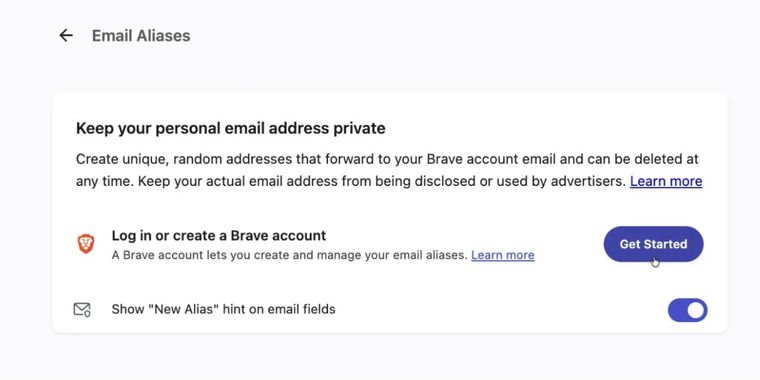
Brave has recently released desktop version 1.94, introducing , a new privacy feature that lets users create unique email addresses for websites without exposing their primary address, similar to alternatives like SimpleLogin or the recently discussed Apple Hide My Email. Messages sent to an alias are forwarded to the user’s main inbox, and aliases can be deactivated if they begin receiving unwanted mail. The initial release includes up to five free aliases, which can be generated directly from email fields through autofill or the right click menu and managed from Brave’s settings.
Using a different alias for each site can also reduce tracking based on email addresses. Companies can upload customer emails to advertising platforms for server side profile matching, a practice that browser based tracker blocking and cookie partitioning cannot prevent. The feature is built on Brave Accounts, a new account system separate from Brave Premium that is expected to support more Brave services over time. Brave Accounts uses OPAQUE, a password authentication protocol that lets users sign in without transmitting their password to Brave’s servers, although the company notes that risks such as phishing and weak passwords still remain.
Brave stores primary email addresses and aliases encrypted at rest, processes forwarded messages for spam and malware, and says emails are deleted from its servers within seconds after delivery. Mobile support and a paid Premium tier are planned, while Brave warns that some forwarded messages may initially be incorrectly routed to spam folders.





- Web Browser
- Free
- Open Source
Related news
External links
- Brave Accounts: your password never leaves your device, everBrave Blog • Official source
- Brave launches Email Aliases to keep your personal email address private from websitesBrave Blog • Official source
Comments
Let’s if this is going to be at the Same level as Ad guard Mail providing protection against unknown threats hackers and governments or is it going to be more capable at blocking them entirely only time will tell