


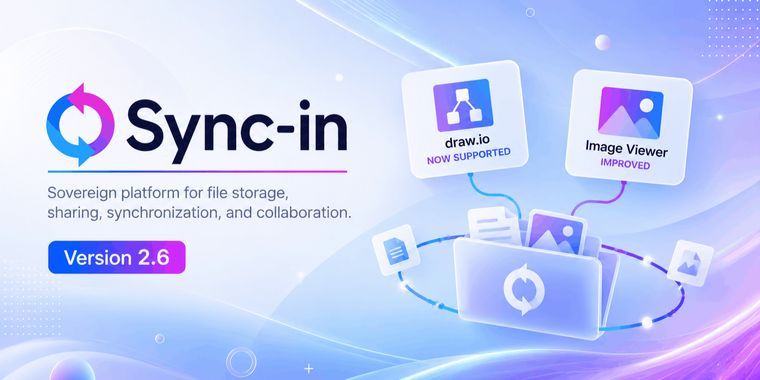

Sync-in 2.6 brings draw.io integration, a redesigned image viewer and unified search modes
Sync-in has released version 2.6 of its collaborative platform, headlined by the integration of draw.io, the popular open-source diagram editor. According to the company's official announcement, this addition represents a much-requested feature that completes the platform's suite of editing tools. The move aligns with Sync-in's stated goal of building a comprehensive, open collaborative environment free from dependency on proprietary software solutions. Alongside the draw.io integration, the update delivers a redesigned document creation dialog that now organizes folders, text documents, office files, and diagrams into distinct categories, with newly created items opening immediately after generation.
The release also introduces several usability enhancements designed to streamline daily workflows. The redesigned image viewer includes gallery mode for browsing all images within a folder, while unified search now offers both local filtering and global search capabilities accessible from the navigation bar. User preferences for display, editing, and notifications are now persisted across sessions, allowing quick access menus to be customized individually. Behind the scenes, Sync-in reports approximately 10% reduced memory usage alongside optimized database health checks and backend improvements including stricter validation using Zod and migration to ESM JavaScript standards.
Security receives notable attention in version 2.6, with consistent protection against abusive requests now extended across authentication, WebDAV, synchronization, and public link services. Password-attempt locks feature automatic expiration, while LDAP identity handling and role management have been strengthened. The company also announced that Sync-in desktop 2.3 is forthcoming, promising faster synchronization engines, configurable server notifications, deletion-safe sync options, and Catalan language support. The entire 2.6 interface is already available in Catalan, marking another step in the platform's localization efforts.




- File Sync Tool
- Free
- Open Source
Related news
External links
- Sync-in 2.6 - draw.ioSync-in • Official source
No comments so far, maybe you want to be first?