


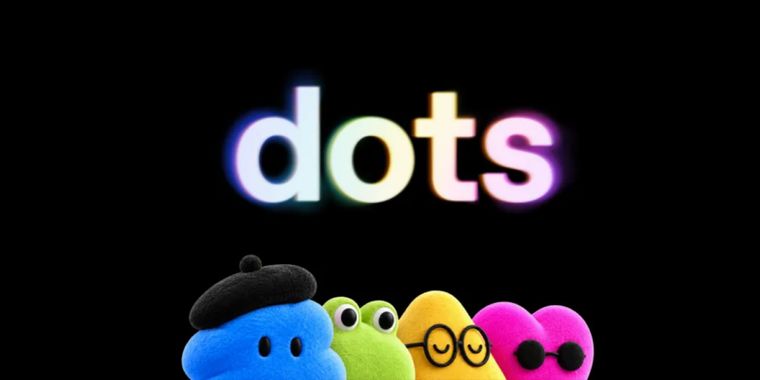

OpenAI launches GPT-6.1 Sol and Dots, its new always-on AI agents that work independently
OpenAI announced more than 20 updates across its models, ChatGPT, Codex, APIs, and enterprise products during DevDay 2026. The biggest model release was GPT-6.1 Sol, an upgraded version of GPT-6 Sol for agentic coding, computer use, and long-running workflows. OpenAI says it approaches GPT-6 Astra performance at about one-fifth the token cost, matched Astra on DeepSWE 1.1, improved OSWorld 2.0 performance by 7%, and reduced factual errors from 11.4% to 7.7%. It costs $2 per million input tokens and $10 per million output tokens, with a 1 million-token context window. An Ultrafast version for Codex is also planned.
OpenAI also introduced Dots, always-on AI agents that can keep working independently instead of waiting for another prompt, closely paralleling Meta’s recently launched Muse. Dots can run 24/7, learn from user feedback, operate their own computer and browser, and connect to more than 4,000 services. They are powered by GPT-6 Astra and will eventually support Slack, other messaging apps, and voice interaction. OpenAI also announced Spaces, a collaborative workspace for Dots, documents, presentations, Living Pages, and shared content management.
Other announcements included ChatGPT Pro 500, a new $500 monthly tier with Astra Ultrafast, and Sign in with ChatGPT support for using paid plan capacity across 16 third-party tools. Codex gained cloud environments for long-running tasks, voice controls, an /agents view, and Codex Security Cloud for scanning GitHub repositories and generating patches. OpenAI also expanded the Agents API with computer use and multi-agent capabilities, introduced the Luna-powered Decisions API for tasks such as classification and routing, added @ChatGPT support in Slack and Microsoft Teams, and previewed Private Inference for customers with stricter privacy requirements.





- AI Chatbot
- Freemium
- Proprietary
Other apps mentioned in this article

Related news
External links
- DevDay 2026 RecapOpenAI Blog • Official source
- Introducing dotsOpenAI Blog • Official source
- Introducing GPT-6.1 SolOpenAI Blog • Official source
Comments
A soul is one thing it doesn't have
Yep, "Dots" is a (Linux) virtual machine stored at OpenAI (i.e. one of the giant datacenters owned by Microsoft and al, or leased by Oracle) that is an agent receiving commands and doing stuff, like Muse, and would be the same security or privacy hell than Muse, where you whole unmetered life is no longer confined to your own computer but completely exposed (using services you've connected) to a company desperate to get new data to train its models. Many people have great fun using Muse to exploit (vibe-coded) security vulnerabilities and run cryptominers, bittorrent clients and botnets, at Meta's expenses. But for OpenAI, it's at Microsoft and Nvidia expenses. But it's only wrong when it's Russian hackers, not when it's trillion dollar companies.