The Best Free WordPress AlternativesTop Blog Publishing & CMS Tools like WordPress

The best free alternative to WordPress is Drupal, which is also Open Source. If that doesn't suit you, our users have ranked more than 100 alternatives to WordPress and loads of them is free so hopefully you can find a suitable replacement. Other interesting free alternatives to WordPress are Joomla, Ghost, Grav and Blogger.

filter to find the best alternatives

WordPress alternatives are mainly CMS Tools, but if you're looking for Blog Publishing Tools or Website Builders you can filter on that. Other popular filters include Open Source, Free, .NET Framework, Website Builder, Linux, Self-Hosted + Open Source and Self-Hosted. You can also filter by region, for example EU-based alternatives if you prefer software developed in the European Union. These are just examples - use the filter bar below to find more specific alternatives to WordPress.
Copy a direct link to this comment to your clipboard
WordPress alternatives page was last updated

Alternatives list

  1. Drupal icon
     494 likes

    Drupal is a free and open source CMS that has been created “by developers for developers”, and is therefore slightly more complicated to learn than a solution like Wix or WordPress. It's intended for an audience with technical skills, which is why it is perhaps less popular. This drawback can also be an advantage: thanks to the great flexibility of Drupal, it is possible to obtain much more advanced results thanks to more in-depth functionality. And like WordPress, it can also be extended with thousands of themes and modules.

    211 Drupal alternatives

    Cost / License

    Application type

    Platforms

    • Self-Hosted
    • PHP
     
    |
    8
  2. Joomla icon
     353 likes

    Joomla is another free and open source popular CMS. It's a powerful, versatile, and flexible platform with a large community of users and developers. It is known to be more accessible than Drupal, but more complex than WordPress. Like the other two, it can be extended with themes and extensions. Joomla still requires some technical skills and is primarily intended for developers.

    209 Joomla alternatives

    Cost / License

    Application types

    Platforms

    • Self-Hosted
    • PHP
     
    |
    3
  3. Ghost icon
     259 likes

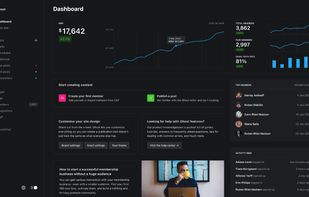
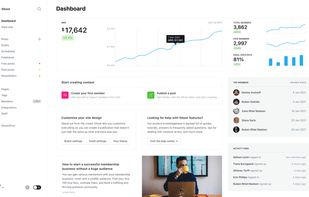
    Launched in 2013, Ghost is a modern blogging platform that you can self-host or pay for a hosted version (a bit like WordPress). But unlike the three CMS mentioned above, it's not based on PHP but on NodeJS, which can be a good thing for JavaScript developers. Ghost has a very sleek interface and offers useful tools like subscriptions, memberships, analytics, and integrations to easily grow your audience. You can also download beautiful themes from their marketplace to speed up the process of launching your website.

    280 Ghost alternatives

    Cost / License

    • Free Personal
    • Open Source (MIT)

    Application types

    Platforms

    • Online
    • Self-Hosted
    • Cloudron
    • Node.JS
     
    |
    1
  4. Grav icon
     138 likes

    Grav is a powerful and easy to use open source CMS written in PHP and based on the Symfony web application framework. Compared to other content management systems, it is a fast, simple and flexible file-based platform. This means that Grav doesn't use a database like MySQL or MongoDB, but stores all the information in YAML files. This also means that the learning curve is pretty straightforward, there are less security risks, and the websites are usually pretty fast. There's also a marketplace with themes and plugins, but don't expect to see as many as for WordPress, Joomla or Drupal.

    191 Grav alternatives

    Cost / License

    • Free
    • Open Source

    Application type

    Platforms

    • Self-Hosted
    • Cloudron
     
    |
    6
  5. Blogger icon
     227 likes

    Yes, the famous Blogger is still alive! Launched in 1999, and bought in 2003 by Google, it's the veteran of this list. It's a free blogging platform that offers most of the features you would need for blogging: a commenting system, built-in social features, ease of use, templates, the ability to use your own domain name… It's more limited than WordPress, but if what you're looking for is a simple solution to publish blog posts, this might be a good fit for you.

    201 Blogger alternatives

    Cost / License

    • Free
    • Proprietary

    Application type

    Platforms

    • Online
    • Android
    • Chrome OS
    • Android Tablet
     
    |
    3
  6. Medium icon
     183 likes

    Medium is a new place on the Internet where people share ideas and stories that are longer than 140 characters and not just for friends. It’s designed for little stories that make your day better and manifestos that change the world.

    137 Medium alternatives

    Cost / License

    • Freemium
    • Proprietary

    Platforms

    • Online
    • Android
    • iPhone
    • Android Tablet
    • iPad
     
    |
    4
  7. Jekyll icon
     127 likes

    Jekyll is a static site generator (SSG) created in 2008 by Tom Preston-Werner, the founder of GitHub. It's coded in Ruby and requires NodeJS. It's very different from WordPress on many points. For starters, it's a static site generator, which means it takes your text and generates static HTML pages for your site (with no database).

    Like Grav, it's pretty fast and simple to use, but it requires a bit more technical knowledge as you don't have access to an admin dashboard to manage your website. One advantage, though, is that you can use the free hosting provided by GitHub Pages with Jekyll.

    135 Jekyll alternatives

    Cost / License

    • Free
    • Open Source (MIT)

    Platforms

    • Mac
    • Windows
    • Linux
    • Self-Hosted
     
  8. Hugo icon
     93 likes

    Hugo is a general-purpose website framework for generating static web pages. Hugo flexibly works with many formats and is ideal for blogs, docs, portfolios and much more.

    109 Hugo alternatives

    Cost / License

    Platforms

    • Mac
    • Windows
    • Linux
    • Self-Hosted
     
  9. Webflow icon
     89 likes

    Build custom websites using Webflow's platform with HTML, CSS, and JavaScript. Design, animate, collaborate, and host responsive sites, generating clean code. Users enjoy CMS integration for content, SEO control, and globalized experiences. Transform unstyled elements into reusable components.

    260 Webflow alternatives

    Cost / License

    • Freemium
    • Proprietary

    Application type

    Platforms

    • Online
    • Software as a Service (SaaS)
     
  10. Bear Blog icon
     45 likes

    Privacy-first, no-nonsense, super-fast blogging. No trackers, no JavaScript, no stylesheets. Just your words.

    89 Bear Blog alternatives

    Cost / License

    • Freemium
    • Proprietary (MIT)

    Application type

    Platforms

    • Online
     
  11. ProcessWire icon
     165 likes

    ProcessWire is a free and open source content management framework (CMF) and content management system (CMS). The backend is clean and structured for easy handling. This tool gives you all the freedom you need to design your website. It is not as well known as the giant WordPress or its competitors Joomla and Drupal, but this lightweight software stands out from the competition with certain advantages (ease of use, security, stable API, page templates…).

    Cost / License

    • Free
    • Open Source

    Application types

    Platforms

    • Mac
    • Windows
    • Linux
    • Online
    • Self-Hosted
    • PHP
     
  12. Frappe Builder icon
     14 likes

    Frappe Builder is an open-source low-code website builder built on the Frappe Framework, designed for simplicity, speed, and flexibility. Craft beautiful websites effortlessly with an intuitive visual builder.

    34 Frappe Builder alternatives

    Cost / License

    Application type

    Platforms

    • Online
    • Self-Hosted
    • Linux
    • Docker
     
12 of 98 WordPress alternatives