
Tetiva icon
Tetiva icon

Tetiva

Tetiva is a desktop API client for HTTP, gRPC, GraphQL and WebSocket. It is built with Go and Wails on the system web view rather than Electron, so the download is around 30 MB.
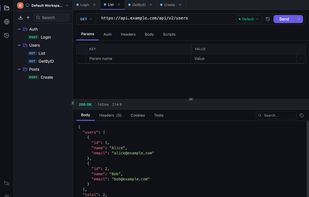
HTTP request in a collection with the JSON response

Cost / License

  • Freemium (Subscription)
  • Open Source (MIT)

Platforms

  • Mac
  • Windows
  • Linux  .deb packages and an apt repository for Ubuntu 22.04+ and Debian 12+ (amd64, arm64)
1like
0articles
Save

Features

Properties

  1.  Lightweight

Features

  1.  Ad-free
  2.  No registration required
  3.  API Testing
  4.  GraphQL

Tetiva News & Activities

Highlights All activities

Recent activities

Tetiva information

  • Developed by

    Tetiva
  • Licensing

    Open Source (MIT) and Freemium product.
  • Pricing

    Subscription ranging between $7 and $39 per month + free version with limited functionality.
  • Written in

  • Alternatives

    12 alternatives listed
  • Badge

    Get an embeddable badge for Tetiva
  • Supported Languages

    • English
    • Russian

AlternativeTo Category

Development

GitHub repository

  •  171 Stars
  •  0 Forks
  •  0 Open Issues
  •   Updated  
View on GitHub
Tetiva was added to AlternativeTo by Saveliy Yudin on and this page was last updated .

No comments or reviews, maybe you want to be first?

Official Links

What is Tetiva?

Tetiva is a desktop API client for HTTP, gRPC, GraphQL and WebSocket. It is built with Go and Wails on the system web view rather than Electron, so the download is around 30 MB.

Requests live in collections with folders, environments and variables. Every response goes to history, where two runs of the same request can be compared side by side. gRPC works through server reflection or local .proto files, with example messages generated from the schema; unary calls are supported today. Pre-request and post-response scripts run in a sandboxed JavaScript engine with no file or network access and support a subset of Postman's pm.* API.

Postman v2.1 collections and environments import directly, and so do cURL commands. Collections export back to the Postman format, and any request can be copied as cURL, Python, JavaScript, Go, Java, C# or PHP code.

No account is required. Everything is stored locally in a single SQLite file, the app works offline, and the client sends no usage analytics. A built-in MCP server, off by default, lets AI agents such as Claude Code read and run your saved requests.

Optional cloud sync keeps collections in step across devices in real time. The free plan covers two devices; paid plans add shared team workspaces, organizations and roles. Collections can also be published as public read-only documentation pages.

The client is open source under the MIT license and runs on macOS (universal build), Windows (x64 and ARM64) and Linux (.deb packages and an apt repository). The interface is available in English and Russian.