Tabletist is a fast, native database client for PostgreSQL, MySQL, SQLite and BigQuery. It is written in Rust and draws its own window, so there is no browser inside. It runs on Linux (Omarchy and Hyprland first), macOS and Windows. BigQuery connections open read-only: browse, filter and run SELECTs.
It looks at home on each platform. On macOS it has a macOS look in IBM Plex. On Linux it has the Omarchy look: square, keyboard first, with vim keys and the desktop's monospace font throughout. It follows the Omarchy theme live on Omarchy, and the system's light or dark setting elsewhere.
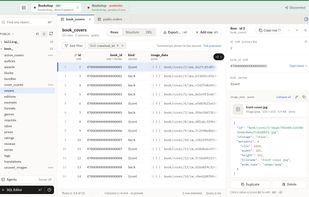
Saved connections are tagged with their environment (local, dev, staging, production). It connects directly, over TLS, or through SSH tunnels with a password, a key file or your agent. Passwords live in the system keyring, or are asked for when you connect. Tables open in a data grid with sorting, filters and paging done by the server, a row panel that shows every field in full, and Structure and DDL views. Each connection has a SQL editor with completion, a formatter, vim keys if you want them, a row limit and a timeout.
It is careful with production. A production connection opens read-only unless you turn that off. Edits stay pending until you save, and Review SQL shows the statements a save will run before it runs them. A save is one transaction and never overwrites a row someone else changed: it writes nothing and shows what you loaded, what the server holds now and your values side by side. A save to production asks first, with the statements on screen.
Coding agents such as Claude Code and Cursor can read the databases you allow, over MCP. They only read: every query runs in a read-only transaction that is rolled back. The connection's password stays in the system keyring and never reaches the agent. You can hide tables, mask columns, and read a log of every call.
To look around without a database of your own, start it with --demo: it opens a small sample SQLite database in a throwaway folder and never touches your saved connections or your keyring.
Tabletist is free and open source under the MIT license.
What it does not do yet: SSH tunnels do not go through ProxyJump or ProxyCommand. Binary values, values over 256 KiB, views and tables without a primary key or unique index cannot be edited. Agents can read but not write. The app is in English only. The AUR packages are not published yet.








 Fla added Tabletist as alternative to MySQL Workbench, DbGate and Valentina Studio
 Igor-Alexandrov added Tabletist as alternative to TablePlus, DBeaver, Beekeeper studio, DataGrip and 5 more



 Igor Alexandrov




No comments or reviews, maybe you want to be first?