


You can think of Neo4j as a high-performance graph engine with all the features of a mature and robust database.
Cost / License
- Free
- Open Source
Since
- Since 2012
 United States


+1





Sites and apps similar to Stardog Cloud include neo4j, which is free and open source. Other options are ArangoDB, Titan Database, QLever and Blazegraph. You can choose from more than 10 Business Intelligence Tools like Stardog Cloud for Linux, Mac, Windows and self-hosting.
You can think of Neo4j as a high-performance graph engine with all the features of a mature and robust database.
United States
ArangoDB database is an open-source NoSQL solution with a flexible data model for documents, graphs, and key-values.
 Germany
 EU


Titan is a scalable graph database optimized for storing and querying graphs containing hundreds of billions of vertices and edges distributed across a multi-machine cluster. Titan is a transactional database that can support thousands of concurrent users executing complex graph...


Very fast SPARQL Engine, which can handle very large knowledge graphs, offers context-sensitive autocompletion for SPARQL queries, and allows combination with text search.
GermanyEU


SPARQL and Gremlin compatible graph database that supports 50 million+ triples and powers Wikidata and Wikibase


Nebula Graph is an open-source graph database capable of hosting super large-scale graphs with billions of vertices (nodes) and trillions of edges, with milliseconds of latency. It delivers enterprise-grade high performance to simplify the most complex data sets imaginable into...


The Document-Graph database supports SQL and Native Queries, asynchronous commands, intents, and much more.



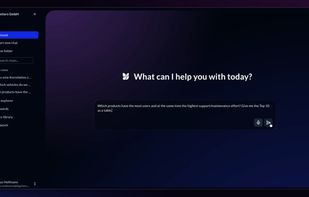
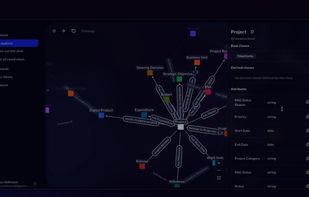
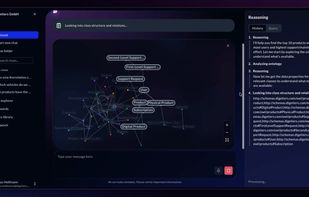
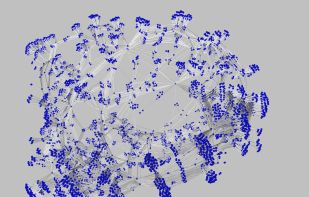
Consolidates diverse enterprise sources and business logic into a machine-readable graph providing federated data integration, ontology-based modeling, governance tools, transparent AI-driven querying, and reusable knowledge products for analytics, BI, and application interoperability.
GermanyEU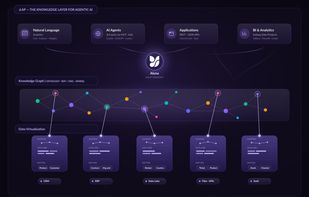


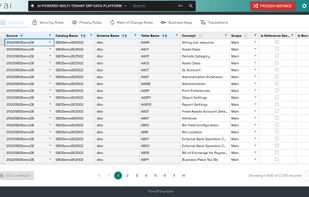
AI-driven platform that profiles source metadata and data to identify business entities, keys and relationships across systems. It produces Data Vault models with hubs, links and satellites, or semantic models for enterprise knowledge graphs, all with source lineage.
GermanyEU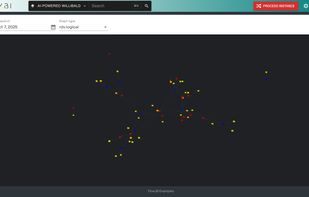


Timbr is an ontology-based semantic layer used by leading enterprises to make faster, better decisions with AI-ready knowledge. It transforms fragmented structured data into a unified, SQL-queryable knowledge graph that makes relationships, metrics, and business context...


 China


