
Flow.BI icon
Flow.BI icon

Flow.BI

 Like

AI-driven platform that profiles source metadata and data to identify business entities, keys and relationships across systems. It produces Data Vault models with hubs, links and satellites, or semantic models for enterprise knowledge graphs, all with source lineage.
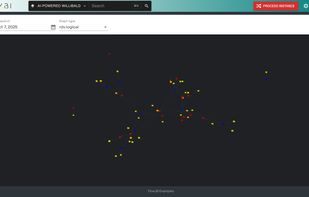
A generated Data Vault model in the 3d graph viewer.

Cost / License

  • Usage-based
  • Proprietary

Since

  • Since 2024

Platforms

  • Online  AWS, Azure, Google Cloud
0likes
0articles
Save

Features

Highlights All activities

Flow.BI News & Activities

Recent activities

Flow.BI information

  • Developed by

    DE flagFlow.BI GmbH
  • First released

    2024
  • Licensing

    Proprietary and Commercial product.
  • Pricing

    Usage-based pricing (pay per credit or per use).
  • Alternatives

    15 alternatives listed
  • Badge

    Get an embeddable badge for Flow.BI
  • Supported Languages

    • English

AlternativeTo Category

Development
Flow.BI was added to AlternativeTo by molschimke on and this page was last updated . Flow.BI is sometimes referred to as Flow.BI for Data Vault, Flow.BI for Knowledge Graphs. 

No comments or reviews, maybe you want to be first?

Official Links

What is Flow.BI?

Flow.BI is an AI-driven data modeling platform that analyzes data from multiple source systems and generates an integrated enterprise data model. It identifies business entities and the relationships between them across sources, giving data teams a consistent model of the business instead of one assembled by hand.

From the same analysis, Flow.BI can produce different outputs depending on the project: a Raw Data Vault model with hubs, links and satellites for data warehousing, or a semantic model and enterprise knowledge graph that can provide structured context for analytics, AI assistants and GraphRAG applications. Generated models come with documentation and traceability back to the source metadata.

Flow.BI is aimed at data architects, data engineers and knowledge engineers working on new data warehouses, the redesign of existing models or the onboarding of additional sources. The generated models are meant to be reviewed and refined with business experts, and the platform is offered together with a network of consulting and software partners.