


runlocal
1 like
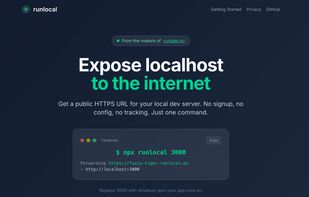
Expose localhost to the internet Get a public HTTPS URL for your local dev server. No signup, no config, no tracking. Just one command.

Cost / License
- Free
- Open Source (MIT)
Application typeApplication types
Since
- Since 2026
GitHub
- GitHub stars: 1


Features
Highlights All activities
runlocal News & Activities
Recent activities
- filipebarroso liked runlocal
 Seawise-io-Admin added runlocal as alternative to Seawise.io
 duanlab added runlocal as alternative to NPS Enhanced
- Paul updated runlocal
- gautema added runlocal
 gautema added runlocal as alternative to Webhook Relay, Expose, Loophole, zrok and 12 more


Developed by
 runlater-eu
Licensing
Open Source (MIT) and Free product.Written in
Alternatives
19 alternatives listedBadge
Get an embeddable badge for runlocalSupported Languages

AlternativeTo Categories
Security & Privacy, Development, Network & AdminGitHub repository
- 1 Star
- 0 Forks
- 1 Open Issue
- Updated


No comments or reviews, maybe you want to be first?