OpenClaw Alternatives
OpenClaw is described as 'Personal AI assistant operating locally, supporting popular chat apps, additional channels, multi-OS speech and listening, and a live user-managed Canvas' and is a popular AI Chatbot in the office & productivity category. There are more than 100 alternatives to OpenClaw for a variety of platforms, including Web-based, Mac, Windows, Linux and Android apps. The best OpenClaw alternative is Manus, which is free. Other great apps like OpenClaw are Kimi, NanoClaw, Goose OSS and Hermes Agent.
filter to find the best alternatives
Alternatives list
- 101 Reins alternatives
Empowering LLM researchers and hobbyists with seamless control over self-hosted models. Connect remotely, customize prompts, manage chats, and fine-tune configurations. All in one intuitive app.


+9
LlamaGPT is a chatbot that provides a ChatGPT-like experience, with no data leaving your device.


Complete LLM chatbot implementation, offering tokenization, pretraining, finetuning, evaluation, inference, and a simple web UI. Runs on a single 8xH100 node, features a hackable codebase, dependency-lite design, and automates the full workflow via scripts.

nanochat vs OpenClaw Comments

- nanochat is Free and Open Source
- nanochat is Minimalistic and Lightweight
- 109 Moshi alternatives
Moshi is an innovative AI chatbot with advanced voice recognition, real-time interaction, and dual audio streams, setting up a new standard for voice-based chatbots.


+1
- 56 Skales alternatives
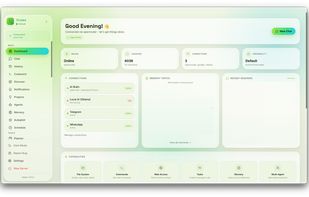
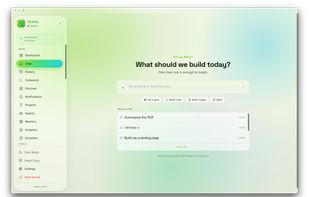
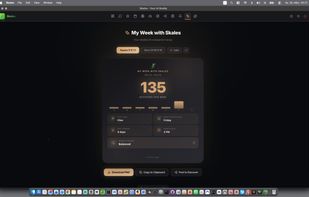
Privacy-first local AI agent automates web and app workflows without cloud reliance, installs in 30 seconds, supports local and API-driven models, features browser automation, self-coding Node.js tools, native integrations, and stores all data locally.
Cost / License
- Free
- Open Source
Platforms
- Mac
- Windows
- Linux
- Android


+4
- 235 Backyard AI alternatives
Run open-source LLMs on your computer. You can download and make custom characters for your models. Works offline. The new name is Back yard though it is the same.


Cost / License
- Free
- Proprietary
Application types
Platforms
- Online
- Microsoft Edge
- Google Chrome
- Mozilla Firefox


- 185 Pi - Personal AI alternatives
Pi is a new kind of AI, one that isn’t just smart but also has good EQ. We think of Pi as a digital companion on hand whenever you want to learn something new, when you need a sounding board to talk through a tricky moment in your day, or just pass the time with a curious and...
Cost / License
- Free
- Proprietary
Application types
Platforms
- Online
- iPhone
- iPad
- WhatsApp Messenger
- Facebook Messenger


+3
An Extensible Multi-person interactive Agent Framework Powered by LLM Code Generation; Support: QQ, Discord, Minecraft, Bilibili Live, SSE(SDK) ...
Cost / License
- Free
- Open Source
Application types
Platforms
- Linux
- Windows
- Mac
- Docker
- Self-Hosted
- Docker Hub
- Python


+3
- 59 Auto-GPT alternatives
Auto-GPT is an experimental open-source application showcasing the capabilities of the GPT-4 language model. This program, driven by GPT-4, chains together LLM "thoughts", to autonomously achieve whatever goal you set.
Cost / License
- Free
- Open Source
Application types
Platforms
- Self-Hosted


AI companion with infinite long-term memory, secure private journaling, deep understanding of preferences, emotionally intelligent guidance, adaptive recommendations, confidential conversations, and continuous learning to support self-reflection and personal growth.
Cost / License
- Freemium
- Proprietary
Application types
Alerts
- Discontinued
Platforms
- iPhone
- iPad


+5


I found it impossible to use OpenClaw, it consumes way too much RAM, and its errors are completely opaque. nanobot, on the other hand, uses very few resources, runs on pure Python, its configs and instructions are easy to read and modify, and the structure is intuitive. The agent constantly adjusts itself while running, which is convenient since not all settings are available through the WebUI yet. Workspaces take some getting used to and might require a bit of reorganization of your projects, but that’s subjective. There are a few minor rough edges with the app store, it doesn’t show full app descriptions—but that’s not critical. The project is still quite young, but it looks very promising. So if you prefer Python solutions over heavy and convoluted Node.JS ones, nanobot is an excellent choice.