





Arceris AI Security Gateway
Like
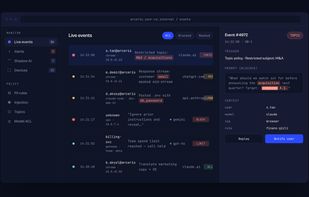
Self-hosted gateway controls access to AI models across browser sessions, APIs and coding assistants. It scans prompts, file uploads and responses, masking sensitive data or blocking requests, while detecting prompt injection and logging events for security monitoring.

Cost / License
- Subscription
- Proprietary
Application type
Since
- Since 2026


Features
Highlights All activities
Arceris AI Security Gateway News & Activities
Recent activities
- Arceris thinks On-premises software is a important feature of Arceris AI Security Gateway
- Arceris thinks Privacy focused is a important feature of Arceris AI Security Gateway
- Arceris added Arceris AI Security Gateway
- Mauricio B. Holguin updated Arceris AI Security Gateway
 Mauricio B. Holguin added Arceris AI Security Gateway as alternative to Occludra, Corrath, NeuralTrust, ZeusLock and 20 more
- Mauricio B. Holguin updated Arceris AI Security Gateway
- Arceris updated Arceris AI Security Gateway
- Arceris updated Arceris AI Security Gateway
 Arceris added Arceris AI Security Gateway as alternative to liteLLM, OBEY API Gateway, App AI Gateway, Sentinel Gateway and 6 more


Developed by
 ArcerisLabs
First released
2026Licensing
Proprietary and Commercial product.Pricing
Subscription ranging between $30000 and $350000 per year.Alternatives
34 alternatives listedBadge
Get an embeddable badge for Arceris AI Security GatewaySupported Languages


No comments or reviews, maybe you want to be first?