


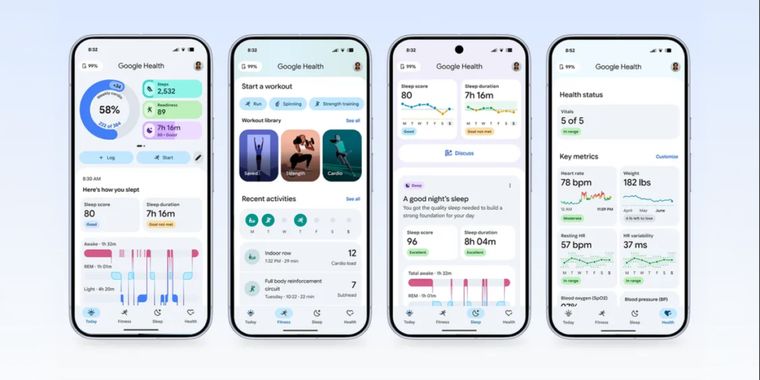

Google is replacing Fitbit with Google Health, including AI Coach and multimodal logging
After several months of public preview testing, Google is finally transitioning the Fitbit app into a new Google Health app, with the update starting to roll out on May 19. The Fitbit name will remain for hardware, but the software experience is moving under Google Health across Android and iOS, combining Fitbit’s tracking features with Google’s broader health, software, and AI efforts (Ironically, the company already had an app under this same name, which was withdrawn in 2011). As part of that shift, Google also plans to invite Google Fit users to migrate their data into Google Health later this year.
The new app is organized around four tabs: Today, Fitness, Sleep, and Health. Today includes a customizable metrics dashboard, Fitness covers activity tracking, metrics, and workout planning, Sleep adds detailed sleep data and an updated sleep score, while Health brings together wellness metrics, medical records, and other health information. The biggest addition, however, is likely Google Health Premium, the paid plan replacing Fitbit Premium, which includes Health Coach, a Gemini powered AI assistant that can answer health and fitness questions, adapt workout suggestions, and use personal metrics to provide more relevant guidance, along with deeper insights, multimodal logging through text, voice, or photos, and the existing workout and mindfulness library.
Google is also expanding dashboard customization, adding a new Log button for manual entries like activity, food, sleep, hydration, glucose, temperature, and weight, and bringing back friend leaderboards with support for both steps and cardio load. The app will be available in more than 200 countries, and Google says Fitbit health and wellness data will not be used for Google Ads, at least for now.





- Fitness Tracker
- Freemium
- Proprietary
Other apps mentioned in this article

Related news
External links
- Introducing the Google Health appGoogle The Keyword • Official source
- Google Health Coach is now available to Premium usersGoogle The Keyword • Official source
- Google’s plan to win the AI health race? Play nice with Apple and other rivalsCNN
- Google unveils screenless Fitbit Air and Google Health app to replace FitbitArs Technica
- ‘Google Health’ replaces Fitbit app, new ‘Premium’ plan joins AI Pro9to5Google
- Google's Biggest Health Announcements: Fitbit Air, Goodbye Fitbit App and Hello 'Coach'CNET
No comments so far, maybe you want to be first?