

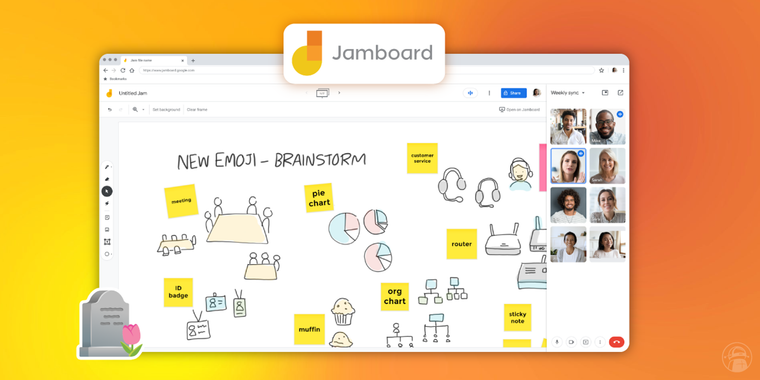
Google to phase out Jamboard, recommends transition to third-party alternatives by 2024
In a non-surprising announcement, Google has revealed its plans to phase out Jamboard, its digital whiteboard and associated mobile apps, by 2024. Launched in 2016, Jamboard was designed for collaborative work, but Google has decided to refocus its efforts on core content collaboration tools within Google Workspace, such as Google Docs, Google Sheets, and Google Slides, especially now that Bard will be integrated with several Google Apps.
Jamboard, initially priced at $4,999, provided features like collaborative editing, web client access, and integration with Google Drive and Google Meet. It also supported 16 simultaneous touch points, Google Cast, and a battery-less passive stylus. From October 1, 2024, Google will start to withdraw support for the Jamboard tool and associated devices, but it can still be used as basic whiteboards without cloud content access. Just keep in mind that all data on the app will be deleted after December 31, 2024.
The company has recommended platform users to opt for third-party alternatives available in the market, such as FigJam, Lucidspark, or Miro, which will be incorporated into the Google Workspace Marketplace to facilitate the transition (you can use them in Google Meet as well). Google is also providing a retention and migration path for Jamboard data, allowing existing Jams to be imported into the recommended apps. In addition to the ones mentioned, we can also recommend that you take a look at other alternatives in the market, such as Mural, Microsoft Whiteboard, Apple Freeform, or a free open-source option like OpenBoard Whiteboard. In any case, Jamboard joins the ever-growing list of products Killed by Google.


- Whiteboard
- Paid
- Proprietary
External links
- Jamboard hardware auto update policy Google Workspace Admin Help • Official source
- Google shutting down Jamboard whiteboard app, hardware9to5Google
- Google is sunsetting its collaborative Jamboard appEngadget
- $5,000 Google Jamboard dies in 2024—cloud-based apps will stop working, tooArs Technica
- Google Will Kill Its $5,000 JamboardPCMag UK
- Google will shutdown Jamboard next year, announces new whiteboarding toolsNeowin
Comments
You'd think Jamboard, an enterprise-focused product tied to the core functionality of an expensive physical hardware (already) sold to many organizations, would have a longevity.
Or Google Domains, a domain registrar, which is something you wouldn't want to change often. It's also apparently great for Google Cloud users. Or Album Archive, a service built just for the purpose to let you view photos from services Google have killed before.
So not even being an enterprise product AND tied to expensive enterprise hardware is enough to secure a long life at Google.
What's next? If in the next few years Google Meet doesn't retain good-enough user counts, all those Google Meet-branded hardware in meeting rooms worth who-knows-what dollars will be sent to landfill?