


Waterfox
465 likes
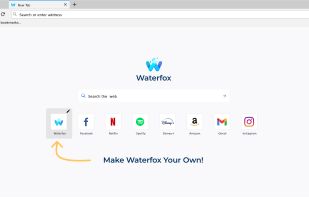
Utilize Waterfox for a high-speed, private browsing experience on 64-bit systems. Built on Firefox, it taps into Intel's C++ compiler for optimal performance, supports legacy extensions, allows full customization, and blocks ads by default, ensuring utmost control and security.

Cost / License
- Free
- Open Source
Application type
Platforms
- Mac
- Windows
- Linux
- Android
- Android Tablet
- Flathub


Features
Highlights All activities
Waterfox News & Activities
Recent News
- Fla published news article about Waterfox
- Fla published news article about Waterfox
- Paul published news article about Waterfox


Recent activities









Europe’s Open-Source Solutions: Your Guide to Transparent, Independent and GDPR-Aligned Software.
This guide is designed for anyone looking to take greater control of their digital life by choosing open-source solutions developed and maintained within Europe. It highlights projects that promote transparency, reduce reliance on non-European tech ecosystems, and align with Europe’s strong commitment to privacy and data protection. The goal is to support digital autonomy in Europe while uplifting the local developers and communities who build trustworthy, user-centric software.


DeMicrosoft Your Life
How are you?
In this list I bring you a variety of alternative software to those from Microsoft, and also that these free and open source programs
So enjoy this list!
(I will be updating it every day)



Open-Source Slopware
A list of open-source software containing slop (LLM generated) code or endorses the usage of LLMs in other ways.
This list contains software that obviously accepts irresponsible coding practices or promotes LLM usage. I found these applications while searching for alternatives to previously used software that turned out to contain code generated by slop-machines.
Each of added applications have at least one link that points to the verifiable proof.
This list by no means is meant to cover all the software that contains code by not-so-intelligent tools and people using them but to serve as a reminder to myself about what I have already checked.
Why having LLM generated code (and using generative tools in general) is bad?
Ethical reasons — such as illegally retrieved training material, underpaid workers that prepare the training data.
Impact on environment — increased fossil fuel usage to supply the needed electricity power, water usage in water scarce regions. This somewhat overlaps with the above.
Social impact – noise pollution in neighbourhoods near AI data centres, air pollution from diesel- or gas-powered turbines (also overlaps with the above), resource consumption by data centres drastically increases utility prices.
Impact on brain and thinking, reasoning — by offloading thinking and decision making to machines people are shooting in their foot (more like in their head) as this leads to brain rot. Less intelligent people are easier to control.
Even legal issues (especially in open-source software as it cannot be guaranteed that the “generated” code is not really just re-used, thus unknowingly violating the source license).
Inevitable enshittification — every software product from big technology eventually gets enshittified to maximize revenue. For users this could mean hidden or plain ads, biased opinions/information, privacy violations, increased prices for LLM based tools.
Burden on open-source software maintenance — LLM tools provide easier access to code contributions which often shifts the responsibility of checking code quality from developers to maintainers and reviewers. Digging through walls of merge request text and code generated by slop-machines takes valuable time that otherwise could be spent more meaningfully by fixing bugs and working on new features.
I will try to add links that back up the claims above, but it may take a while.
Of course, I see how and where generative tools could be helpful and sometimes I feel tempted to find an acceptable way to use them, but for now the direct and indirect costs far too much outweigh gains.
This list has its positive counterpart: Slop-Free (Supposedly) Open-Source Software (not quite complete yet).
Also take a look at and give thumbs up to AI Slopfree Software Catalog which contains software dedicated against usage of LLMs.
Also, here is a list of some labels that can be added / voted for so they would eventually appear on application pages:
Slopware;
Slop (LLM) Code;
Slop-Source Software;
Open-Source Slopware;
Contains Slop (LLM Generated) Code.
Official Links

Install from the command line
winget install -e --id Waterfox.Waterfoxbrew install --cask waterfoxflatpak install flathub net.waterfox.waterfox
Developed by
 BrowserWorks Ltd.
 Licensing
Open Source and Free product.Written in
Rating
Average rating of 3.7Alternatives
105 alternatives listedNews
9 news article related to WaterfoxBadge
Get an embeddable badge for WaterfoxSupported Languages

AlternativeTo Categories
Web Browsers, Education & ReferenceGitHub repository
- 6,361 Stars
- 434 Forks
- 359 Open Issues
- Updated




Comments and Reviews
Best Firefox-fork out there, no telemetry & faster than Mozilla's browser.
Waterfox is now owned by System1, an ad / data collection company, so you can bet it has telemetry now. I would avoid it like the plague.
Waterfox cut ties with System1 a year ago.
What about the support for extensions? And if EFF is privacy concerned, why Firefox is not enough and we "need" Waterfox? 🦊-fan here, but no blind, want to learn from others about the gap.
I'd leave zero stars if I could.
Waterfox is owned by System1, an ad / data collection company, so I would avoid it like the plague. If you are looking for a hardened / more private version of Firefox, Librewolf is very good, though.
For the record, Waterfox is independent again now.
Waterfox is one of the browsers I recommend if you want more control over your browsing experience without giving up compatibility with Firefox extensions. I like its focus on privacy, the absence of unnecessary telemetry, and the extra customization options that appeal to power users. At the same time, it still feels familiar and easy to switch to. If you're looking for a browser that balances performance, privacy, and flexibility, Waterfox is definitely worth trying.
I used Waterfox for a while, and it was the first browser based on Firefox that I used extensively (after Chrome) as my primary browser for a long time. We can say that it is between the Firefox browser and the unnecessary things that come with it and LibreWolf and the high privacy it enjoys, which may not appeal to some. I went back to using it, but not like I used to as the main browser. Now I noticed somethings that I did not pay attention to it, which is the UI it seems a bit old, but of course you can customize it to the highest levels, but I am talking about the default options. There are several things that count for them, including that they removed unnecessary things from Firefox, and they have a wide variety of search engines that come with the browser by default. Also, the settings menu is simple and clear, and you won't get lost in it, unlike some browsers. Another plus of the browser is the good documentation it has which you can read here: https://www.waterfox.com/support/waterfox-help/ .
What is blamed on them is that the Android version is not as efficient as the computer version. I mean, when I search for a specific topic or domain every three times , there is a time (and sometimes more) when the search fails and a page pop up saying that the server you are searching for does not exist. I am sure that I am connected to the Internet and that this link exists, but it often fails even when searching using the DuckDuckGo search engine. The problem may be mine, but I don’t think so. Yes, my device is kind of old, but not to the point that it fails to run a browser? The last one that I hope the developers improve, which is the menu bar icons that make the browser a kind of appearing undesirable, and they may confuse you sometimes. They can replace them with something simpler or even delete them, such as LibreWolf, where only the options are written. In general, the browser is good for the advantages I mentioned, and it is not the default option that I would recommend for use on mobile phones. But the computer version, it is excellent after some tweaks.
I am a very new user of Waterfox, but thus far am very pleased. I was looking to switch off of Mozilla Firefox and initially tried LibreWolf, but I felt their modifications to Firefox were poorly executed (in the version I tried). Waterfox feels very slick and professional in comparison. On initial start, there is a very simple way to instantly pull your existing Firefox or Firefox ESR (great for Debian users!) information in, and Waterfox also supports Firefox Sync (disabled by default as a privacy feature which I appreciate). All of the "AI" features were disabled by default as far as I could tell, including more hidden bits in the about:config. Waterfox's original developer has returned and owns the project again via the BrowserWorks company, and released a good statement about his opinions on AI, which is another big reason I made the switch. I appreciate the additional exposed settings in the about:settings menu too, which includes a few security settings that LibreWolf set without letting you customize! I personally prefer the condensed UI choice as well, and the extra settings for the theme are great. You can always go back to Firefox's other themes too. Firefox's new ads for Mozilla's other services are removed, too. All of the extensions I use work great, and I opted to use the Tarball for Linux, so no Flatpak-related issues with permissions or access. Overall, I'm a happy user for now!
Kind of like Ungoogled Chromium in that it's Firefox minus the Mozilla telemetry and services, except Waterfox feels like a complete application instead of one with a bunch of gaps.
Using it is about the same as using Firefox. Less stuff breaks than in LibreWolf (which goes a lot further in its privacy protection). Waterfox tracks Firefox's ESR releases, so it can run behind the main browser in terms of features, but they seem to track security updates quickly. It's compatible with Firefox Add-ons, and the one Firefox service it does use is Sync, which is end-to-end encrypted.
The Android version is solid. When I first tried it out, in-browser translations were missing, but they're back now.
Real installers with updaters for Windows and Mac (unlike LibreWolf), Flatpak and tarballs for Linux (but not ARM Linux yet). The Flatpak has the usual issues talking to KeePassXC
It changes some of my settings after each restart. I like it otherwise, but its hard for me to trust.