


Syng Karaoke
1 like
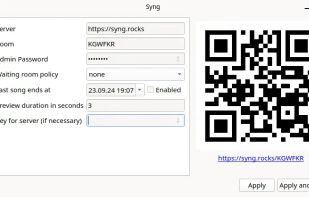
Syng is an all-in-one karaoke software, consisting of a backend server, a web frontend and a playback client. Karaoke performers can search a library using the web frontend, and add songs to the queue. The playback client retrieves songs from the backend server and plays them in...

Cost / License
- Free
- Open Source (AGPL-3.0)
Application type
Platforms
- Online
- Linux
- Flathub
- Flatpak
- Windows


Features


Highlights All activities
Syng Karaoke News & Activities
Recent activities
 Elio-Gargiulo added Syng Karaoke as alternative to Elio Karaoke Studio
 Jon-Vargas added Syng Karaoke as alternative to Beltr
 Paul added Syng Karaoke as alternative to Nightingale Karaoke
 Plecto added Syng Karaoke as alternative to Plecto
 voicestage_dev added Syng Karaoke as alternative to VoiceStage


Developed by
Christoph StahlLicensing
Open Source (AGPL-3.0) and Free product.Written in
Alternatives
23 alternatives listedBadge
Get an embeddable badge for Syng KaraokeSupported Languages

AlternativeTo Category
Audio & MusicGitHub repository
- 46 Stars
- 7 Forks
- 6 Open Issues
- Updated


No comments or reviews, maybe you want to be first?