What this project actually is
I wanted to know one thing: could frontier LLMs carry a genuinely huge piece of software from C++ to Rust? Not generate a plausible-looking file, not translate a self-contained algorithm, carry a whole codebase across, one that is:
large: hundreds of thousands of lines across a dozen subsystems;
deeply stateful: an HLE kernel with schedulers, fibers, IPC and services;
unforgiving: a GPU command processor, a shader recompiler, and a JIT where a single wrong bit produces a black screen rather than a stack trace;
built on C++ idioms with no direct Rust equivalent: inheritance hierarchies, raw pointer graphs, shared_ptr cycles, destructor ordering, std::variant.
I had serious doubts it would go anywhere. It did: the experiment ended up producing an emulator that boots and runs commercial titles, and that reaches the performance of the C++ original.
"Faithful" was the whole point, and it is a much harder target than "works". The port is held to structural parity with the C++ source: the Rust file tree mirrors the upstream directory tree, methods live in the file their C++ counterpart lives in, constants stay next to the code that owns them, and lifecycle order is preserved literally. A maintainer looking at any Rust file should be able to answer which C++ file is this, and what is still missing? The contract the work is held to is written down in CLAUDE.md — it is the interesting artefact of this project as much as the code is.
Now ruzu can fly on its own.





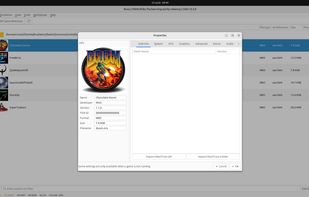


 justarandom added ruzu as alternative to Ryubing (Ryujinx GreemDev), NxEmu, Citron Neo and Hydra Switch Emulator


