Orynivo is a free, open-source music player and library manager for Windows, Linux and macOS. It is primarily aimed at people who keep their own music collection and want to manage it locally instead of uploading it to a cloud service.
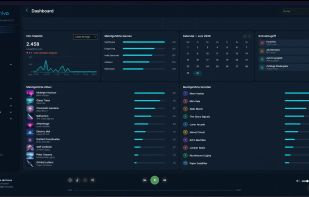
Music can be browsed by artist, album, track, genre or folder. Orynivo also includes playlists and smart playlists, favourites, playback history, an editable queue, lyrics, artwork management, library search and a Genre Cloud for exploring larger collections.
Supported formats include FLAC, WAV, MP3, AAC, Ogg Vorbis, Opus, MKA, DSF and uncompressed DFF/DSDIFF. Available audio outputs depend on the operating system and include WASAPI, ASIO/cwASIO, OpenAL and direct ALSA. Orynivo also supports ReplayGain, a parametric equalizer, gapless playback, several output profiles and, with suitable hardware, native DSD or DoP playback. Native AirPlay 2 output is available as an experimental feature.
For collections stored on another computer, the optional Orynivo Server can make a central music library available on the local network. It provides authenticated streaming, remote library browsing, artwork, playlists and library management. The server is optional; Orynivo works as a regular local music player without it.
Other features include internet radio, podcasts, synchronized lyrics, MusicBrainz metadata and ratings, automatic and manual cover searches, artist information, library backup and restore, and access to Plex music libraries. There is also an optional AI chat for OpenAI-compatible services and an MCP server whose individual tools can be enabled or disabled.
The library database and settings remain under the user’s control. No account or subscription is required, and a local music library is not uploaded anywhere. External services are only contacted when features such as lyrics, artwork, metadata, podcasts, radio or AI integration are used.
Some functions depend on the operating system, audio hardware, drivers, network receivers or third-party services. Experimental and platform-specific limitations are documented in the project wiki.






 EU
EU


 Björn Schlaack


No comments or reviews, maybe you want to be first?