





Onsite Link Verdict
Onsite Link Verdict is a broken link checker for WordPress. It scans posts, pages, images, comments and redirect chains, and it runs on the site's own server through WordPress cron. There is no cloud service, no API key, no account and no monthly credit allowance, so it also...


Cost / License
- Freemium (Subscription)
- Open Source (GPL-2.0)
 EU
EUPlatforms
- Self-Hosted
- Wordpress

Features
- Broken Links Check
Tags
Onsite Link Verdict News & Activities
Recent activities
- Danilo_Venom updated Onsite Link Verdict
- onsitetools added Onsite Link Verdict
 onsitetools added Onsite Link Verdict as alternative to Xenu's Link Sleuth, Integrity, LinkChecker and Scrutiny

Onsite Link Verdict information
Developed by
 Onsite Tools
 Licensing
Open Source (GPL-2.0) and Freemium product.Pricing
Subscription + free version with limited functionality.Written in
Alternatives
16 alternatives listedBadge
Get an embeddable badge for Onsite Link VerdictSupported Languages
- English


What is Onsite Link Verdict?
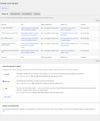
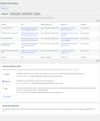
Onsite Link Verdict is a broken link checker for WordPress. It scans posts, pages, images, comments and redirect chains, and it runs on the site's own server through WordPress cron. There is no cloud service, no API key, no account and no monthly credit allowance, so it also works on staging sites, intranets and sites behind HTTP authentication that an external crawler cannot reach.
The difference is what it accepts as proof. A link check can fail for two very different reasons: the page is gone, or the server declined to answer an automated request. Only 404 and 410 are the destination server saying the page no longer exists, and even then the plugin asks a second time using a different method before accusing the link, because some servers answer 404 to HEAD and 200 to GET. A connection failure has to repeat three times in a row before it counts, so a brief DNS hiccup at the hosting company cannot condemn every link checked in that window.
Everything else goes to a separate "Unverifiable" tab with a plain-language note about what happened. A 403, a 429, a 451, a challenge page or a non-standard code such as 999 means the server refused this particular request, which is not evidence that the page died. The result is a short list of real problems rather than a long list that is mostly noise.
The free version is published in the official WordPress.org plugin directory under GPLv2 or later. A paid Pro add-on adds bulk fixing, scheduling controls, exclusions and CSV export.
You can try the rule on a single address, without installing anything, at https://onsitetools.dev/check-a-link/