

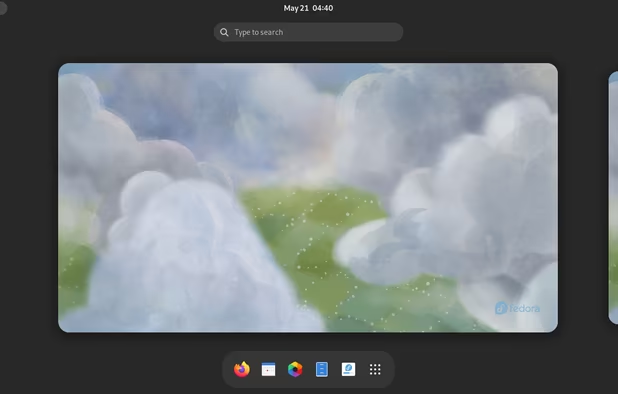
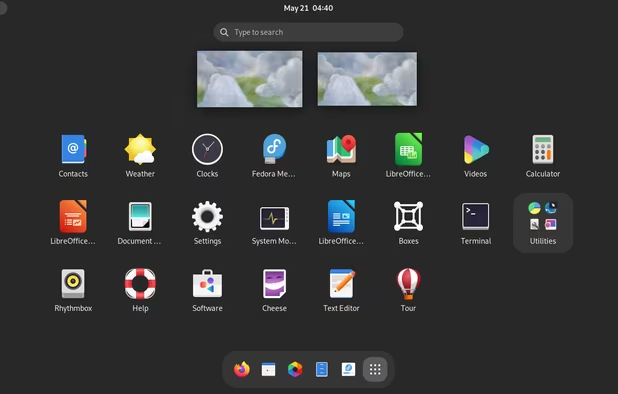
Fedora creates an innovative, free, and open source platform for hardware, clouds, and containers that enables software developers and community members to build tailored solutions for their users.
 United States
+9
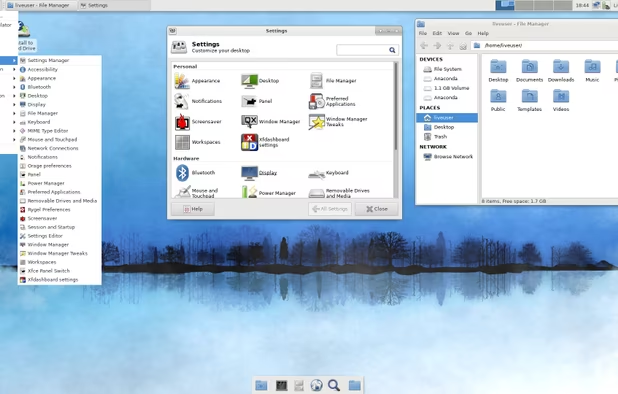


Minimal Linux Live is described as 'Tiny Linux distribution which is designed to be built from scratch using a collection of automated shell scripts' and is a Linux Distro in the os & utilities category. There are more than 25 alternatives to Minimal Linux Live for a variety of platforms, including Linux, Self-Hosted, Mac, Windows and Haiku apps. The best Minimal Linux Live alternative is Fedora, which is both free and Open Source. Other great apps like Minimal Linux Live are EndeavourOS, Lubuntu, Haiku and Alpine Linux.
Fedora creates an innovative, free, and open source platform for hardware, clouds, and containers that enables software developers and community members to build tailored solutions for their users.

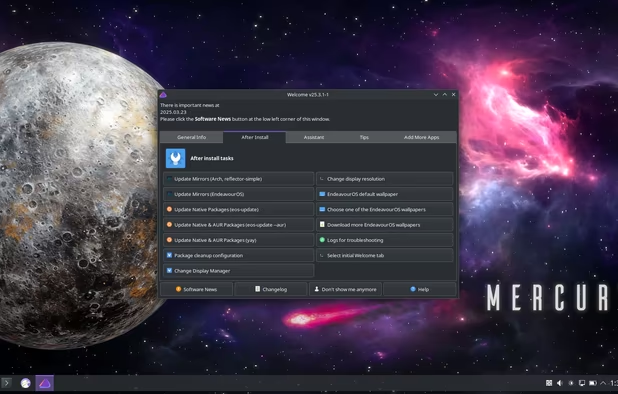
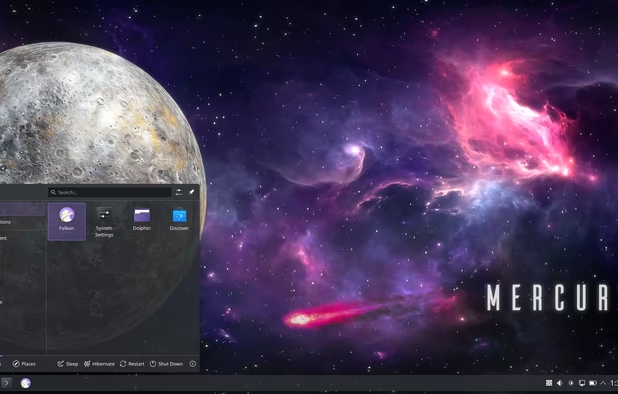
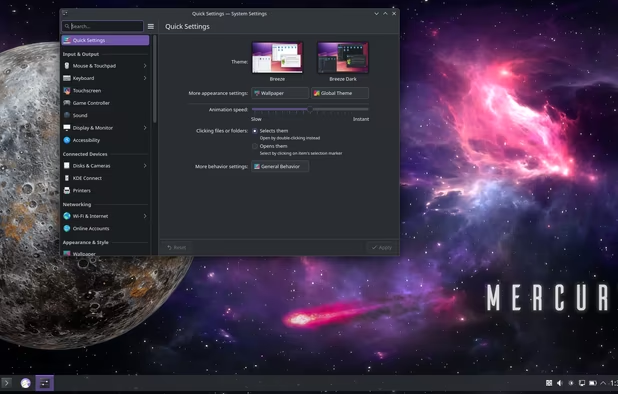
EndeavourOS is an Arch-based distro that provides an Arch experience without the hassle of installing it manually for both x86_64 and ARM systems. After installation, you’re provided with a lightweight and almost barebones environment ready to be explored with your terminal...


Lubuntu is a fast and lightweight operating system with a clean and easy-to-use user interface. It is a Linux system, that uses the minimal desktop LXDE/LXQT.


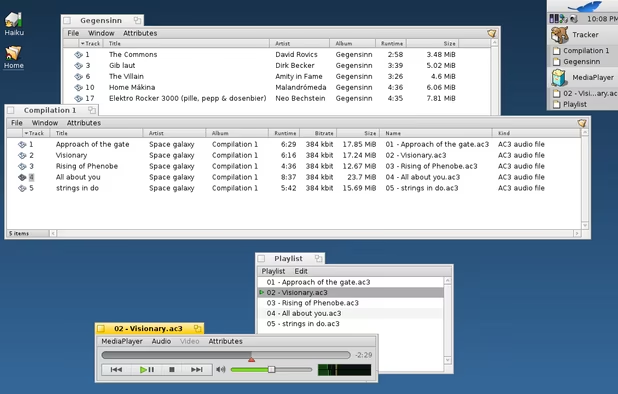
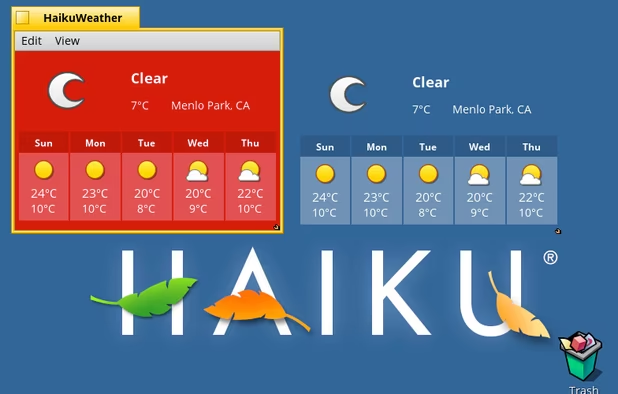
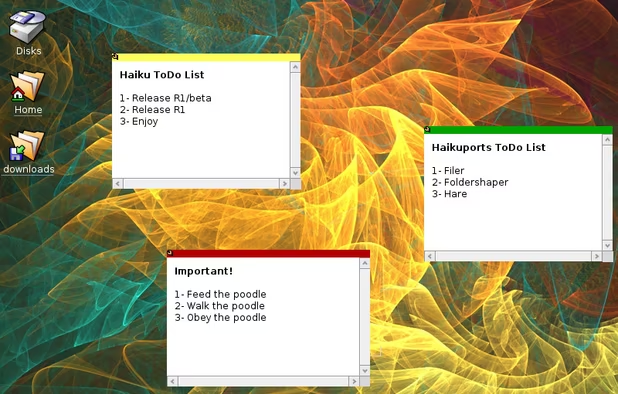
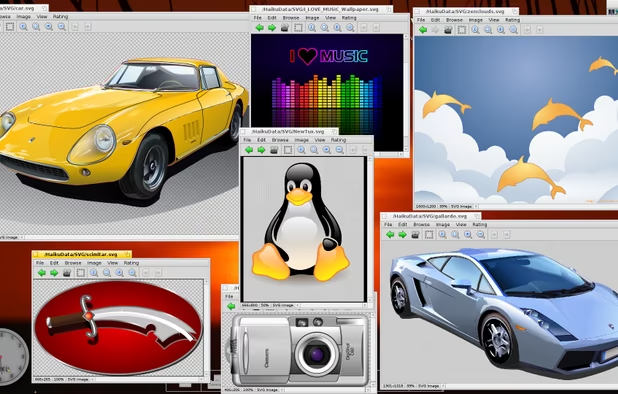
Haiku is an open-source operating system that specifically targets personal computing. Inspired by the BeOS, Haiku is fast, simple to use, easy to learn and yet very powerful.


Alpine Linux is a security-oriented, lightweight Linux distribution based on musl libc and busybox.


Puppy Linux is a unique family of Linux distributions meant for the home-user computers. It was originally created by Barry Kauler in 2003.


The Temple Operating System (TempleOS) is a free and open source, x86_64, non-preemptive, multi-tasking PC operating system.


DietPi is a lightweight and optimized operating system mostly targeted against IoT devices. With DietPi you can install specially optimized software with a few clicks. It has an easy-to-use whiptail GUI for its many configuration and system management options and a helpful...


SliTaz is a free operating system, working completely in RAM and booting from removable media such as a CD-ROM or USB key. SliTaz is distributed as a LiveCD, and weighs less than 40MB. The system is quick and responsive, clean and robust.


Porteus is a complete linux operating system that is optimized to run from CD, USB flash drive, hard drive, or other bootable storage media. It's small (under 300Mb) and insanely fast which allows you to start up and get online while most other operating systems are left...


MenuetOS is an Operating System in development for the PC written entirely in 32/64 bit assembly language. Menuet64 is released under proprietary license and Menuet32 under GPL. Menuet supports 32/64 bit x86 assembly programming for smaller, faster and less resource hungry...


 Netherlands
 EU
EU
 United Kingdom

 Norway


 Switzerland

