memo is a native desktop application for Linux and Windows (macOS support in progress) that transforms fragmented files and personal data into a connected, searchable knowledge system — completely local and independent from the cloud.
At its core, memo combines desktop search, file management, knowledge organization, and peer-to-peer sharing into a single modular platform. It enables users to browse, search, and enrich their data using labels, custom metadata, collections, and intelligent filters — without modifying original files or relying on sidecar files. All metadata is stored separately in a local database, ensuring consistency even when files are moved or renamed outside the application.
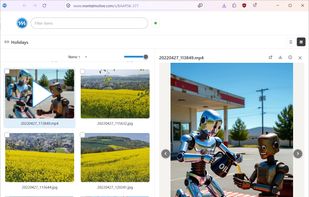
The platform includes a free “Files” app with a modern file browser featuring tabs, split views, and integrated previews for PDFs, images, videos, audio, and text files. Users can add labels, annotations, and structured metadata while keeping full control over their data.
The “Search & Collect” app adds advanced full-text search across file contents and metadata, including Office documents, media files, and more. It supports faceted browsing, typo-tolerant suggestions, semantic filtering, and the creation of dynamic collections that group files without duplication. It’s free to use for up to 10,000 indexed files and 5 collections, with an upgrade available for unlimited indexing and collections.
The “Beam” app adds peer-to-peer sharing: collections become secure web links that transfer directly from device to device, locally or worldwide, with no cloud upload. Recipients just need a browser — no installation required. Shares can be password-protected, access-controlled, and opened up for recipient uploads, with a built-in group chat for collaboration. Free to use for up to 50 files and 1 active shared collection.
memo is designed around digital sovereignty: all data remains locally stored, fully private, and independent from external services. Future extensions will add knowledge apps for contacts, tasks, calendars, and location data.
With its modular architecture and planned app ecosystem, memo evolves beyond a file manager into a unified knowledge operating system for personal and professional information management.





 EU
EU



 memo-hlo added memo as alternative to Everything, Listary, EverythingToolbar, Recoll and 8 more
 mentalmotive GmbH

No comments or reviews, maybe you want to be first?