
LingoTweaker icon
LingoTweaker icon

LingoTweaker

 Like

LingoTweaker is a proofreader of numerous languages written in Rust, with bindings with Python and Node and compilable to WebAssembly.
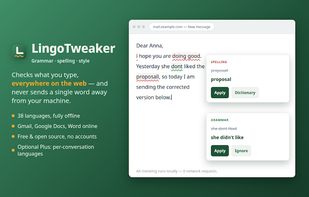
LingoTweaker screenshot 1

Cost / License

  • Freemium (Pay once or Subscription)
  • Open Source (LGPL-2.1)

Since

  • New

Updated

  • Updated Oct 2026

Platforms

  • Google Chrome
  • Mozilla Firefox
0likes
0articles
Save

Features

Features

Highlights All activities

LingoTweaker News & Activities

Recent activities

LingoTweaker information

  • Developed by

    SE flagFidus Writer
  • Licensing

    Open Source (LGPL-2.1) and Freemium product.
  • Pricing

    One time purchase that costs from $29, and / or subscription that costs from $19 per year + free version with limited functionality.
  • Written in

  • Alternatives

    10 alternatives listed
  • Badge

    Get an embeddable badge for LingoTweaker
  • Supported Languages

    • English

AlternativeTo Categories

Web Browsers, News & Books

GitHub repository

  •  13 Stars
  •  1 Forks
  •  2 Open Issues
  •   Updated  
View on GitHub
LingoTweaker was added to AlternativeTo by mimumu on and this page was last updated .

No comments or reviews, maybe you want to be first?

What is LingoTweaker?

LingoTweaker includes a port of the LanguageTool proofreading engine and its rule data. Additional languages and improvements to existing languages will be added over time.

LingoTweaker is an independent project, not affiliated with or endorsed by the LanguageTool project, whose name and trademark belong to their owners. Upstream references and licenses are kept.

Rust-first: cargo add lingotweaker and embed the engine directly (lt::Engine::check). v2 HTTP drop-in: same /v2/* paths, parameters, and JSON schema, so existing clients switch without changes. WebAssembly: lt-wasm / the lingotweaker-wasm npm package runs the engine in the browser and Node from fetchable per-language data packs. Vendored data: everything needed at runtime is copied into data/ with per-file sha256 provenance, pinned to one upstream commit (upstream.json). Parity-driven: the legacy <example> tests are the primary gate; a pinned Java build of the legacy engine provides differential fixtures.