




DeadLock
23 likes
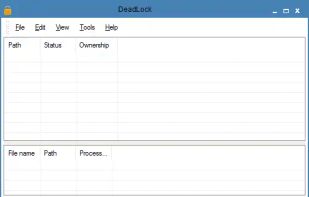
Unlock files and folders blocked by the system or other applications, enabling deletion, copying, renaming, or moving with a free tool. Use an intuitive interface or command-line options for batch unlocking, process termination, and detailed lock information.

Cost / License
- Free
- Open Source (GPL-3.0)
Application type
 EU
EUPlatforms
- Windows


Features
DeadLock News & Activities
Highlights All activities
Recent News
No news, maybe you know any news worth sharing?
Share a News Tip
Recent activities
- Danilo Venom liked DeadLock
 Danilo Venom added DeadLock as alternative to LockHunter, Microsoft PowerToys, IObit Unlocker, Wise Force Deleter and 15 more
- Danilo Venom updated DeadLock
- RemovedUser updated DeadLock


DeadLock information
Developed by
 codedead.com
 Licensing
Open Source (GPL-3.0) and Free product.Written in
Alternatives
19 alternatives listedBadge
Get an embeddable badge for DeadLockSupported Languages

AlternativeTo Category
File ManagementGitHub repository
- 189 Stars
- 25 Forks
- 2 Open Issues
- Updated


Featured in Lists


Using
A list with 61 apps by julienth37 without a description.
Comments and Reviews
This is a suspecious file !
It's open source..
40% of my Applications are open-source and they are scanned safe and no problem installing it. But for some reason when I installed this application it marked as a threat. By the way, I am a total open source supporter and prefer to use it more than any other products.
[Edited by penuelmaypa, October 13]
@penuelmaypa You actually realise you make no sense? being opensource doesn't prevent from being a malware, it simply make it useless. anyone can see the source code, so everyone can see all the malicious stuff in your code, as well as take it out and compile a safe version. why would any malware be opensource for god sake. Do some damn research before calling to the virus/malware/shit. sorry for the lack of effort in this awnser, but such useless comment don't deserve better
How do you know the .exe you downloaded came from the opened source? If I were a malware writer, I would open-source some innocent program, then sneakily add malware components (without publishing the source), and wrap it up in an installer, CLAIMING that it came from the published source. Even SourceForge has been caught re-packing installers and adding AdWare to them. The only way to trust an open-source program is to inspect and compile the source yourself. NOT by downloading some random .exe on the internet.
(Though in this particular case, it may be a false positive by Avast. But who knows?)
I'm the owner and programmer of CodeDead and although all my answers may seem biased, I really don't want to defend my own software.. That being said, I have nothing to gain with my software. Absolutely nothing. I don't ask for money, I don't display any ads on my site or in my software, not now, not ever. Seeing as I get 10.000+ downloads each month for which I ask nothing in return and haven't asked for anything since I started all this, I probably could have made a lot of money.
But (bear with me) I personally create the executables and compile them myself, as is. If you really want to be sure, go ahead and compile them yourself. Just know that I already did the work for you and would never, never ever even consider to put any kind of malware, advertisement or any tracking inside my software. It's just not something I would do. Call me old fashioned, call me lame but I hate software with ads or tracking. I hate malware and I would gladly help you and anyone else get rid of malware, adware etc. That is why I make software; to help people solve problems, not to create them.
But like you said, don't trust something? Don't execute it. I'm not in the business of changing your mind, I'm not in the business of anything so whatever your decision may be, I gain nothing.
[Edited by alessandromercier, May 01] Here's the latest virus scan by the way, https://virustotal.com/nl/file/edfe8daab3ff2ac264a7cf44699b8d1e96de1cba9ec03eaba0ccb0c8e988bd00/analysis/1493681027/
I'm not questioning the integrity of CodeDead or any of its software. Hell, most legit security tools are flagged by most antivirus anyway. Call any low-level enough Windows APIs, and at some point in life a software would be falsely flagged by one AV or another.
Just trying to clear up the misconception of people being lulled into a false sense of security, that something marked open-source CANNOT be malicious. It most certainly can, and has happened before.