
AEGIS AI Agent Security icon

AEGIS AI Agent Security

 Like

Open-source desktop security for local AI agents, with skill/configuration reviews, alerts, selected-process controls and policies on configured command-line and MCP routes. Windows-first beta.
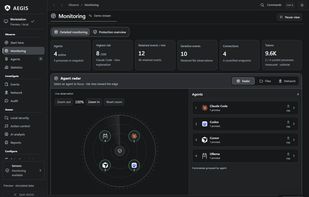
AEGIS Monitoring — source UI preview, simulated data, 11 October 2026

Cost / License

  • Free
  • Open Source (MIT)

Application type

Since

  • New

Updated

  • Updated Nov 2026

Platforms

  • Windows
0likes
0articles
Save

Features

Features

Highlights All activities

AEGIS AI Agent Security News & Activities

Recent activities

AEGIS AI Agent Security information

AlternativeTo Categories

Security & Privacy, OS & Utilities

GitHub repository

  •  159 Stars
  •  29 Forks
  •  88 Open Issues
  •   Updated  
View on GitHub
AEGIS AI Agent Security was added to AlternativeTo by Escape-Studio on and this page was last updated .

No comments or reviews, maybe you want to be first?

What is AEGIS AI Agent Security?

AEGIS is a free, MIT-licensed Windows-first desktop security application for people running local AI agents.

Choose a local folder or agent profile for static review of suspicious patterns in skills and project settings before bringing them into a workflow. Compare saved snapshots to see what changed.

Investigate detected-agent process trees, configured file activity, TCP endpoints and alerts with captured evidence. Suspend or resume a currently observed selected process, or stop it with explicit confirmation. AEGIS rechecks its identity before acting.

Explicitly configured AEGIS execution and selected-action routes enforce allow/deny policies and block policy-denied commands before they start. Separately, the validating MCP gateway requires exact one-use approval for a tool and its arguments.

The workspace also includes CPU/RAM charts, Claude Code token subtotals and estimated costs, audit history and report exports.

AEGIS is currently a Windows-first public beta. macOS and Linux source support is experimental.

Screenshots show source UI previews with simulated data captured on 11 October 2026.