



Ardour 9.5 adds pianoroll chord editing, MIDI workflow boosts, and MCP server
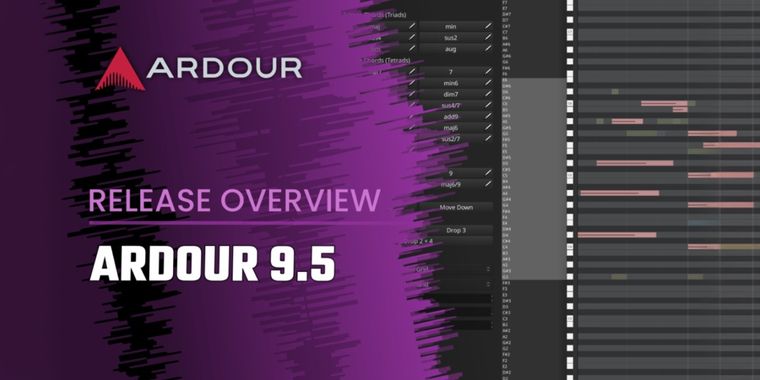
The open-source digital audio workstation Ardour has launched version 9.5, with a strong focus on MIDI editing and pianoroll improvements. The release adds chord editing inside the pianoroll, letting users draw 3, 4, or 5 note chords from a new left sidebar, change existing chord types without redrawing notes, apply inversions, drop notes, and quantize selected MIDI notes to the grid. A Cubase-style cross cursor has also been added to help with orientation while drawing notes or editing automation.
The pianoroll can now show multiple MIDI regions at once, with faded reference notes from inactive regions, often known as ghost notes in other DAWs. Users can switch between active regions from a drop-down menu or edit all visible regions at the same time when needed. Notes also gain new color schemes for velocity, channel, track, and configurable pitch, while MIDI automation lanes are now stacked vertically and can be added, edited, or cleared more easily through the A button.
Beyond MIDI, Ardour 9.5 improves the summary pane with theme support, sharper visuals, and right-side zoom controls, while plugin views in the editor’s bottom pane can now be collapsed and still keep a bypass toggle visible. The Mixer page now supports dragging local and global track templates onto existing tracks to replace processing setups. The release also includes an experimental, opt-in MCP server that lets locally running large language models control Ardour, with a focus on accessibility for users with visual impairments, though it does not add AI audio generation.




- Music Production App
- Paid
- Open Source
Related news
External links
- Ardour 9.5 — What's newArdour DAW • Official source
No comments so far, maybe you want to be first?