Comment on real lines. Stack dependent pulls. Triage next to the branch. Ship with GitHub-compatible CI and automation that fires on repository events. One surface, less tab debt.
Plan, automate, and ship in one platform.
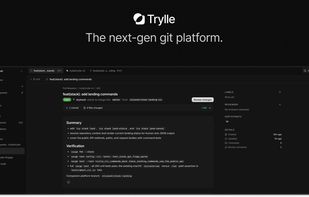
- Collaborate on pull requests: Drafts and issues stay next to open PR rows, stacks stay grouped in order, and CI status shows on the list. Review and triage never leave the branch you are shipping.
- Automate on repo events: Install automations beside your repos. They run when real repository events fire—a PR opens, CI succeeds, a bot gets mentioned—with permissions you control and audit trails you can trace.
- GitHub-compatible Actions: Run your existing .github/workflows YAML on Linux, ARM64, and macOS runners—with repo and org secrets, artifacts, and release publishing included.
Review, automate, and govern repos in one surface.
Keep diffs, issues, and automation on the same timeline as the code—without switching tabs or losing branch context inside Trylle.
- Guided pulls in Zen mode: Flip into a quieter lane—a narrative walk-through of what changed alongside the snippets that matter—so reviewers stay oriented without tab sprawl.
- Automations as early warning: Kick off bots on real repo events (pr.opened, push) to flag risky diffs—secrets drift, flaky touchpoints—right on the timeline where maintainers ship.
- Draw clear repo boundaries: Pair Git identity with workspace rules—revoked invites, scoped actors, tightened merge surfaces—before noise escalates into accidental merges.
- Trust signals beside the proposal: Expose assist and provenance cues next to approvals—confidence hints grounded in tooling, not vibes—keeping humans decisive when tooling multiplies throughput.
Everything around the merge, built in.
The pieces teams usually bolt on—stacks, migration, releases, a review queue, a CLI—ship as part of the platform.
- Stacked pull requests: Ship dependent branches as a stack. Pull lists keep stacks grouped in order, and the CLI creates, restacks, and submits them for you.
- Migrate and mirror from GitHub: Import public or private repositories with history intact, and keep a push mirror in sync so the old remote stays alive while you switch.
- Releases and artifacts: Cut releases with generated notes and uploaded assets, publish them from Actions-compatible APIs, and browse CI artifacts per run.
- A queue for your reviews: One inbox for pulls waiting on you and the ones you authored—review state and CI status visible before you open a thread.
- The try CLI: Repos, pulls, issues, stacks, CI, and automations from the terminal. JSON output built for scripts and agents, plus AI explain, draft, and diff helpers.
- Runners for real matrices: Linux x86, ARM64, and macOS runners for Actions-compatible workflows, with verified commit signatures shown right on your history.








 Trylle, Inc.

No comments or reviews, maybe you want to be first?