Synclet icon
Synclet icon

Synclet

A self-hosted, open-source cloud drive that leaves your files exactly as they are: plain folders on your own server, with a web app and apps for Mac, iPhone, iPad and Android.
Synclet Web-App

Cost / License

  • Free
  • Open Source (MIT)

Platforms

  • Android
  • iPhone
  • Android Tablet
  • iPad
  • Self-Hosted
  • Docker
  • Mac
0likes
0articles
Save

Features

Properties

Features

Highlights All activities

Synclet News & Activities

Recent activities

Synclet information

AlternativeTo Categories

Backup & Sync, File Sharing, Office & Productivity, Development, Network & Admin, Photos & Graphics, Remote Work & Education

GitHub repository

  •  0 Stars
  •  0 Forks
  •  0 Open Issues
  •   Updated  
View on GitHub
Synclet was added to AlternativeTo by eltomato on and this page was last updated .

No comments or reviews, maybe you want to be first?

Official Links

What is Synclet?

Synclet turns a folder on your server into a cloud drive you can use from the browser, your Mac, your iPhone and your Android phone. Underneath it's still just a folder: no blobs in a database, no metadata files in your folders. Point Synclet at the files you already have and they show up right away. Stop using it tomorrow and everything is exactly where you left it.

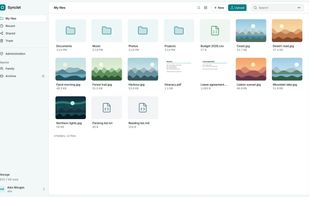
The web app previews photos (HEIC too), videos, PDFs and text, searches inside your documents, and lets you move, copy or download many files at once. On the Mac your files appear in Finder and download only when you open them. On iPhone, iPad and Android they show up in the Files app and the system file picker, and you can save to Synclet from any app.

Synclet is made for sharing at home: shared folders for the family and the NAS shares you already have, with read or write access per person or group. You also get share links with a password and expiry date, a trash, optional file versions, optional Office editing in the browser (Euro-Office), and single sign-on via OIDC or forward-auth.

It runs as one small Docker Compose stack on Linux, a NAS or anything else with Docker. Free and open source under the MIT license.