Cost / License
- Free
- Open Source
Application type
Platforms
- Linux
- Online
- Self-Hosted
- Flathub
- Flatpak


Genie is the most popular Linux alternative to Siri.
- Genie is Free and Open Source
Siri is not available for Linux but there are some alternatives that runs on Linux with similar functionality. The best open source Linux alternative is Genie. If that doesn't suit you, our users have ranked more than 25 alternatives to Siri and nine of them are open source and available for Linux so hopefully you can find a suitable replacement. Other interesting open source Linux alternatives to Siri are kalliope, Voxos, SEPIA Framework and Lucida.



Genie is the most popular Linux alternative to Siri.
Kalliope is a modular always-on voice controlled personal assistant designed for home automation.
Voxos is a versatile and user-friendly voice assistant for your desktop computer. It streamlines integration of LLMs into your day-to-day workflows compared using web UIs to access those LLMs. It is ideal for anyone that uses a desktop computer and wants to save time and effort.
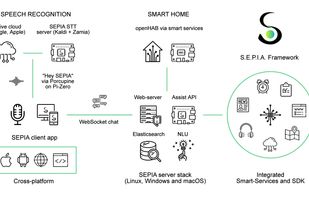
SEPIA is a server-based, extendable, personal, intelligent assistant. The SEPIA-Framework is a collection of open-source modules and tools that form a coherent ecosystem for self-hosted, privacy-compliant, voice-controlled applications and devices.


formely known as Sirius, Lucida is a speech and vision based intelligent personal assistant developed in Clarity Lab at the University of Michigan.
Dragonfire is an open source virtual assistant for Linux operating systems especially for Ubuntu based distributions. Dragonfire will be preinstalled software package on DragonOS Linux Distribution.

Simply put, Kara is a voice assistant that steals 0% of your data so you stay free! She is a actively maintained, modular, and designed to customize.
Presbot is a community of chatbots, an interactive version of Linkedin. Presbot provides the simplest and fastest way to create your personal and professional chatbot. Presbot employs rule based and machine learning algorithms and learns from each interaction with your end users.