


SecNote
2 likes
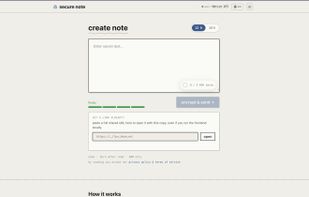
End-to-end encrypted, read-once notes. AES-256-GCM in the browser, proof-of-work spam protection, zero accounts. Self-hostable, with Rust backend.

Cost / License
- Free
- Open Source (GPL-3.0)
Platforms
- Online
- Software as a Service (SaaS)


Features
Highlights All activities
SecNote News & Activities
Recent activities
 David Haukeness added SecNote as alternative to Gone by haukened
- reviewed SecNote★★★★★
amazing thing to not rely on front end!!!!! A+++
a little bit long url but I like idea
- Mustafa liked SecNote
- Alina M thinks Zero Knowledge is a important feature of SecNote
- Alina M added Self Destructing Messages as a feature to SecNote
- Alina M added Client side encryption as a feature to SecNote
- Alina M added Lightweight as a feature to SecNote
- Alina M added Privacy focused as a feature to SecNote
- Alina M added Proof Of Work as a feature to SecNote

Developed by
 PWN-ALL
 Licensing
Open Source (GPL-3.0) and Free product.Written in
Alternatives
13 alternatives listedBadge
Get an embeddable badge for SecNoteSupported Languages

AlternativeTo Categories
Security & Privacy, Social & CommunicationsGitHub repository
- 2 Stars
- 0 Forks
- 1 Open Issues
- Updated


Comments and Reviews
amazing thing to not rely on front end!!!!! A+++
a little bit long url but I like idea