



MUSE gives AI coding agents (Claude Code, OpenClaw, Cursor, Windsurf, Gemini CLI, Codex) persistent cross-session memory and multi-role governance — all through plain Markdown files.
Cost / License
- Free
- Open Source (MIT)
Platforms
- Mac
- Linux
 Taiwan



Apps similar to SAME (Stateless Agent Memory Engine) include Tolaria, which is free and open source. Other options are Model Context Protocol, Claude-Mem, Qarinah and LedgerMind . You can choose from more than 10 Large Language Model (LLM) Tools like SAME (Stateless Agent Memory Engine) for the web, Mac, Windows, Linux and self-hosting.
MUSE gives AI coding agents (Claude Code, OpenClaw, Cursor, Windsurf, Gemini CLI, Codex) persistent cross-session memory and multi-role governance — all through plain Markdown files.
Taiwan
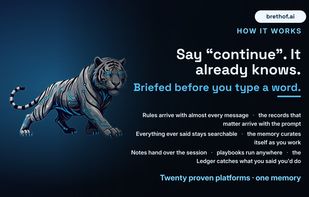
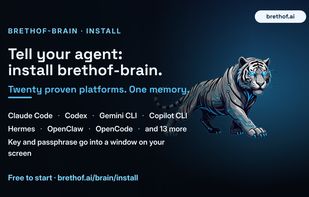
Every AI agent forgets the moment a session ends, and you become its memory: re-explaining the project, the conventions, what was already tried. brethof-brain is the memory instead.
 Poland
 EU
EU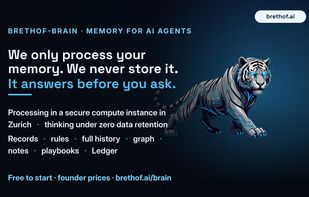


The knowledge base for ChatGPT and Claude. Save notes once, connect via MCP, stop re-explaining context every conversation.
 BelgiumEU
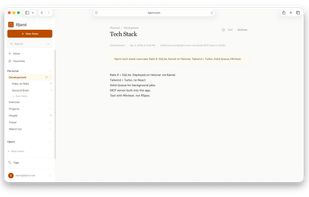
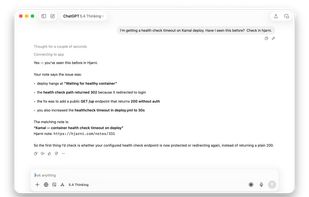
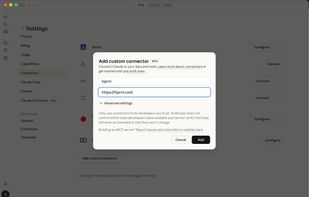


Haki gives any AI agent a memory that lasts for months dated, sourced, and provable. Self-hosted on your own Postgres, Apache-2.0, no amputated edition.
 Mali
Mali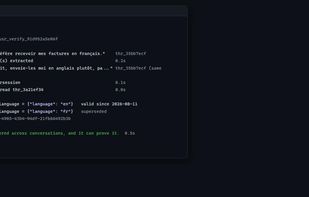


Tracebrain turns your conversation into your memory: what you're working on, what you promised, and everyone who matters. In a vault of your own. Usable by any AI you choose.
 Ukraine


MemoryPlugin gives AI the ability to remember you — your preferences, history, and context — across chats and tools. No more starting from zero. Enjoy smarter, faster, and more useful conversations that help you accomplish more.
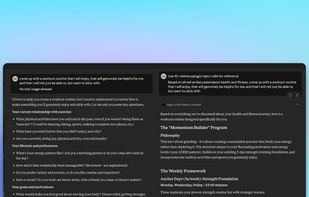
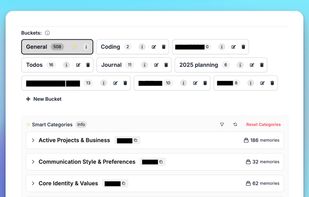
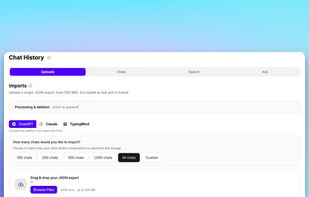


An AI assistant that permanently stores user corrections and preferences, applying them across every future session and project to eliminate repeated teaching, personalize outputs for creators, students, developers, teams, and maintain reliable consistency.

Maximem Synap is a managed long-term memory layer for AI agents. It stores what an agent learns across sessions and returns the relevant parts at inference time, instead of re-sending an entire conversation history into the context window.


 Australia


 Italy
Italy