Cost / License
- Freemium
- Proprietary
Application type
Platforms
- Online
- Google Chrome
- Software as a Service (SaaS)
- Mozilla Firefox
 United States


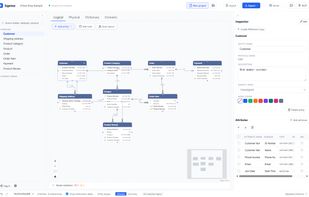
Sites and apps similar to QuickDBD include draw.io, which is free and open source. Other options are Xmind, MySQL Workbench, Lucidchart and Heimer. Diagram Editors like QuickDBD are a crowded field, with more than 25 alternatives for Windows, Linux, Mac, self-hosting and iPhone.
United States
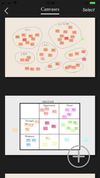
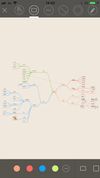
A workspace for handwritten sticky notes, movable mind maps, limitless canvases, diagrams, web clippings, reusable cards, and linked canvases. It includes SCAMPER, Matrix, SWOT, 3C, Blue Ocean Strategy, and Business Model Canvas frameworks, plus shared whiteboards.
 Japan


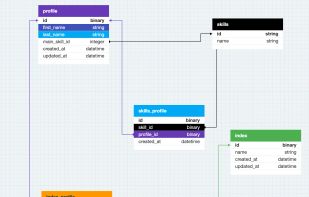
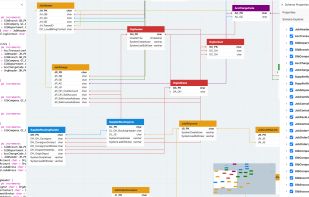
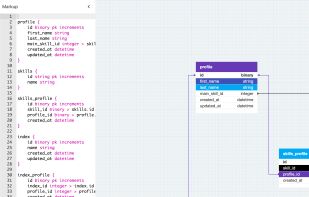
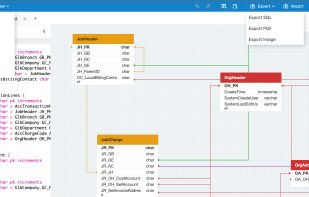


Open source diagram editor for visualizing full database schemas via a single query in seconds, supporting MySQL, MariaDB, PostgreSQL, SQL Server, and SQLite, with AI-driven DDL export, image download, attractive sharing options, and advanced editing features.


SQLDBM offers you an easy, convenient way to design your database absolutely anywhere on any browser, working away without need for any extra database engine or database modelling tools or apps.


A tool for drawing flowchart and sequence diagrams with a simple, concise and easy to use syntax, in a similar manner as markdown.


 United States


DBDesigner 4 is a visual database design system that integrates database design, modeling, creation and maintenance into a single, seamless environment.
 Germany
 EU


An ERD is an essential diagram for visually representing the relationships between tables when designing a database. While there are various ERD tools available, one of them, dbdiagram, has been popular among many users for its intuitive UI and powerful features.


Online database designer. Unlock the Power of Real-Time Collaboration and Easy Data Import in Database Designing. DynoBird support mysql, postgres, sql server and sqlite.


DbDesigner is a web application which allows you to design your database schema without writing SQL.


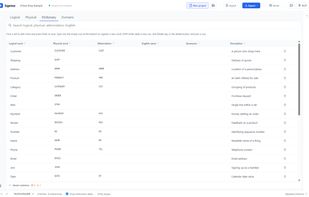
ERD tool that generates physical column names from a shared glossary and naming rules, so schemas always follow the team's naming standard.