




Picodata
Like
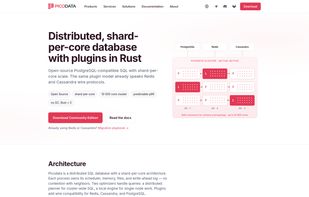
Picodata is a distributed, PostgreSQL-compatible database with a plugin model in Rust; plugins add Redis and Cassandra CQL wire protocol support.

Cost / License
- Freemium (Pay once or Subscription)
- Open Source (BSD-2-Clause)
Application type
Platforms
- Mac
- Linux
- Docker

Features

Highlights All activities
Picodata News & Activities
Recent activities
- Konstantin-Osipov updated Picodata
- Konstantin-Osipov added Picodata
- Paul updated Picodata
 Konstantin-Osipov added Picodata as alternative to PostgreSQL, CockroachDB, Apache Cassandra, VoltDB and 6 more
Developed by
 picodata.io
 Licensing
Open Source (BSD-2-Clause) and Freemium product.Pricing
One time purchase (perpetual license) ranging between $10000 and $100000 + free version with limited functionality.Written in
Alternatives
10 alternatives listedBadge
Get an embeddable badge for PicodataSupported Languages

AlternativeTo Category
DevelopmentGitHub repository
- 120 Stars
- 16 Forks
- 2 Open Issues
- Updated


No comments or reviews, maybe you want to be first?