
Odara icon
Odara icon

Odara

AI-first ETL/ELT tool in Rust. Build data pipelines visually, then drop into SQL or Python — with a built-in AI assistant that composes pipelines from plain English.
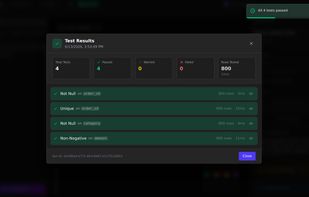
Data-quality test results

Cost / License

  • Free
  • Proprietary

Platforms

  • Windows
  • Linux
0likes
0comments
0articles

Features

Properties

  1.  Privacy focused
  2.  Lightweight

Features

  1.  Ad-free
  2.  Works Offline
  3.  No Coding Required
  4.  Team Collaboration
  5.  Workflow Automation
  6.  Rust
  7.  AI-Powered

Odara News & Activities

Highlights All activities

Recent activities

Odara information

  • Developed by

    FR flagodara.rs
  • Licensing

    Proprietary and Free product.
  • Alternatives

    12 alternatives listed
  • Supported Languages

    • English
Odara was added to AlternativeTo by samu123 on and this page was last updated .
No comments or reviews, maybe you want to be first?

What is Odara?

Odara is an AI-first ETL/ELT platform built in Rust with a React frontend. It lets you build data pipelines the way you think about them — describe what you want in plain English and the built-in AI assistant drafts an ordered pipeline of typed nodes you can review and drop straight onto the canvas. From there you refine visually, or dive into SQL and Python for full control.

Under the hood, transforms run on Apache DataFusion (Arrow-native SQL) and Python blocks execute via subprocess with PyArrow for zero-copy data exchange — no JVM, no GC pauses. Everything runs locally on your machine.

What you can do with it:

  • Generate pipelines from natural language — the AI assistant (works with DeepSeek, Anthropic/Claude, Gemini, and OpenAI-compatible providers) drafts, adds, or modifies nodes for you.
  • Mix SQL and Python in the same pipeline — small, single-purpose transform blocks.
  • Connect to 20+ sources and targets — PostgreSQL, MySQL, Oracle, SQL Server, MongoDB, Snowflake, DB2, generic ODBC, plus CSV/Excel/XML files, S3, Google Drive, Azure Blob, FTP/SFTP/FTPS, and REST APIs.
  • Visual mapper — a Talend tMap-style component with N inputs, M outputs, joins, and expressions.
  • Orchestrate with Maestro — run pipelines in parallel, series, or conditionally.
  • Real-time streaming (Pulse) — Kafka, RabbitMQ, NATS, and MQTT sources with window/aggregate/join operators.
  • Monitor executions with live progress, row counts, and durations.
  • Version pipelines with Git, manage multiple projects and environments, and drive everything through a 230+ endpoint REST API.

A modern, local, AI-native alternative to heavyweight enterprise ETL suites — without the JVM, the licensing, or the vendor lock-in.

Odara Videos

Show 2 more videos