


A Fast, friendly, open-source operating system, for newbies, geeks & DIY enthusiasts.
 India



+1
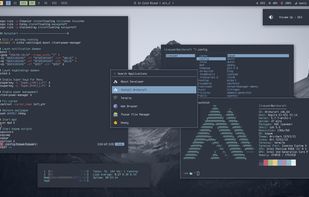


Apps similar to MorphOS include Tails, which is free and open source. Other options are Zorin OS, Manjaro Linux, elementary OS and ReactOS. There's no shortage of Operating Systems like MorphOS, with more than 50 alternatives for Linux, self-hosting, Windows, Mac and the web.
A Fast, friendly, open-source operating system, for newbies, geeks & DIY enthusiasts.
India
ravynOS is a new open-source desktop operating system that aims to provide a similar experience and compatibility with macOS on x86-64 systems.


General purposed Web Desktop Operating Platform / OS for Raspberry Pis, Now written in Go! - tobychui/arozos



Founded in 2014 by Oliver Pinter and Shawn Webb, HardenedBSD is a security-enhanced fork of FreeBSD. The HardenedBSD Project is implementing many exploit mitigation and security technologies on top of FreeBSD.


ROSA Linux is a Linux operating system and distribution, developed by Russian company LLC NTC IT ROSA. It is available in three different editions: ROSA Desktop Fresh (GNOME and KDE), ROSA Enterprise Desktop, and ROSA Enterprise Linux Server.
 Russia


Xinuos OpenServer™ 10 is a 64-bit operating system based on the popular FreeBSD and designed to support business applications within an enterprise environment.


Minoca OS is a general purpose operating system designed specifically for feature-rich embedded devices. It's got all the high-level functionality that you've come to expect from an operating system, but offers it in a fraction of the memory footprint.
 Canada


MirOS BSD is a secure operating system from the BSD family for 32-bit i386 and sparc systems. It is based on 4.4BSD-Lite (mostly OpenBSD, some NetBSD®).


Based in Ottawa, Ontario, Canada, BlackBerry QNX has provided foundational software for many of the world’s mission-critical embedded systems since 1982. From nuclear power plants, surgical robots and class III life-critical medical devices to autonomous vehicles and brands like...


Calculate Linux is based on Gentoo that is well known for its stability and great performance on a broad range of hardware: from Pentium Pro to modern CPUs.


The AmigaOS look and feel, though still largely based on the earlier 3.1 release was revised somewhat, with an improved user interface based on ReAction, improved icon rendering and official support for true color backdrops.
 Germany
 EU





 United States


