Linknesis icon
Linknesis icon

Linknesis

 Like

Self-hosted network monitoring platform for Linux and Windows probes. Run or schedule iperf3 and MTR tests between sites, view live throughput, jitter, loss and hop latency, export reports, share sessions, configure threshold alerts, and use REST, MCP and AI analysis.
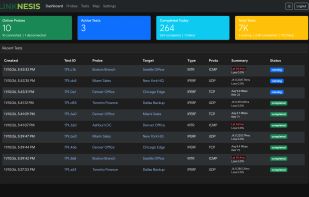
Dashboard with live probe and test counters

Cost / License

  • Free Personal
  • Proprietary

Application type

Since

  • New

Platforms

  • Self-Hosted
0likes
0articles
Save

Features

Properties

Features

Highlights All activities

Linknesis News & Activities

Recent activities

Linknesis information

  • Developed by

    Linknesis
  • Licensing

    Proprietary and Free Personal product.
  • Pricing

    Subscription ranging between $24 and $429 per month.
  • Alternatives

    19 alternatives listed
  • Badge

    Get an embeddable badge for Linknesis
  • Supported Languages

    • English
Linknesis was added to AlternativeTo by Linknesis on and this page was last updated .

No comments or reviews, maybe you want to be first?

What is Linknesis?

Linknesis is a self-hosted network monitoring platform for running, scheduling, and analyzing iperf3 and MTR tests from a web interface. Linux and Windows probes test connectivity between sites, data centers, client networks, and IP addresses or hostnames. Probes connect outbound to the Core, allowing deployment behind NAT without port forwarding. Bidirectional tests measure upload and download.

It supports TCP and UDP iperf3 tests with bandwidth limits, reverse and bidirectional modes, parallel streams, and DSCP settings, plus ICMP, TCP, and UDP MTR tests. Live charts show throughput, retransmissions, congestion window, jitter, packet loss, and per-hop latency. Test results include summaries and PDF, TXT, and JSON exports; tests can run once or on schedules.

The interface maps probes with GeoIP data, shows active tests, and supports threshold notifications, webhooks, shareable live-test links, a REST API, and an MCP server. Optional AI analysis, using a user-provided provider, generates technical explanations, executive summaries, and draft NOC or ISP tickets. The Core runs on Linux via Docker Compose, while probes use TLS 1.3 with certificate pinning.