

Kryptic icon
Kryptic icon

Kryptic

 Like

Kryptic is a developer secrets platform for engineering and DevSecOps teams who want secrets out of plaintext .env files, out of shared docs, and out of CLI wrappers that break the IDE run button.
Kryptic screenshot 1

Cost / License

  • Freemium (Subscription)
  • Open Source (GPL-3.0)

Since

  • New

Platforms

  • Windows
  • Mac
  • Linux
  • Online
  • Self-Hosted
0likes
0articles
Save

Features

Features

Highlights All activities

Kryptic News & Activities

Recent activities

Kryptic information

  • Developed by

    GR flagTheka.dev
  • Licensing

    Open Source (GPL-3.0) and Freemium product.
  • Pricing

    Subscription ranging between $11 and $25 per month + free version with limited functionality.
  • Alternatives

    13 alternatives listed
  • Badge

    Get an embeddable badge for Kryptic
  • Supported Languages

    • English
Kryptic was added to AlternativeTo by Theodosis on and this page was last updated .

No comments or reviews, maybe you want to be first?

Official Links

What is Kryptic?

Kryptic is a developer secrets platform for engineering and DevSecOps teams who want secrets out of plaintext .env files, out of shared docs, and out of CLI wrappers that break the IDE run button.

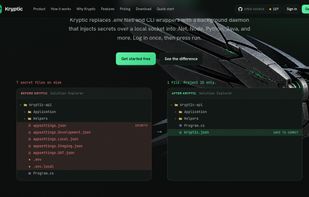
A local daemon signs you in once with Google, Microsoft, or GitHub. The repo only keeps a commit-safe project ID in kryptic.json. When you hit run, secrets are injected over a local OS socket instead of being written to disk. That means coding agents in the working tree cannot pick up a leftover .env that .gitignore would never have committed. This is filesystem-level protection: it is not a sandbox, and it does not replace a network-edge agent proxy. Once a secret is in a process environment, that process can still read it.

Hosted servers store ciphertext they cannot open. Decryption happens on your machine, in the browser, or on a CI runner that holds a sealed grant. The daemon, SDKs, and encryption engines (everything on the plaintext path) are open source, so you can inspect how secrets move.

SDKs cover .NET, Node.js, Python, Java, Go, Ruby, C++, and Rust on Windows, macOS, and Linux. SSO is included on every plan, not gated to enterprise. A self-hosted option is available when secrets need to stay in your own environment.