




CVE Lite CLI
1 like
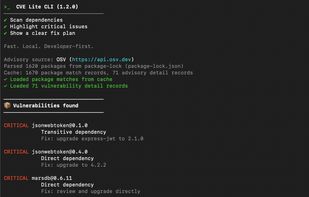
Scans JavaScript and TypeScript lockfiles for vulnerabilities, distinguishes direct versus transitive issues, generates severity-grouped copy-and-run fix commands, offers HTML and CI-ready reports, supports offline use, and works without sending any data.

Cost / License
- Free
- Open Source (MIT)
Application type
Platforms
- Mac
- Windows
- Linux

Features
CVE Lite CLI News & Activities
Highlights All activities
Recent activities
 Mauricio B. Holguin added CVE Lite CLI as alternative to Vibgrate
- Ben liked CVE Lite CLI
- Danilo Venom updated CVE Lite CLI
- Sonu-Kapoor added CVE Lite CLI
 Sonu-Kapoor added CVE Lite CLI as alternative to Snyk, Patchdex, Dependabot, Trivy and 1 more


CVE Lite CLI information
Developed by
 Sonu Kapoor
 Licensing
Open Source (MIT) and Free product.Written in
Alternatives
6 alternatives listedBadge
Get an embeddable badge for CVE Lite CLISupported Languages

AlternativeTo Categories
Development, Security & Privacy, OS & UtilitiesGitHub repository
- 750 Stars
- 157 Forks
- 49 Open Issues
- Updated


No comments or reviews, maybe you want to be first?